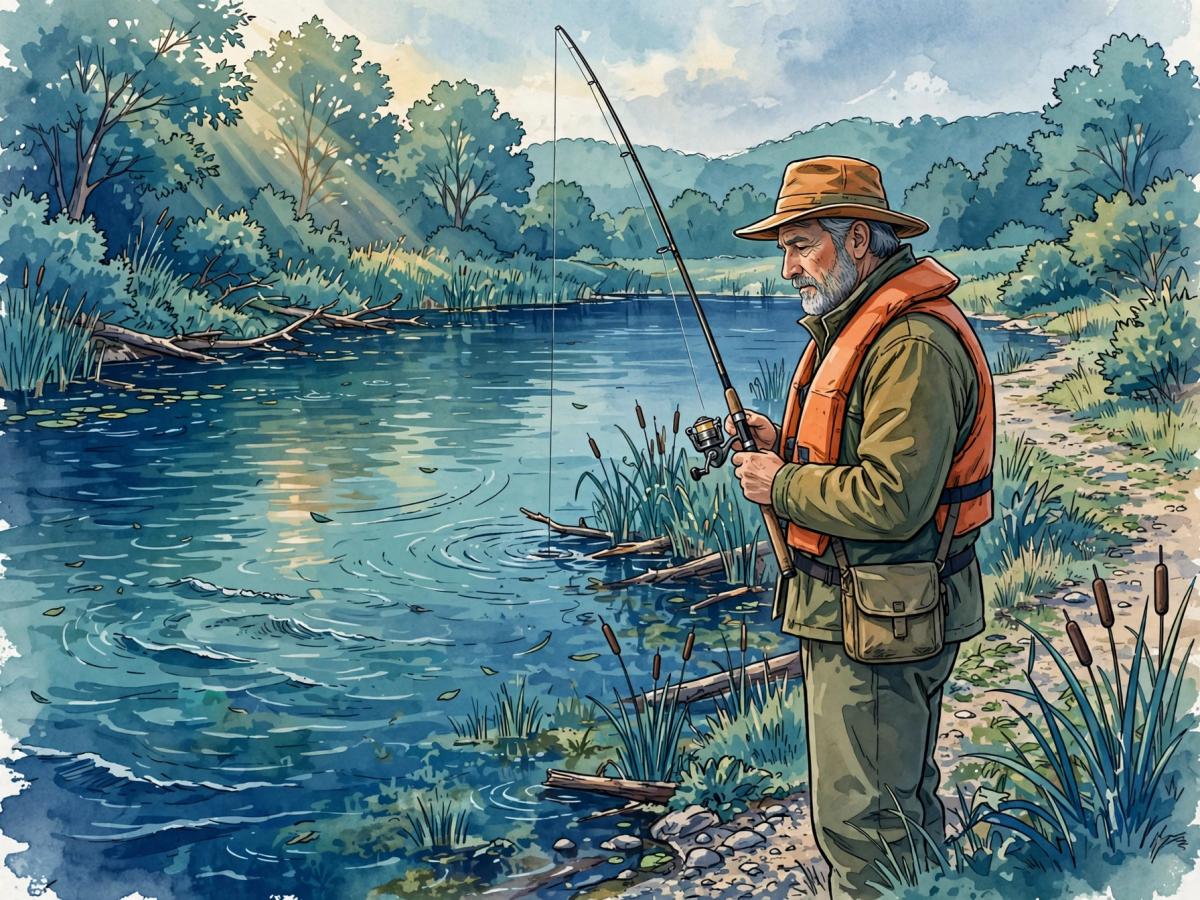
Give the water a chance to speak first
A quiet first cast can make an angler reach for a different lure, a different depth, and a different shoreline before the first presentation has taught anything. Fast changes feel active, but they can erase the clues that would have explained what happened. Observation creates a better starting point.
The goal is not to stand still forever. The goal is to know what the water was doing before you changed your approach, then make a change you can understand. A baseline gives you something to compare. One meaningful adjustment keeps the next decision connected to evidence rather than frustration.
Learning goal
By the end of this lesson, you should be able to make a quick baseline observation, separate what you saw from what you think it means, choose one meaningful variable to change, and recognize when safety or access matters more than a controlled comparison.
Start with a baseline
Before you tie on a new idea, take a short look around. From a secure position, note the light, wind, water surface, clarity, temperature clues you can responsibly obtain, cover, visible forage, signs of fish activity, and the access around you. You are not trying to explain everything. You are making a snapshot of the conditions at the moment you begin.
Use concrete descriptions. The water may be lightly rippled on the windward side. A shade line may reach farther from the bank than it did on your last visit. Small bait may flicker near a surface seam. Leaves or foam may collect along an edge. The bank may be more crowded, the water higher, or the path more slippery. These observations are more useful than a broad label such as good conditions or bad conditions.
Your baseline should include what is absent as well as what is present. You may see no visible forage, no surface activity, no safe place to stand near the most interesting cover, or no open casting lane. Absence is not proof that fish are absent. It tells you what you can and cannot use as evidence right now.
Read clues as a group
Light, wind, water, cover, forage, and access interact. A shaded bank can look different from a bright bank, but the relevant question may be whether the shade also changes surface temperature, visibility, or the position of small prey. Wind can push food toward one edge, change your casting angle, and make a boat or kayak harder to hold in place. Water level can expose or cover structure and change the route fish and people use.
Fish response belongs in the same picture. A swirl, missed strike, follow, snag, or complete lack of contact can tell you something about the presentation and the place. It cannot tell you everything about fish behavior. A response may come from a different species than you expected. No response may mean the presentation passed outside the useful depth or angle, or it may mean the fish were not active at that moment. Record the clue without forcing it into a universal rule.
Access is part of the observation, not an inconvenience to solve later. A feature that looks interesting from a distance may have no secure casting room. A current edge may be visible from shore but too strong to approach from the watercraft position you have. A bank may offer a great view while giving you no safe landing plan. Include those limits in your baseline so they shape the next choice.
Separate observation from interpretation
A simple two-column note keeps your thinking honest. In the first column, write what a camera, clock, or measuring tool could record. In the second, write the explanation you are considering.
Observed: Small bait flicked twice along the edge of shade at 8:20. The wind pushed a light surface ripple toward the bank. Three casts reached the edge and produced no contact.
Possible meaning: Bait may be using the shade edge. A fish may be feeding there. The presentation may have been too high, too fast, or outside the active window. The lack of contact does not settle the question.
This distinction does not make fishing less intuitive. It gives intuition a place to be tested. Use words such as may, might, or worth checking when the evidence is thin. Use a stronger conclusion only after repeated observations or a clear response supports it. One visible swirl can guide your next cast. It cannot prove every fish in the area is feeding on the surface.
Treat the first presentation as a measurement
Choose the first approach because it lets you learn something safely. If you want to understand a depth change, use a presentation whose movement gives you a sense of where it travels. If you want to compare windward and sheltered water, keep the basic presentation familiar while changing the angle or bank. If you are fly fishing, protect room for the back cast and use a presentation you can control in the current. If you are on a kayak or boat, hold position only when the conditions and equipment support it.
Before you cast, decide what you will watch. You might look for the presentation touching bottom, moving above cover, crossing a current seam, or entering the shade at a repeatable angle. You might watch the line, the surface, or the point where the presentation disappears. A defined observation keeps the cast from becoming a vague search for a bite.
Give the first approach enough repetition to be informative. That does not mean repeating a dangerous or clearly unproductive action. It means allowing the same basic choice to pass through a comparable area or angle more than once, when safe, before calling it a test. Keep track of where you cast and what you noticed. A quiet result is still a result when the conditions and presentation were clear.
Change one meaningful variable
After a fair first comparison, change one factor that could explain the result. Useful variables include depth, retrieve speed, casting angle, distance from cover, position along an edge, presentation size or profile, and the time spent in a particular zone. Choose the variable that connects most closely to what you observed.
If the presentation moved too high, change depth and keep the angle similar. If wind made the line difficult to control, change your position or cast angle before changing the entire presentation. If the shallow edge was quiet but the first deeper water had a clear transition, compare that depth with the same basic approach. If a branch creates a snag risk, change your distance from the cover and keep a landing plan instead of forcing a cast into it.
Avoid changing everything at once. A new lure, new color, new line, new depth, new bank, and new retrieve may produce a fish, but it will not tell you which decision mattered. One meaningful variable does not require perfect science. It simply leaves a useful thread between the observation and the next experiment.
There are times when a larger change is sensible. A storm front, rising water, unsafe current, a closed access point, or a complete change in light can make the original comparison irrelevant. State why you changed the plan, then begin a new baseline. You can still be observational without pretending that the first and second situations were equivalent.
Know when the water has given you enough information
A test has done its job when you can describe what you tried, where you tried it, what response you saw, and what remains uncertain. You do not need to force a conclusion. You can decide that the result was unclear and choose a better question for later.
Move or stop isolating variables when safety, access, or fish care requires it. Leave room for people and boats. Do not keep fishing a snagged area if hook recovery would put you near unstable footing or moving water. If a fish is hooked, the priority becomes controlled handling and release or harvest decisions under current local rules, not completing your comparison.
Field exercise: make a baseline, then one change
At your next session, spend five minutes observing before the first cast. Write one concrete clue for each category that applies:
- Light and weather.
- Wind or water movement.
- Water clarity, level, or temperature clue.
- Cover, depth change, or structure.
- Visible forage or fish response.
- Casting room, footing, traffic, and exit access.
Choose one first approach and write the result in observable language. Make three to five careful attempts when the situation remains safe and comparable. Then change one meaningful variable. Keep the other choices as similar as practical, repeat the comparison, and write what changed.
Finish with three sentences: what I saw, what I think may explain it, and what I still do not know. If conditions changed enough to make the comparison unfair, say so. The exercise succeeds when your next decision has a reason, not when the water produces a particular result.
Safety and local guidance
Observation never requires unsafe access. Check current local rules for fishing methods, access, species, seasons, harvest, release, watercraft, and protected habitat. Look behind you before casting and keep hooks, tools, and lines controlled around people, pets, and gear. Stay on secure footing. Do not wade, launch, hold a position, or approach current, depth, weather, or visibility beyond your ability. Keep fish handling brief and follow current local release or harvest guidance. When conditions change the risk, stop the comparison and make the safe choice.
Quick recap
- Build a baseline from concrete observations before changing the setup.
- Consider light, wind, water, cover, forage, response, and access together.
- Separate what you saw from the explanation you are testing.
- Use the first presentation to learn something specific and repeatable.
- Change one meaningful variable when the comparison remains safe and fair.
- When conditions change sharply, begin a new baseline instead of pretending the old test still applies.
Test Your Knowledge
Ready to see how much you've learned? Take this quick 4-question quiz to complete the lesson.
Take the Quiz to Finish
Complete the quiz above to unlock the lesson completion.