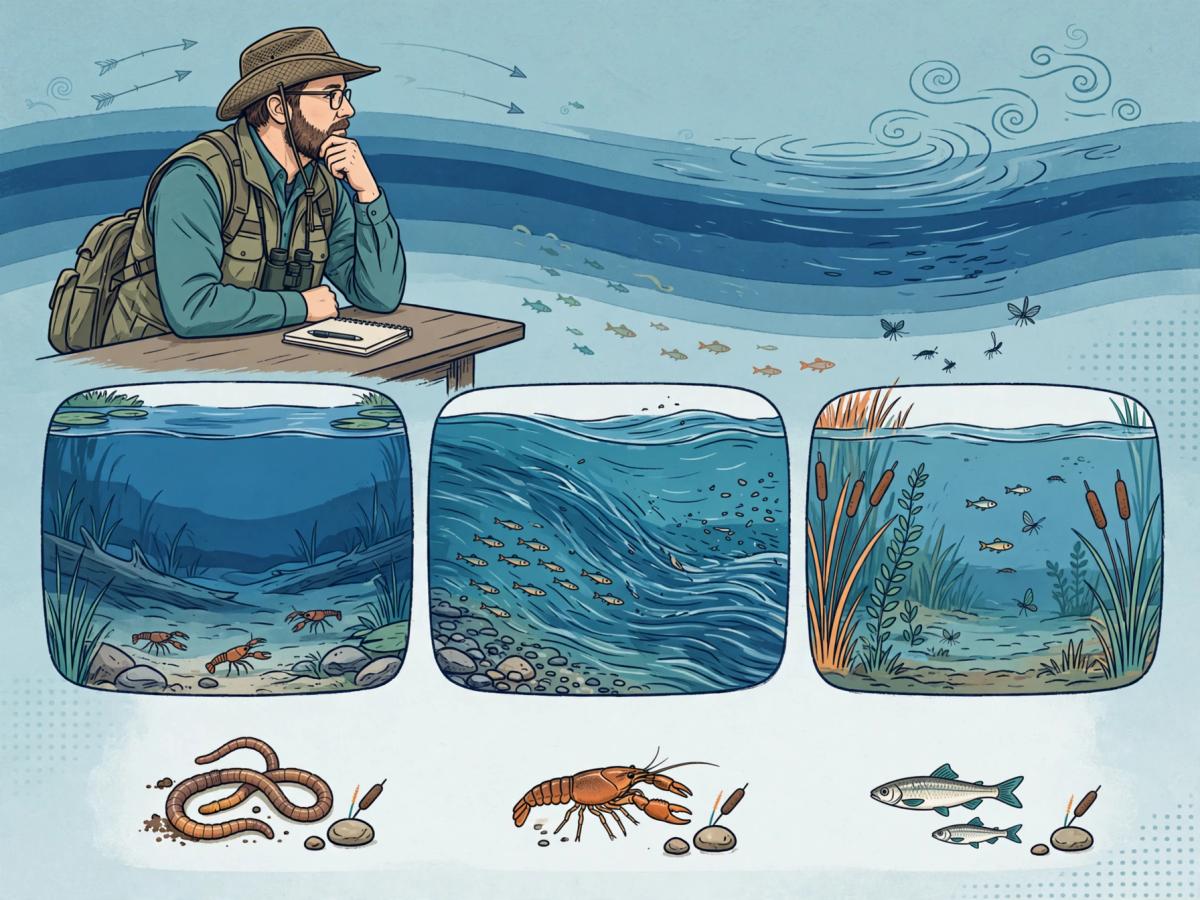
Let conditions narrow the bait choice
Intermediate bait selection is less about finding a secret offering and more about making a choice you can explain. What is legal on one water may be restricted on another. What is easy to care for at the start of a trip may become stressed, spoiled, or difficult to dispose of later. The water itself can also give you clues. Available forage, current, depth, temperature, cover, and the amount of time you can observe all shape the decision.
This lesson compares broad bait choices and presentation decisions without promising a particular catfish response. A legal worm, permitted baitfish, cut offering, or other natural presentation can each be reasonable in the right setting. Your job is to match the choice to the conditions, keep the hook and bait manageable, and leave the water without moving unwanted organisms or waste between places.
Learning goal
By the end, you should be able to:
- Verify the current rules that govern bait collection, purchase, possession, transport, use, and disposal.
- Use visible forage and water conditions to choose a first legal bait option.
- Keep bait healthy or contained long enough to make a fair presentation test.
- Compare two choices by changing one meaningful variable and recording what happened.
No bait guarantees a fish. Species, water body, season, forage, weather, access, and local regulations continue to matter after you make a careful choice.
Start with permission and rules
Before you collect, carry, or use bait, check the current official regulations for the exact water. Look for rules about bait species, size, source, collection methods, possession limits, transport between waters, use of live organisms, and disposal. Some places allow a baitfish in one context and prohibit it in another. Some require bait to come from a particular water or source. A general lesson cannot replace the current rule for your location.
Confirm access as well. A legal bait does not make trespassing legal, and a public shoreline does not automatically allow collection from every area. If you cannot confirm the rule, choose an option you can verify or postpone the collection. Carry only what you can care for and what the regulation permits.
Plan the end before the first cast. Do not release unused bait into a different waterway. Keep bait, water, containers, and scraps contained. Follow official disposal guidance, and leave the shoreline cleaner than you found it. These steps protect the water and make your own equipment easier to manage.
Read what the water is offering
Look for evidence before choosing a presentation. Small fish near vegetation, insects near the surface, invertebrates around rocks, or food moving with current can tell you what is available. The absence of an obvious sign is also information, although it does not prove that forage is absent below the surface.
Notice the water's movement. A small offering may drift too quickly in a strong seam, while a larger or more secure presentation may remain readable. In calm water, a large bait can be harder to place naturally or can create more disturbance than you intend. The choice is not simply small versus large. Ask whether the bait can stay where you want it, remain legal, and be inspected without rushing.
Water clarity and light can affect how visible a presentation is, but they do not create a universal color, size, or scent formula. Keep your language modest in your notes. Write that you matched a legal offering to observed forage and a manageable presentation. Do not write that the match must produce a bite.
Compare broad bait choices
Worms and other small natural offerings
A worm or another permitted small natural offering can be useful when you want a compact presentation that is easy to carry and inspect. It may suit a calm or lightly moving area, but it can wash off, gather debris, or become difficult to observe in stronger current. Check the rules before collecting or using it, and keep unused material contained.
The practical question is whether it remains on the hook and in the intended zone. If the offering disappears quickly, do not assume a fish took it. Current, small fish, snags, and poor hook security can create the same result. Inspect the rig carefully and record what changed.
Legal live bait
Live bait can reflect forage that is present, but its use depends heavily on local rules and responsible care. Confirm the species, source, collection method, possession limit, transport requirement, and whether live use is permitted on that water. Keep it in a suitable, secure container with conditions that prevent unnecessary stress. Shade, temperature, oxygen, and clean water matter, but local regulations and species needs decide what is appropriate.
A stressed baitfish is a cue to stop and solve the care problem, not to keep casting until it fails. Do not move live bait or bait water to another waterway. Do not release an unused baitfish unless the current official rule specifically permits the action and the release is into the lawful source water. When in doubt, contain it and follow the official disposal guidance.
Legal cut or prepared natural offerings
A legal cut offering can provide a scent and profile that differs from a whole bait. Use only a permitted species and source, and prepare it with clean tools in a place where scraps can be contained. Avoid leaving fragments on the bank or in a boat. The goal is a tidy, observable presentation, not a larger mess.
Keep the piece secure enough to survive casting and current while leaving the hook point usable according to the lawful rig and your equipment. If the offering spins, collects debris, or drifts out of the intended area, that is a presentation problem to solve. It is not evidence that a different brand or exaggerated amount is needed.
Prepared baits and other permitted options
Some waters allow prepared or locally common bait options. They can be convenient when you want consistent portions and simple storage, but they still require rule checks, secure containers, and responsible cleanup. Do not treat a familiar recipe or a product recommendation as universal advice. The water, the law, and your ability to manage the session matter more than a label.
Match presentation to the condition
Start with a simple question: where can the bait sit or move while you can still read the line and reach the rod safely? A bottom presentation may work differently in still water, a steady flow, or a snag-filled area. Keep the rig within the area you can retrieve without stepping toward unstable water.
Use one bait choice and one manageable position for the first test. Note the cast angle, current, time, bait condition, and whether the hook stayed clear. If you change bait, keep the position and general timing similar. If you change location, keep the bait and presentation as similar as safety and local rules allow. This gives you a better comparison than changing everything after a quiet few minutes.
Set a check interval that suits the conditions rather than following a rigid clock. Strong current, debris, small fish, heat, and live-bait care may require earlier inspection. The check is also a chance to keep hooks secure, remove line from a walkway, and make sure other people can pass safely.
Intermediate field exercise: the bait decision matrix
At the next lawful water, write down three observations before choosing bait:
- What forage or food evidence is visible, and where?
- How fast is the water moving where you plan to fish?
- What bait care, transport, and cleanup can you realistically manage for the full session?
Then check the current rules and list two legal options that fit the conditions. Choose one as your first test. Keep the hook, general position, and observation window consistent enough to learn from the result. Record whether the bait stayed secure, whether it remained in the intended area, what the water did, and what signs you observed.
If you compare the second option, change only the bait or one clearly stated presentation variable. End by recording which choice was easier to care for and why. A bait that produced no bite can still be a sound decision if it was legal, manageable, and tested honestly.
Safety and local rules
Keep hooks covered when bait is not being used. Use pliers or another suitable tool for adjustments, and keep fingers clear of the hook point. Wash hands after handling bait and before eating. Keep containers closed around children and pets, and clean equipment without sending bait or dirty water into a different waterway.
Check the current official rules for bait species, collection, possession, transport, line and hook limits, access, release, and harvest. Follow local guidance for fish that are protected or cannot be moved. Stop if heat, storms, rising water, poor footing, or fatigue makes bait care or hook control unreliable.
Recap
- Choose bait only after checking the current rules for the exact water.
- Use forage and current as clues, not as a promise of a particular response.
- Compare worms, permitted live bait, cut offerings, and other legal choices by their care and presentation needs.
- Keep bait, water, hooks, and scraps contained from start to finish.
- Change one meaningful variable so the result teaches you something.
Test Your Knowledge
Ready to see how much you've learned? Take this quick 4-question quiz to complete the lesson.
Take the Quiz to Finish
Complete the quiz above to unlock the lesson completion.