Let the bank shape the plan
A bank session begins before the first cast. The shoreline decides how you stand, where you can place a rod, how you reach a fish, and how you leave when the weather or footing changes. A deep-looking hole is not a useful target if getting there requires a steep descent, an unstable edge, or a route you cannot see on the way back.
Intermediate bank fishing is the practice of combining water reading with ground reading. Look for a casting angle that shows you a current edge or depth change, a stable place to stand, a clear path for other people, and an exit you can use without rushing. A conservative daylight or well-lit plan gives you more time to notice changes. It also makes the equipment, hooks, and fish easier to manage.
Learning goal
By the end of this lesson, you should be able to:
- Screen a shoreline for stable footing, lawful access, and a clear exit.
- Choose a casting angle that keeps the line readable without reaching into unsafe water.
- Organize a daylight or well-lit session around weather, visibility, fatigue, and changing conditions.
- Move or end the session when the bank no longer supports safe fishing.
The best position is the one that lets you fish and leave with control. Location quality never cancels a safety problem.
Read the terrain before the water
Look at the ground from a distance before carrying in tackle. Wet grass, loose rock, mud, exposed roots, flood debris, undercut soil, and steep slopes all change how you stand and move. Water can hide a drop-off, and a bank that was firm on a previous visit can soften after rain or a changing level.
Check whether the place is public or permission-based. Do not cross fences, close gates improperly, or assume an unmarked path gives access to the water. Stay clear of dams, spillways, active work areas, unstable retaining walls, and places where current or waves can pull you off balance. If you cannot identify a stable route to the position and back, choose another place.
An exit is part of the initial check, not an emergency idea saved for later. Walk the route with empty hands first when possible. Note where a person could turn around, where gear could catch, and how the path would look if the light fell or weather arrived. Carry only what you can manage without using both hands for a heavy load on uneven ground.
Choose a position that explains the water
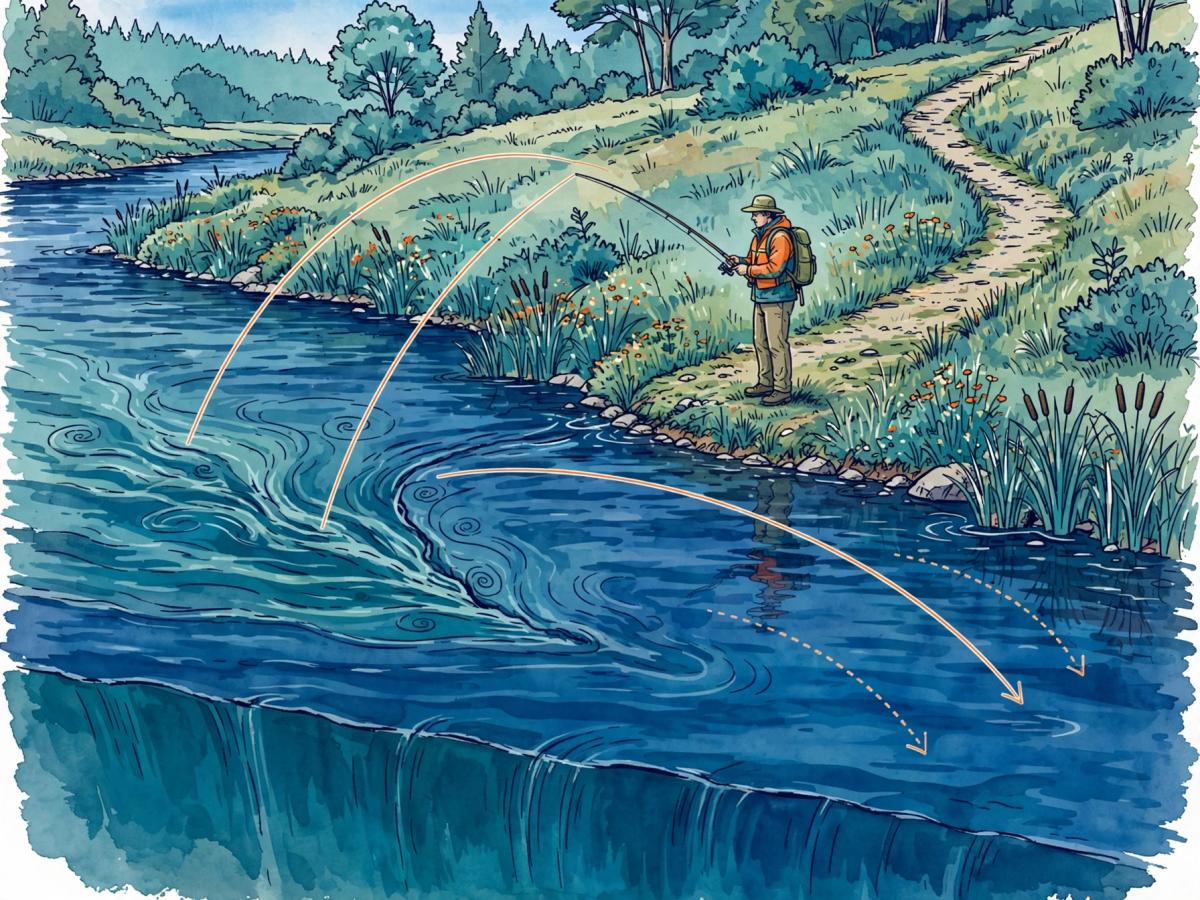
The first cast should answer a question you can observe from safe ground. You might be looking at a current seam, the edge of a flat, a channel transition, or cover that is close enough to reach without stepping toward the water. The angle matters because it changes how the sinker contacts bottom, how the line crosses current, and how easily you can see a signal.
A cast across moving water may pull the line into a bow or sweep the bait away. A cast along an edge may keep the presentation in a more consistent lane, but it may also bring the rig toward cover. A cast toward slack water may be easier to read while offering less information about the faster seam. There is no universal best angle. Choose the one that fits the actual flow, the bottom you can manage, and the space around you.
Place the rod so the tip is visible and the base cannot slide. Keep lines separated from one another and away from walkways. Leave enough room to step back from a fish or a snag without stepping toward an edge. If the landing area is too narrow for a net or a safe release, reduce the distance or choose a different position before fishing.
Build a conservative session plan
Arrival check
Confirm access, weather, water level, footing, visibility, and the route home. Tell someone where you will be and when you expect to return. If the place is unfamiliar, go with a partner or choose a more visible public area. Check current fishing and access rules for the water rather than relying on memory.
First position
Choose the safest spot that still lets you observe one habitat clue. Set the rod, line, bait, tools, and landing area before adding another presentation. Take a moment to see how wind and current move the line. If the baseline is unreadable, solve that problem or simplify the setup.
Adjustment window
Give the position enough time to teach you something while remaining ready to stop. Look for changes in water level, debris, boat traffic, people, wind, and footing. Change one variable when useful. A short move to a stable related position is better than a long search along an unstable shoreline.
End point
Set a return time before the session gets quiet or exciting. Leave earlier if light falls, a storm approaches, the bank softens, fatigue affects balance, or you cannot see the landing and exit area. A session that ends with your equipment controlled and your route clear is a successful practice in judgment.
Handle current, access, and other people
Keep a respectful distance from other anglers and leave a clear path for people who need to pass. Do not cast over another person's line or place a rod where a dog, child, or passerby could catch the hook. If the space is crowded, simplify the setup or move to a lawful position with room.
Avoid stepping into current to improve a casting angle. Shore fishing does not require you to prove that a difficult edge can be reached. If water level or flow changes, the same line may reach a different bottom or create a new hazard. Recheck the bank before moving any tackle.
Wind and rain can change a stable-looking area. Keep containers closed, secure loose items, and protect communication devices. When lightning, high wind, flooding, or poor visibility threatens, end the session and leave by the route you already checked.
Intermediate field exercise: draw the bank map
Before a session, sketch a simple map with:
- The water edge, current direction, visible depth or cover clues, and any no-go areas.
- Your proposed standing position and two casting lanes that do not cross other people.
- The landing area, tool location, and a step-back space that does not lead toward the water.
- The route in and the route out, including where footing could change.
- A nearby Plan B that is stable, lawful, and visible during the planned session.
- The condition that would make you leave, such as rising water, unstable soil, darkness, lightning, or fatigue.
When you arrive, compare the sketch with the real shoreline. If the water or ground has changed, update the plan rather than forcing the old one. After the session, write down whether the casting lane was readable and whether the position gave you enough room to land and release a fish safely.
Safety and local rules
Follow current access, license, fishing, line, hook, bait, release, and harvest rules. Use public access or permission-based access only. Do not normalize unfamiliar night fishing, steep bank access, climbing over barriers, or standing on wet rocks above moving water. A well-lit, known route is safer to manage than a poorly lit shortcut.
Keep hooks and lines secure, especially when carrying gear or changing position. Use a suitable landing net and tools when the bank allows it. Keep hands free for balance on uneven ground, and ask for help rather than carrying more than you can control. Stop when weather, current, visibility, fatigue, or crowding exceeds your ability to manage the space.
Recap
- Screen the ground and the route before studying the water.
- Choose a casting angle that creates information without requiring unsafe access.
- Keep rods, lines, tools, landing space, and people organized.
- Build a daylight or well-lit session with a clear return time and Plan B.
- Leave when the bank, weather, light, or your balance no longer supports a calm decision.
Test Your Knowledge
Ready to see how much you've learned? Take this quick 4-question quiz to complete the lesson.
Take the Quiz to Finish
Complete the quiz above to unlock the lesson completion.