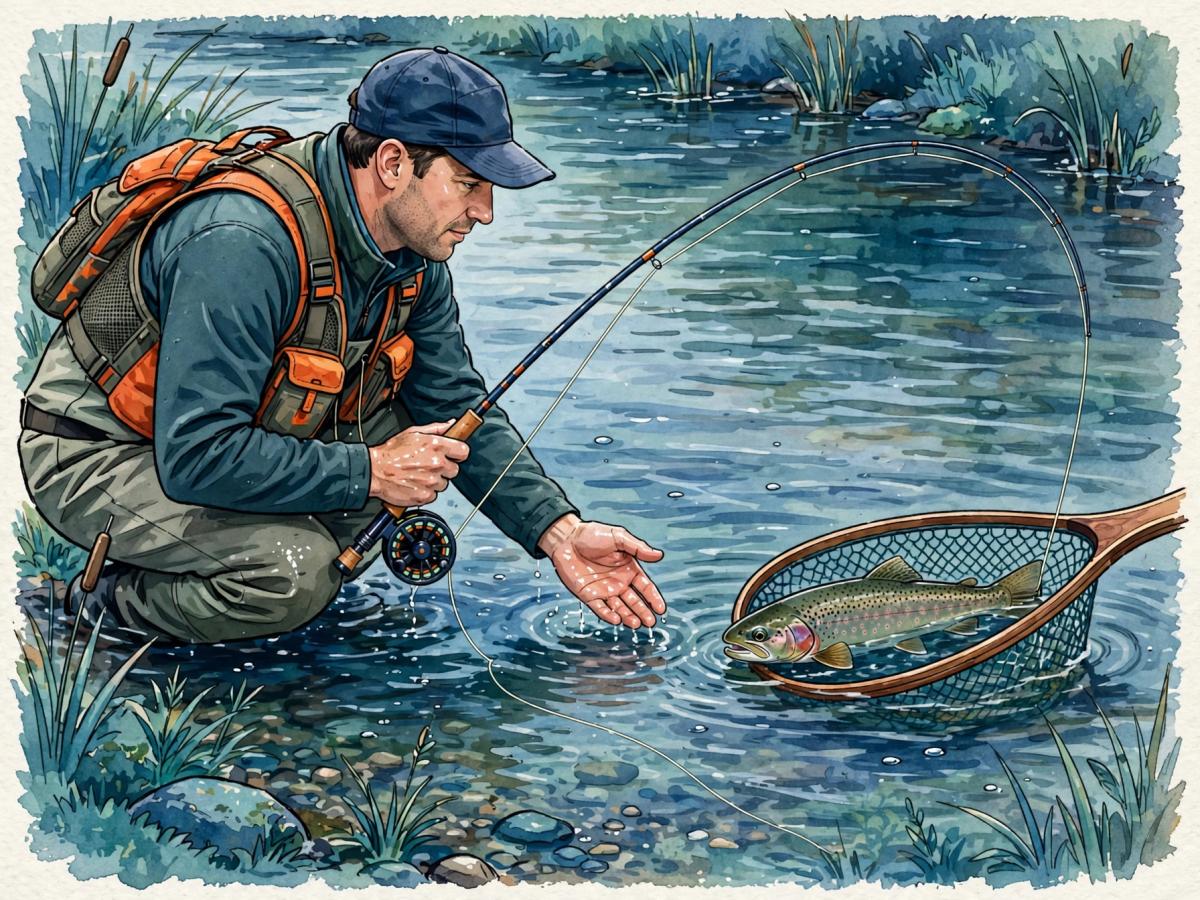
Fight and Land the Fish
The moment a fish takes can make the water feel smaller. The line tightens, the rod bends, and the next decisions happen quickly. A calm landing begins before the hook is set. You have already chosen a place to stand, noticed the bank or boat edge, and thought about where the fish can safely move.
Landing is a connected skill. Rod angle, line management, pressure, position, net use, and handling all affect the outcome. Species, water temperature, current, tackle, hook style, and local rules change the details. Use this lesson as a decision framework, then adapt it to the fish and water in front of you.
Learning goal
By the end, you should be able to keep steady pressure without lifting the rod into a dangerous position, clear loose line, move away from hazards when possible, use a net with less handling, and release or legally harvest a fish according to current local rules. You will also practice planning a landing path before the next take.
Set pressure with the rod and line
When the fish takes, keep the line connected and use the rod to absorb sudden movement. A high rod angle can protect a light leader in some moments, but pointing the rod straight up can put excessive bend into the tip and make it difficult to steer the fish. A moderate angle with steady pressure gives you more room to respond.
Side pressure can help turn the fish away from a branch, sharp bank edge, or other hazard. Change the direction of pressure gradually and keep the line clear of rocks, weeds, and your feet. Do not pull straight against the fish with a locked arm. Use the rod, your line hand, and the reel together, with pressure that stays firm enough to maintain contact and gentle enough to respect the tackle.
If the fish runs, let it take line under controlled drag when the water and space allow. Keep your fingers away from a moving reel and avoid wrapping line around your hand. If the fish stays close, use the line hand to manage slack and keep the rod doing its work. Each situation calls for attention to the fish's direction rather than a memorized sequence.
Clear the line and back away from hazards
Before the fish gets close, look at the line between you and the water. Loose coils around your feet, a pack strap, a pedal, or a branch can end the fight suddenly. Strip or guide line deliberately, then secure the extra line where it will not catch. Ask a partner for help when one is available, but keep communicating clearly around hooks and moving line.
Notice the safest path for the fish. A shallow, open edge may be better than a steep bank. A clear patch of water may be better than a tangle of vegetation. If the fish moves toward a hazard, change your body position on stable ground and apply controlled side pressure. Do not rush onto slippery rocks or into deep current because the fish is close.
Backing away from an obstacle can help create a better angle. Step only when you can see your footing. Keep the rod and line away from people, boats, and other anglers. If the location does not give you a safe landing route, the right response may be to keep the fish in the water and release it without a close photo or extended handling.
Use the net as a support tool
A net can shorten the time a fish spends under tension and give you a way to support it in the water. Keep the net ready before the fish is exhausted. Wet the net if its material and local practice support that choice, and avoid dragging the fish across dry ground or rocks.
Guide the fish headfirst into the net when it is under control. Do not chase it with the net or stab at the water. Once the fish is in, keep the net low and in the water when possible. Remove the hook with a tool while supporting the fish. If the hook is deeply set or difficult to remove, follow local guidance and choose the action that gives the fish the best chance of a careful outcome.
A net is not a requirement for every legal fishing situation, and carrying one does not replace good planning. From shore, know whether you can reach the water without losing balance. In a boat, secure loose gear and follow the safety practices for the platform. The landing tool should fit the place you fish.
Wet hands, limited air, careful release
Wet your hands before touching a fish. Support the body horizontally when the species and size make that practical, and keep the fish close to the water. Avoid squeezing the belly, covering the gills, or holding the fish by a jaw in a way that the species or local rules do not support.
Keep air exposure brief. A photo is optional, and the fish's condition comes first. If the fish is legal to release, face it into gentle moving water only when the setting and species make that appropriate, and let it regain strength while you maintain support. Release when it can swim away under its own control. Follow local rules for harvest, size, season, and handling. Those rules can differ by water and species.
If you plan to keep a legal fish, prepare before landing so you do not extend handling while looking for equipment. Respect any possession limits and current regulations. Responsible fishing includes knowing the decision before the fish arrives, not improvising after it is out of the water.
Try this in the field
Before your first cast, look at the landing area. Identify an open section of bank or water, the hazards a fish might reach, where your net or tools will sit, and the place you can stand without losing balance. Keep the plan simple enough to remember.
You can rehearse the sequence with an unhooked practice line: clear loose line, move one safe step only if footing is obvious, position the rod at a moderate angle, and place the net where it can be reached. When a fish takes later, focus on pressure and position rather than trying to create a perfect photo or a dramatic fight.
After the outing, note what made the landing easier or harder. Was the line organized? Did you have a safe angle? Did the bank offer a practical release point? Use the answers to improve the next plan.
Safety and local rules
Hooks remain dangerous during every landing. Keep fingers away from the hook point, use forceps or pliers when appropriate, and protect bystanders from a swinging fly. Never step onto unstable rocks or into unsafe current to save a fish or a photograph. Follow local rules for species, seasons, size, possession, hook style, barbs, and release or harvest. When weather, water level, cold, heat, or access changes, change the landing plan or stop fishing.
Recap
- Plan the landing area before the take, including hazards and a safe release point.
- Use steady pressure, a moderate rod angle, and controlled line rather than a locked pull.
- Clear loose line and move only when you can see stable footing.
- Keep the net low and support the fish in the water when possible.
- Wet hands, limit air exposure, and follow local release or harvest rules.
- A safe release or legal harvest matters more than a close photo.
Test Your Knowledge
Ready to see how much you've learned? Take this quick 4-question quiz to complete the lesson.
Take the Quiz to Finish
Complete the quiz above to unlock the lesson completion.