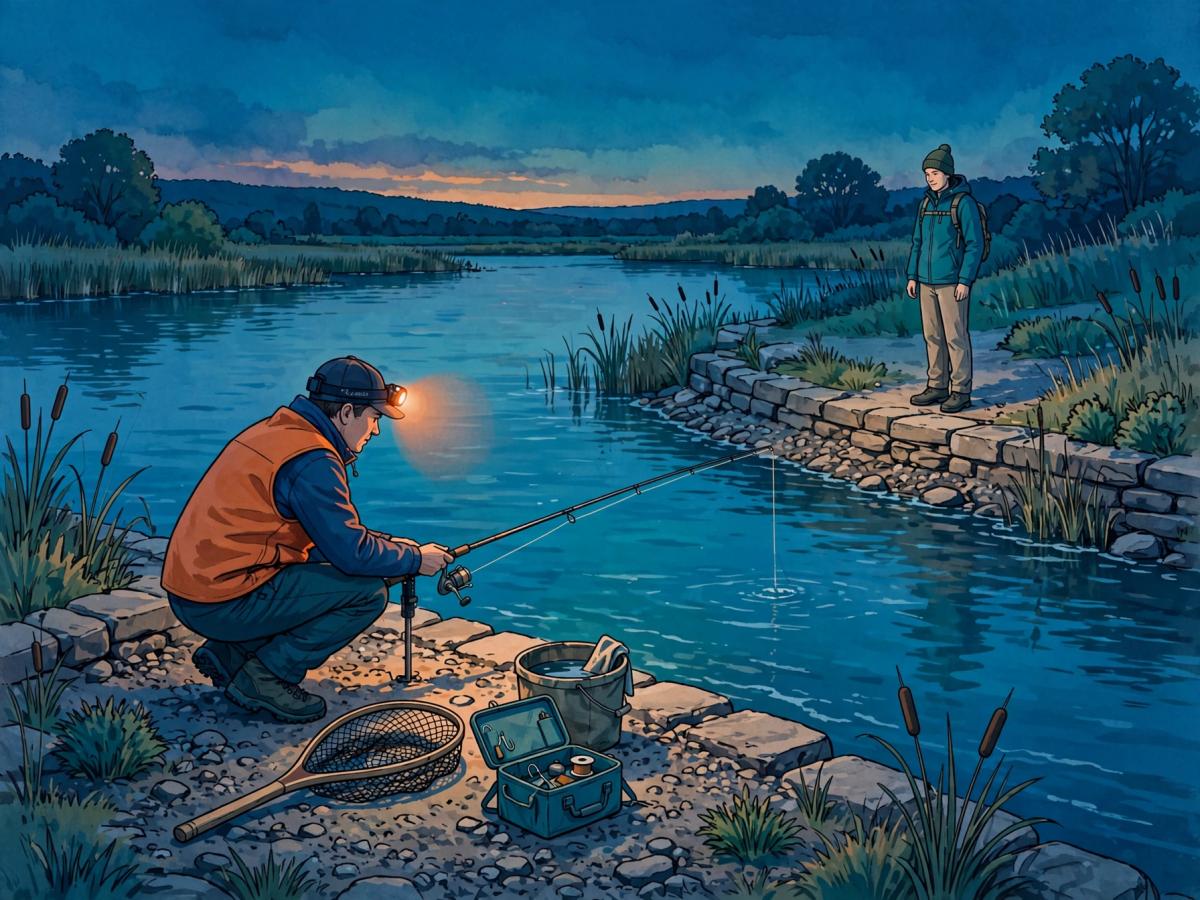
A safe bank plan starts before the first cast
Bank fishing gives you a direct view of the water, but a shoreline can change quickly. Footing, weather, darkness, current, boat traffic, heat, insects, and fatigue all affect the plan. A productive-looking bank is not worth a rushed approach or an uncertain exit.
This lesson treats daylight, stable access, communication, and a planned return as part of fishing technique. It does not normalize unfamiliar night fishing. If you cannot see the route, footing, line, and water well enough to leave calmly, choose a different time or place.
By the end of this lesson, you will be able to:
- Choose a permitted bank position with stable footing and a clear exit.
- Plan communication, lighting, weather awareness, and buddy support.
- Observe bites and changing conditions without letting a quiet period override safety.
Choose the bank you can leave
Begin with access, not with a rumored hole. Walk the approach in daylight when possible. Check the surface, slope, roots, loose rocks, mud, drop-offs, vegetation, overhead branches, and the distance back to your vehicle or companion. Look for a place where you can stand, cast, set down a rod, and step away from the edge without crossing a hazard.
A small flat area can be more useful than a dramatic point. You need room to manage a hook, a net, and a fish without putting your feet in the water. You also need space behind you for a clear cast. If another angler, boat lane, trail, road, or structure makes that impossible, choose another position.
Confirm the access is permitted. Respect gates, private boundaries, posted closures, and areas set aside for wildlife or other water users.
Use daylight and honest lighting
Daylight makes it easier to see where you are stepping, how the bank is changing, and where the line lies. It also helps a buddy, passerby, or emergency contact understand your position. Choose daylight or a well-lit area while you are learning a new bank.
A headlamp is useful in a safety kit, but carrying one does not turn an unsafe bank into a safe one. Keep it available, check the batteries, and use it when light fades or you need both hands. Do not shine it across other anglers' eyes, boat paths, or private areas.
If a trip runs later than planned, do not let the promise of a bite decide for you. Pack early enough to follow the exit plan. An unfamiliar bank after dark can hide holes, slippery surfaces, line, wildlife, and changing water. This lesson does not teach night access as a shortcut to better fishing.
Tell someone and bring a second plan
Share the location, expected return time, route, and who is with you. If the plan changes, update that person. A buddy adds another set of eyes, but a buddy is not a substitute for stable access, communication, or personal judgment. Each person should carry or know how to reach the important information.
Keep your phone or communication device protected from water and within reach. Do not place it at the far end of the bank beside the rod. Pack the basics you can use without clutter: water, weather-appropriate clothing, light, pliers, a net when suitable, and a way to carry line and litter out.
A simple second plan might be a nearby daylight shoreline, a shorter session, or returning another day. Deciding before the trip makes it easier to leave without arguing with yourself at the edge.
Read weather and footing as conditions change
Check a current forecast and look at the sky, wind, temperature, and water before you begin. Weather can change the bank, the cast, and the route back. Rain can make a slope slick. Wind can move branches and line. Heat can make a short walk feel longer. Water level can cover the firm path you used earlier.
Recheck your feet and surroundings whenever you move. Keep tackle organized so line does not become a trip hazard. Set the rod where you can reach it without stepping over hooks or toward the edge. If you feel tired, cold, overheated, or distracted, pause and reassess before making another cast.
Fishing patiently does not mean ignoring a change. The plan is working when it helps you notice a condition early enough to act.
Watch bites without forcing a decision
A rod tip, line angle, slack change, or steady pull can each tell you that the setup changed. Wind, current, bait movement, and bottom contact can also move the line. Watch for a change that persists and compare it with the water around you. Do not sprint toward the rod or grab a line near the edge.
Keep the rod, pliers, net, and landing space arranged before the bite. If a fish moves into cover or the bank becomes crowded, use the safest recovery plan available. It is acceptable to stop fishing when the landing area is no longer controlled.
The goal is not to stay until a bite appears. The goal is to fish with enough attention to make a safe next decision.
Field exercise: draw your bank plan
In daylight, choose one permitted access point and draw four marks on a simple map:
- Your standing and casting zone.
- The place where the rod, net, pliers, phone, and water will stay.
- The safest exit route and a backup route.
- The hazards you will avoid, such as an unstable bank, deep edge, road, boat lane, or overhead branch.
Tell a trusted person the location and return time. On the water, recheck the plan after any weather change, movement along the bank, or shift toward darkness. If the exit no longer looks simple, pack up.
Safety and local-rule reminder
Use current official fishing and access rules. Prefer daylight or a well-lit, familiar area, and do not normalize entering an unfamiliar bank after dark. Wear suitable footwear, keep a light and communication device available, and avoid unstable banks, strong current, lightning, extreme weather, and isolated access that you cannot explain to someone you trust. Stop when conditions or equipment exceed your ability.
Recap
- Choose the bank you can fish, monitor, and leave.
- Daylight and clear lighting support better footing and better decisions.
- Share the route and return plan, and keep a backup option.
- Organize line, hooks, tools, and landing space before the bite.
- A good bank plan makes leaving an ordinary part of the trip.
Test Your Knowledge
Ready to see how much you've learned? Take this quick 4-question quiz to complete the lesson.
Take the Quiz to Finish
Complete the quiz above to unlock the lesson completion.