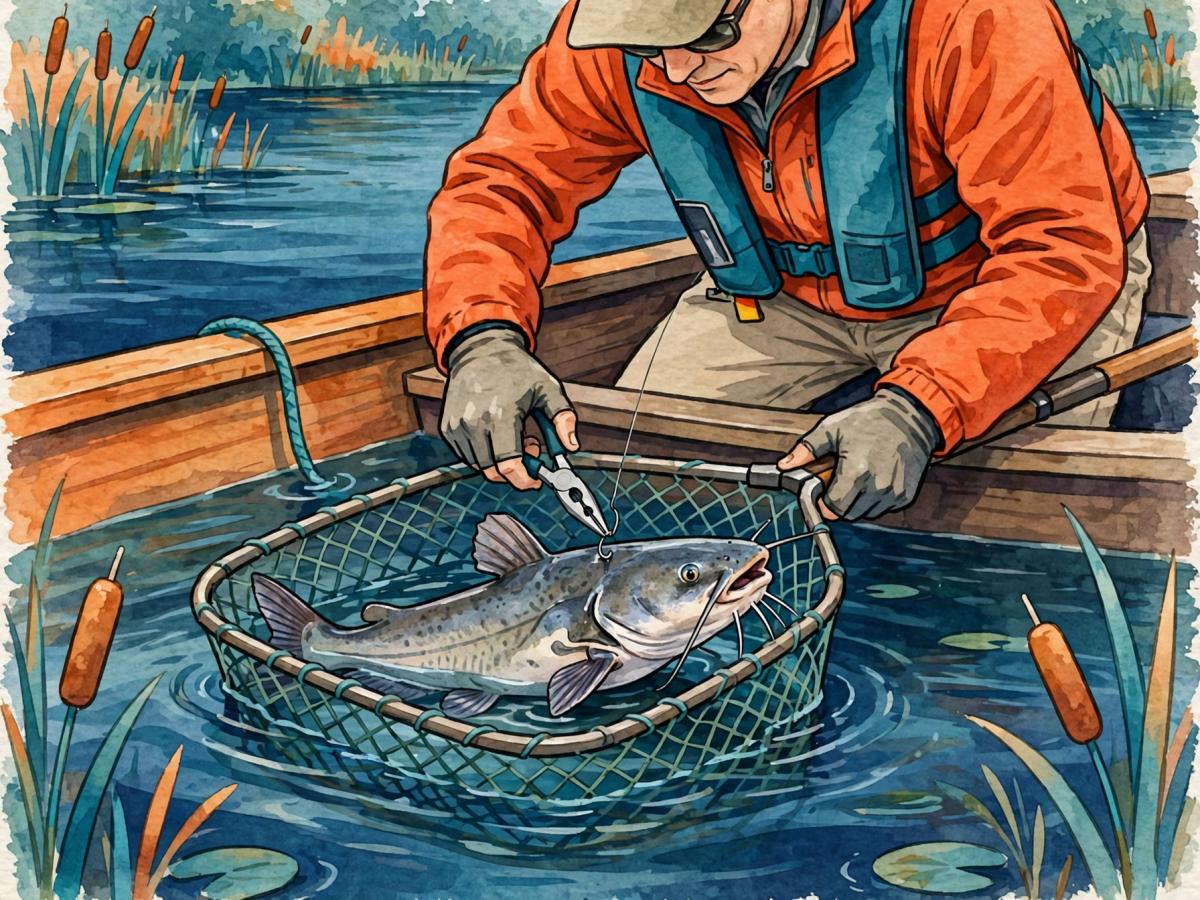
Make the landing calm and close to the water
A catfish can turn a quiet bank session into a rushed moment. Hooks, line, a net, wet footing, and sharp fin spines all deserve attention before the fish reaches the bank. The safest handling plan is simple: prepare tools first, keep the fish close to the water, protect your hands, remove the hook carefully, and follow current local rules for release or legal harvest.
This lesson focuses on safe handling and ending the trip responsibly. It does not teach cleaning or make claims about eating fish. Your local rules, the species in front of you, and your own ability should decide what happens next.
By the end of this lesson, you will be able to:
- Set up pliers, a suitable net, and a clear landing space before a bite.
- Keep hands away from catfish spines and support a fish close over the water.
- Make a careful release or legal-harvest decision and leave the site clean.
Prepare before the fish arrives
Keep long-nose pliers or another appropriate hook-removal tool within reach before you cast. If a net is suitable for the situation, set it where you can pick it up without stepping toward the edge. Clear a small landing area of loose line, hooks, bags, and rocks that could make you trip.
Know where the fish can go if the first landing spot is not workable. A fish that reaches a steep or cluttered bank can turn the next few seconds into a scramble. The plan should bring the fish to a stable, low position close to the water rather than asking you to chase it along the shoreline.
Keep a towel, glove, or other item from becoming a reason to squeeze the fish or cover its body improperly. Use tools for the hook and your judgment for the conditions. A calm setup is more useful than a large pile of gear.
Respect the spines
Catfish have sharp spines in the dorsal and pectoral fins. They can be difficult to see when the fish is moving, and a surprised grab can place a hand in the wrong spot. Keep your hands away from the fins and do not squeeze around them.
Do not handle a catfish by the mouth, gill covers, or a fin unless the method is appropriate for the species and you have been shown how to do it safely. This lesson does not prescribe one universal grip. Keep the fish supported close to the water and use a net or another suitable tool when that gives you better control.
Children and new anglers should have an experienced, safety-minded person manage the hook and fish until they can recognize the hazards. If the fish is thrashing, the hook is in a difficult place, or the footing is poor, pause and get help rather than forcing the moment.
Use tools for the hook
Keep the line controlled without wrapping it around your hand. Use pliers to hold the hook shank or connection when you can do so safely. Keep your face and free hand away from the hook point. If a hook is deeply embedded, difficult to reach, or likely to cause more damage when pulled, do not force it. Follow current local guidance and seek appropriate help.
A net can reduce the need to drag a fish across rocks or grass. Wet the net or hands when that is appropriate for the fish and local handling guidance. Avoid dropping the fish onto a dry surface. Keep the fish horizontal and supported rather than hanging it by the line.
The shortest safe handling path is usually the best one. Have the tool ready, remove the hook with control, and return the fish to the water or secure a lawful harvest without unnecessary delay.
Support close over the water
Keep the fish low, close to the water, and away from a hard bank. Wet hands can help protect the fish's outer surface when hands must touch it, but wet hands do not make a risky grip safe. Avoid squeezing the belly or pressing on the fins.
Support the body with two hands when the size and situation require it, keeping fingers away from the spines. If the fish is too large, too lively, or too difficult for your control, keep it in the net in shallow water while you reassess. Do not lift a fish higher simply for a photograph.
If the fish is being released, return it only when current local rules and conditions support release. Hold it in the water in a calm, supported position and allow it to move away under its own control. Do not throw or slide it from a height. If it does not appear ready, keep the handling close and seek help rather than extending the process.
Make the legal end-of-trip decision
Check the current rules for species, size, season, possession, and release before the trip. This lesson does not provide local numbers or a universal harvest decision. If harvest is legal and you choose it, secure the fish in the manner required for that place. If release is required or chosen, use the careful close-to-water process.
Do not keep a fish while you search for rules after the fact. A current rule check belongs in the plan, just like pliers and a clear landing area. If you cannot confirm the legal or safe next step, keep the fish in the water as much as possible and seek current guidance.
End with a clean bank
After the fish is handled, check the landing area and the path back. Remove loose line, bait containers, wrappers, broken tackle, and any net or container material that should not remain. Keep hooks and tools secured before packing the rest of the gear.
Look for line around grass, branches, and access paths. Remove it when you can do so safely. Do not reach into current, climb a bank, or enter private or protected areas to retrieve an object. Leave natural cover in place and take your own waste with you.
Field exercise: rehearse the landing zone
In daylight and without a live fish, lay out the rod, line, pliers, net, landing space, phone, and carry-out bag. Practice pointing to each item without stepping toward the water. Mark the place where you will stand, the low landing route, and the area you will avoid because of hooks, spines, unstable footing, or another hazard.
Then talk through three decisions: where the hook tool goes, how you will keep the fish close to the water, and how you will follow current release or legal-harvest rules. If the plan depends on a rushed reach or a grip you cannot explain, simplify it before fishing.
Safety and local-rule reminder
Use current official rules for handling, release, harvest, and access. Protect hands from dorsal and pectoral spines, keep hooks controlled, and use pliers or suitable tools. Keep the fish low and close over the water, and stop when the fish, footing, weather, or equipment exceeds your ability. Do not teach yourself a risky grip during a live encounter. Ask for help when the hook or fish cannot be managed calmly.
Recap
- Prepare pliers, a suitable net, clear footing, and a low landing space first.
- Keep hands away from catfish spines and do not force a difficult hook removal.
- Use wet-hand, close-to-water support and limit handling time.
- Follow current local release or legal-harvest rules without guessing.
- Pack line and litter out so the fishing place is ready for the next visit.
Test Your Knowledge
Ready to see how much you've learned? Take this quick 4-question quiz to complete the lesson.
Take the Quiz to Finish
Complete the quiz above to unlock the lesson completion.