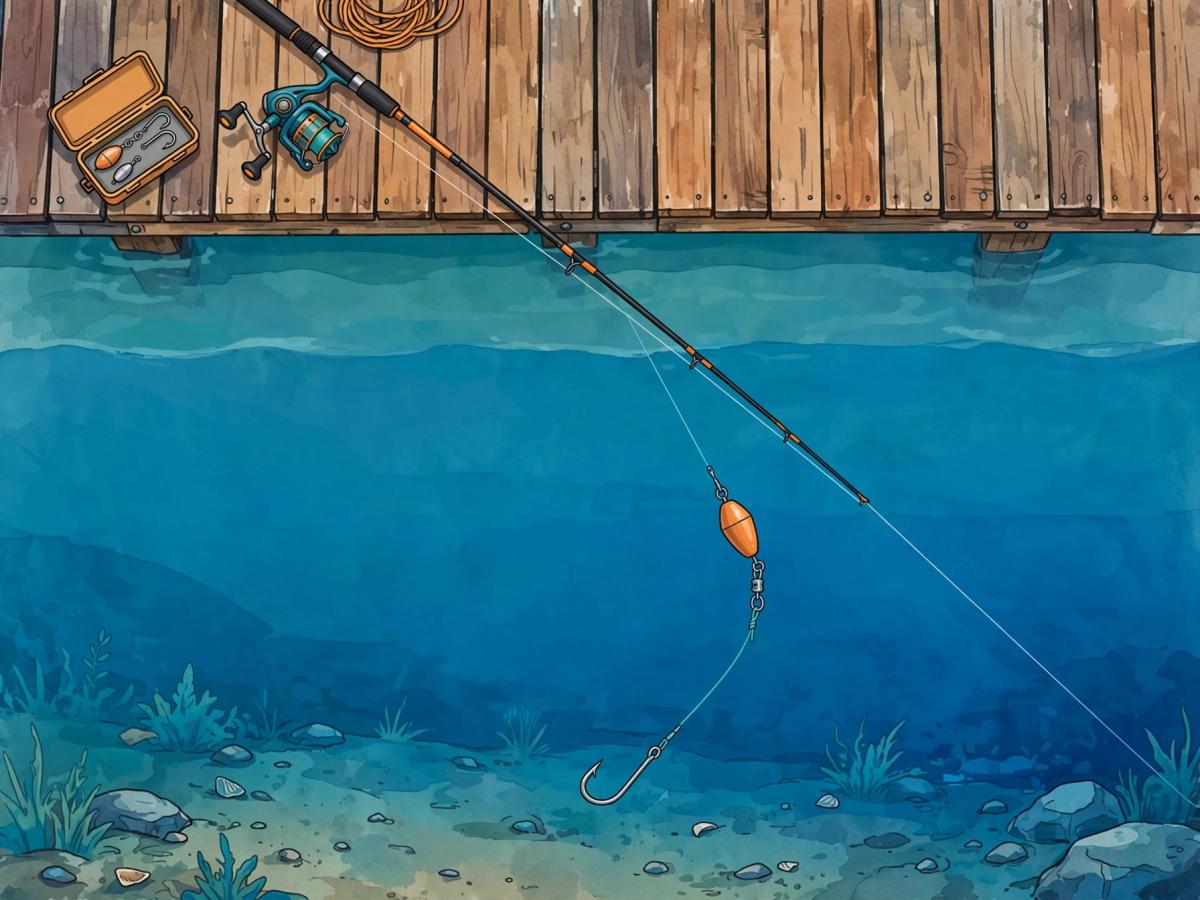
Build the rig around the question
A bottom rig is a way to place an offering and notice what happens near the bottom. It is not one universal recipe. Rod, reel, line, sinker, leader, hook, knots, current, cover, and local rules all affect the setup. The strongest beginner habit is to understand what each part does, then assemble a simple version you can inspect and manage.
Different waters call for different choices. A calm pond, a moving river, and a snag-filled bank may not reward the same sinker arrangement or leader length. Rather than memorizing one size or weight, learn how to check whether the rig stays where you intend, shows a bite clearly, and can be retrieved without creating a hazard.
By the end of this lesson, you will be able to:
- Name the basic parts of a bottom rig and explain their jobs.
- Choose a simple arrangement that fits the water, access, and current rules.
- Check knots, hooks, line path, and casting direction before fishing.
Know the parts
Rod and reel: The rod supports the cast and helps you manage tension. The reel stores line and controls how you recover it. Use equipment you can hold, cast, and respond with confidently. A setup that feels too heavy or awkward can make every other decision harder.
Main line: The main line connects the reel to the rest of the rig. It needs to be in good condition and free of obvious damage. Run your fingers over accessible line sections carefully and replace or repair anything you do not trust. Keep line away from feet, boat traffic, and sharp edges.
Sinker: The sinker helps the offering reach or remain near the bottom. Its shape and position affect casting, current response, snags, and how easily a bite is felt. Some rigs use a fixed position, while others allow the line to move through part of the setup. Choose only after considering the water and local rules. There is no single sinker arrangement for every situation.
Leader: A leader connects the hook area to the rest of the line in some setups. Its length and material influence how the bait moves and how close the hook is to the bottom. Keep the connection simple enough to inspect and replace.
Hook: The hook holds the offering and creates a point of contact with the fish. Choose a legal hook and a size that fits the intended bait and target under current guidance. Keep the point covered or secured whenever you are not actively rigging or casting.
A swivel or another connector may appear in some arrangements. Treat it as a tool for a particular connection, not a required part of every rig.
Decide what the rig must do
Ask three questions before choosing the arrangement:
- Where do I want the bait to be in relation to the bottom and cover?
- How will current, wind, or slope move the line and sinker?
- How will I notice a bite and retrieve the rig without stepping toward danger?
If you cannot answer the third question, simplify the location or setup. A rig that stays on the bottom but cannot be monitored is not a successful rig for that session. If the sinker rolls into wood, the line lies across another person's path, or the bank makes retrieval unsafe, change the plan.
Use a short test cast in an open, permitted area when possible. Learn how the rig lands, how much line you need, and whether the tip or line gives you useful information. Do not test by casting toward people, boats, roads, overhead branches, or fragile habitat.
Build in a calm order
Lay out the rod, reel, line, connection, sinker, leader, hook, and bait before you begin. Keep the hook secured until the final step. Tie one connection at a time and pull gently to seat the knot. A knot check is not a guarantee, but it can reveal a loose tag, crossing line, damaged section, or connection that does not look right.
Run the line through the rod guides and check that it is not wrapped around a tip or handle. Make sure the bail or spool is ready for the type of reel you are using. Keep the sinker and hook clear of your body while moving into casting position.
After the bait is attached, hold the rig in a controlled way. Look behind you and above you. Confirm that no person, pet, boat, line, or object is in the casting path. If the path is not clear, do not cast. Move or choose a different angle.
Check after the cast
A bottom rig changes after it lands. Current can move the sinker, a snag can hold the line, and a fish or other contact can alter the tip. Keep the rod where you can reach it without stepping toward an unstable edge. Notice the line angle, rod position, and changes that persist rather than reacting to every ripple.
If you need to reposition, reel in carefully and keep the hook controlled. Do not pull a snag by walking backward toward the water or wrapping line around your hand. If the rig is stuck and the recovery would put you at risk, leave it and report or remove the line only when you can do so safely.
Field exercise: dry rig rehearsal
At home or in a clear permitted area without a live hook, lay out your rig and name each part aloud. Explain what the sinker does, where the bait sits, how you will notice contact, and where you will stand before casting. Practice a knot check and a controlled reel-in.
Then make a safety sketch of the bank. Mark the casting direction, the no-cast zones, the place where the rod will rest, and the route you will use to leave. If any part of the sketch requires you to lean, climb, cross another person's space, or reach into moving water, redesign it.
Safety and local-rule reminder
Use current official guidance for hook types, tackle restrictions, species, and access. Keep hooks and sinkers secured while rigging. Wear eye protection or step well clear when tensioned line may release. Never cast without checking behind and above you. Do not wrap line around your hand, pull snags from an unsafe position, or continue when wind, current, footing, or equipment exceeds your ability.
Recap
- A bottom rig is a set of jobs, not one universal formula.
- Rod, reel, line, sinker, leader, hook, and connectors should fit the water and your ability.
- Test where you can observe the rig and retrieve it safely.
- Check knots, line path, hook control, and casting clearance every time.
- A simple rig is useful when you understand what it is doing.
Test Your Knowledge
Ready to see how much you've learned? Take this quick 4-question quiz to complete the lesson.
Take the Quiz to Finish
Complete the quiz above to unlock the lesson completion.