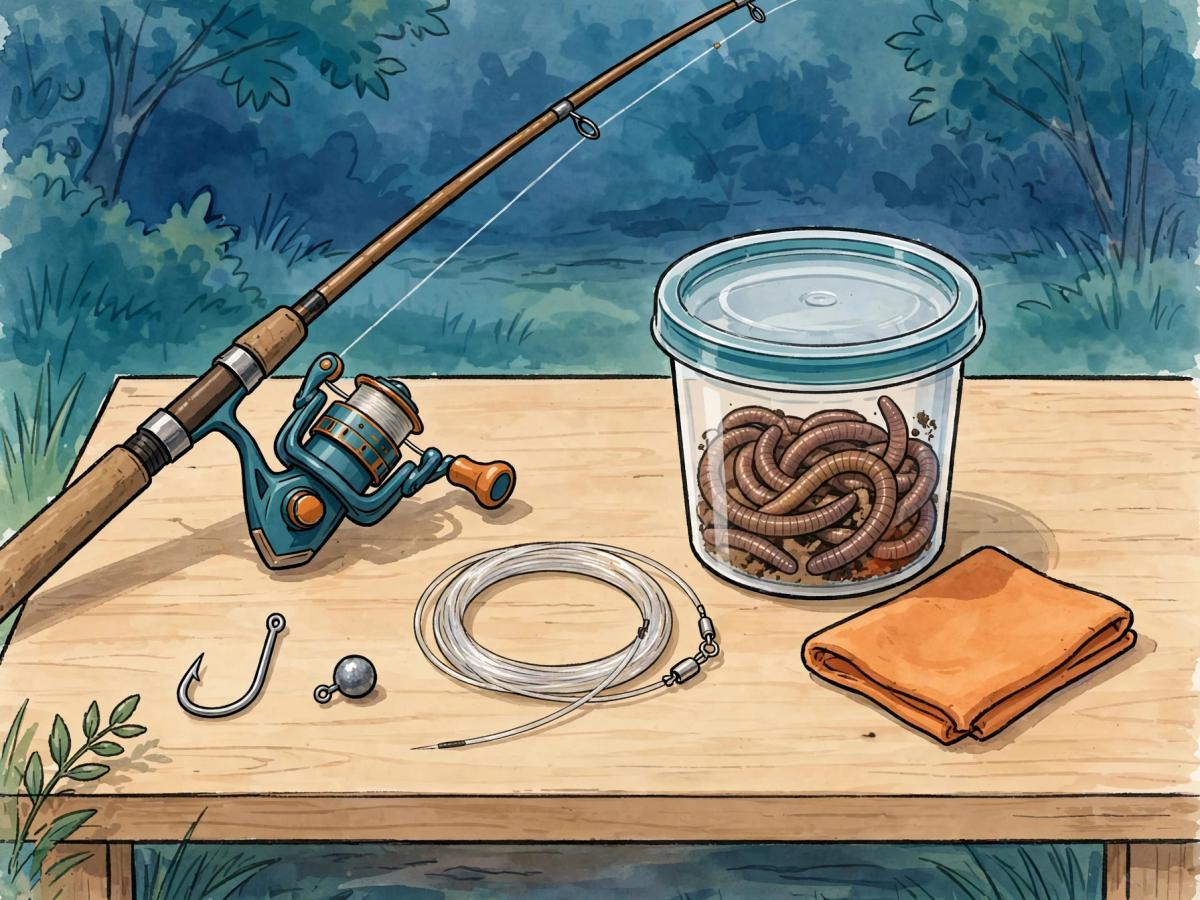
Choose bait with the whole trip in mind
Catfish bait decisions begin with more than smell or reputation. Start with what is legal for the water, what you can care for, what you can present safely, and what the conditions allow you to observe. Prepared baits, worms, legal live bait, and other permitted offerings can all have a place, but no bait guarantees a fish. Species, water, forage, weather, access, and local rules change the decision.
Good bait care also protects the place. A container that overheats, a live bait supply that is crowded, or an unused bait that is released without checking guidance can create problems beyond one fishing trip. Keep the plan modest, legal, and easy to monitor.
By the end of this lesson, you will be able to:
- Compare broad bait choices without turning any one option into a promise.
- Prepare clean, shaded, secure care for bait that needs it.
- Connect bait possession, movement, and disposal to current local rules.
Start with the rules and target
Read the current fishing guidance for the water and species before deciding what to bring. Rules may address which bait can be possessed or used, whether bait can be collected or transported, and what must happen to unused material. They can differ between nearby waters and can change with season or local conditions.
Then name the fishing question. Are you trying to keep a presentation still near the bottom, offer something that moves, or compare a prepared option with a live one? The question should fit your access and equipment. If you cannot monitor the bait, manage the line, or retrieve safely around cover, choose a simpler plan.
Avoid choosing bait because a label or story promises a result. Start with a legal option you can care for and present well. A clear plan gives you useful information even when the fish do not respond.
Think in broad bait families
Prepared bait: A prepared offering can be convenient when you want a consistent shape, scent, or texture. Keep it in a clean, secure container and follow the product or local handling directions that apply. Do not treat its scent as a guarantee. If it becomes difficult to keep on the hook or creates a mess you cannot manage safely, simplify the setup.
Worms and other terrestrial bait: Keep them cool, shaded, and in suitable bedding or a suitable container for the organism. Avoid crushing, overheating, drying, or soaking them. The exact care depends on the bait and the conditions, so do not assume one storage method works for every trip.
Legal live bait: Live offerings may need appropriate water, oxygen, temperature, space, and gentle handling. Use only what current guidance allows. Keep bait contained while you fish and do not move or release it until you know the approved action for the location.
Other permitted offerings: Some waters allow additional natural or artificial choices. Treat each as a local decision. The useful question is whether it fits the target, the water, the rules, and your ability to manage it safely.
These families help you organize a plan. They do not rank one bait as best everywhere.
Care is a performance decision
Bait that is stressed, overheated, crushed, dried, or crowded is harder to present thoughtfully. Prepare the container before you need it. Keep it shaded and secure. Separate bait types when their care needs differ. Check the container without repeatedly handling the bait.
For aquatic bait, use the water and aeration approach appropriate to the organism and current guidance. Do not assume that topping up with water from the nearest shoreline is allowed, or that transporting water between waters is harmless. For terrestrial bait, use appropriate moisture and airflow rather than sealing it in a hot, airless space.
Use a modest amount. Extra bait can become a care problem and a disposal problem. If conditions change, make a calm adjustment or end the bait plan rather than continuing with a setup that is clearly failing.
Match the bait to the presentation
A bottom presentation asks you to understand how the sinker, leader, hook, and bait are behaving together. Current may move the offering, wood may catch the hook, and a changing bottom may make a bite hard to feel. Choose a position and bait that let you monitor the line without leaning, wading, or casting across hazards.
Try one clear comparison. Keep the location and basic rig steady while changing the bait, or keep the bait steady while changing the location. Record what the water and line did. A quiet period does not show that a bait never works. It shows that this combination of conditions did not answer the question yet.
If the bait attracts nuisance activity, creates an unmanageable mess, or becomes difficult to handle, move to a simpler permitted option. Good bait choice includes the end of the cast, the hook, the retrieve, and the cleanup.
Field exercise: build a bait-care card
Before your next catfish trip, write a card with four sections:
- Legal: current water, target, allowed bait, collection or transport limits, and end-of-day rules.
- Care: clean container, shade, appropriate water or bedding, aeration if appropriate, and the amount you need.
- Presentation: the depth or area you will test and the condition you will watch.
- Change: one adjustment you can make if the first plan does not answer your question.
Keep the card with your tackle. After the trip, write one observation without a claim about guaranteed success. For example, you might note that rising flow made the live bait difficult to monitor, so a more protected bank would be a better next test.
Safety and local-rule reminder
Follow current official rules for bait use, collection, possession, transport, release, and disposal. Keep bait, hooks, and tools separate from food and drinks, and wash hands after handling. Do not reach into moving water or unstable banks to refresh a container. Stop when heat, weather, current, footing, or equipment exceeds your ability.
Recap
- Start with current rules, target, access, and the question you want to test.
- Prepared bait, worms, legal live bait, and other options all depend on local conditions.
- Care for bait with shade, clean containers, suitable conditions, and modest amounts.
- Change one variable at a time and avoid turning a quiet period into a universal verdict.
- The best bait plan includes care, presentation, and a responsible end.
Test Your Knowledge
Ready to see how much you've learned? Take this quick 4-question quiz to complete the lesson.
Take the Quiz to Finish
Complete the quiz above to unlock the lesson completion.