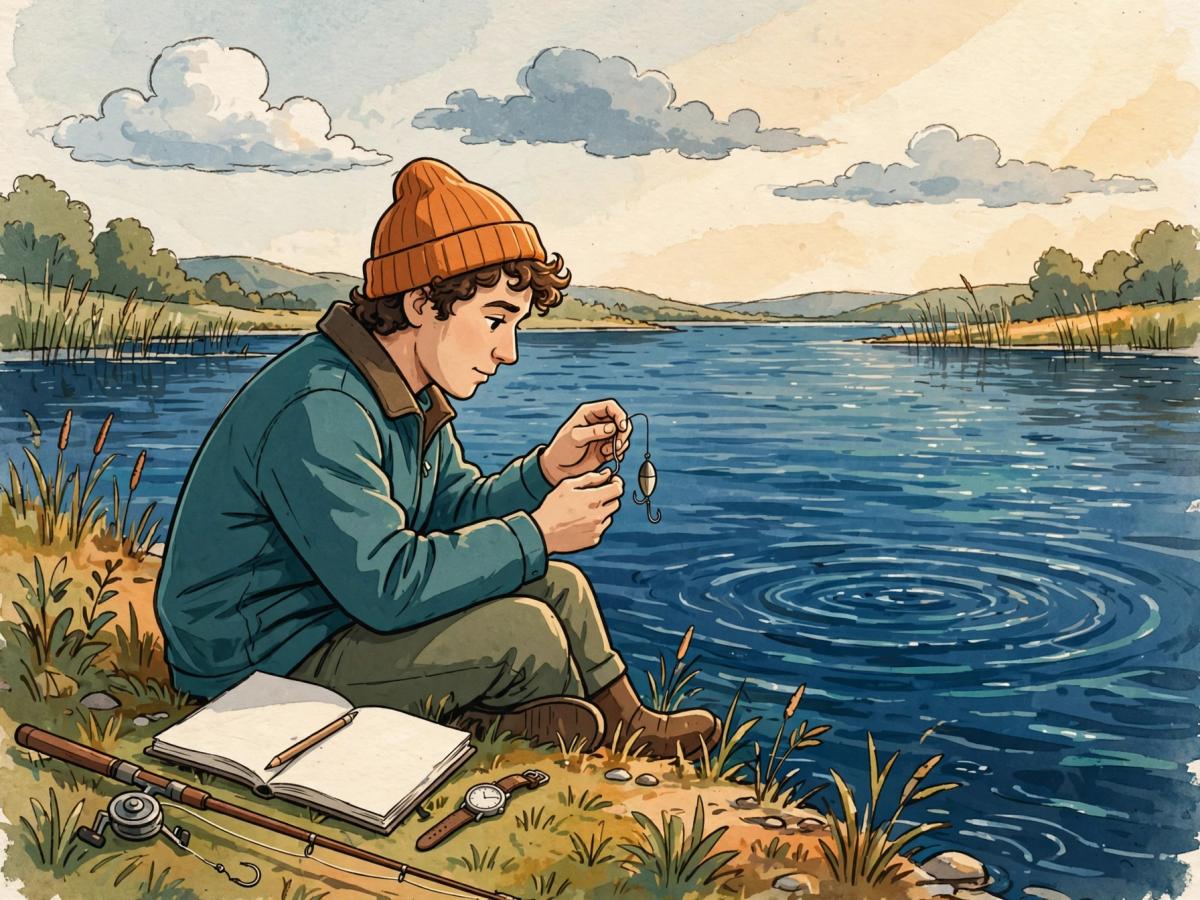
Keep the experiment small
A quiet stretch of fishing can tempt you into changing everything. New spot, new lure, new depth, faster retrieve, slower retrieve, then another change before the first one has had a fair look. By the end, you may have worked hard without knowing what the water taught you.
A smaller experiment makes fishing feel calmer and your notes more useful. You do not need a perfect system. You need a repeatable loop that helps you connect a choice with what happened next.
Use the observation loop
Try this four-part rhythm:
- Notice. Look at light, wind, water clarity, depth, cover, food, current, and any activity.
- Change one thing. Adjust one part of the plan, such as location, depth, speed, size, or angle.
- Fish long enough to learn. Give the choice enough casts or time to travel through the zone you are testing. The right amount depends on the water, presentation, and conditions.
- Record what happened. Note the choice, the conditions, and the response, including no response.
Then decide whether the next change has a clear reason. This loop turns a slow period into an observation session instead of a guessing contest.
Choose one variable
Suppose you are fishing a shaded weed edge with a small presentation. If you move to deeper water, keep the presentation and movement as similar as you can. If you change the retrieve speed, stay in the same area and depth for that test. If you change size, keep the angle and pace familiar.
You will not always be able to control every variable. Wind may push your line, current may change, or another angler may arrive. Write down the change you intended and any outside condition that altered the test. Honest notes are more useful than pretending the water was perfectly controlled.
Give the change a fair look
A single cast can be encouraging or unhelpful, but it rarely explains the whole picture. Watch how the presentation travels, whether it reaches the zone you intended, and whether the conditions make the choice difficult to evaluate. Make enough attempts to form a small observation, then move on when your attention or safety requires it.
A fish response is worth recording without turning it into a rule. Note where and when it happened, what you were doing, and what the water looked like. The same choice may behave differently on another day or another waterway.
Write down the useful details
A pocket notebook or phone note can hold a simple entry:
- Date, time, water, and weather.
- Light, wind, clarity, and any temperature reading you have.
- Feature and approximate depth.
- Presentation and the one change you made.
- Response: a fish, a follow, a snag, a change in bottom, or no response.
You are building a memory aid, not a scientific claim. After several visits, review the notes for repeated clues. Keep the wording specific: "two follows beside shade in light wind" tells you more than "shade always works."
Try this: one-change field exercise
Choose a safe area with one feature you can describe. Before casting, write a one-sentence plan such as, "I will test this presentation along the shallow side of the rock edge." Fish the plan long enough to understand its depth and movement.
Make one change only. You might move to the deeper side, slow the movement, or change the angle. Keep the other choices as steady as the conditions allow. Record what happened, then write one modest next question. For example, "Did the deeper side receive more food activity?" is a better next question than "This spot is always good."
Safety and local guidance
Make room before casting and keep hooks controlled while changing a presentation. Keep your footing in mind when you move between observations, especially near wet rocks, steep banks, current, or low light. Check current local rules for access, seasons, harvest, bait, and watercraft. Do not wade or approach water beyond your skill and equipment. A careful observation from shore is a successful practice session even when conditions tell you to stop.
Quick recap
- Notice the conditions before you decide what to change.
- Change one variable so the result can teach you something.
- Fish long enough to understand the zone and record no response as useful information.
- Keep conclusions tied to the place and moment where you observed them.
Test Your Knowledge
Ready to see how much you've learned? Take this quick 4-question quiz to complete the lesson.
Take the Quiz to Finish
Complete the quiz above to unlock the lesson completion.