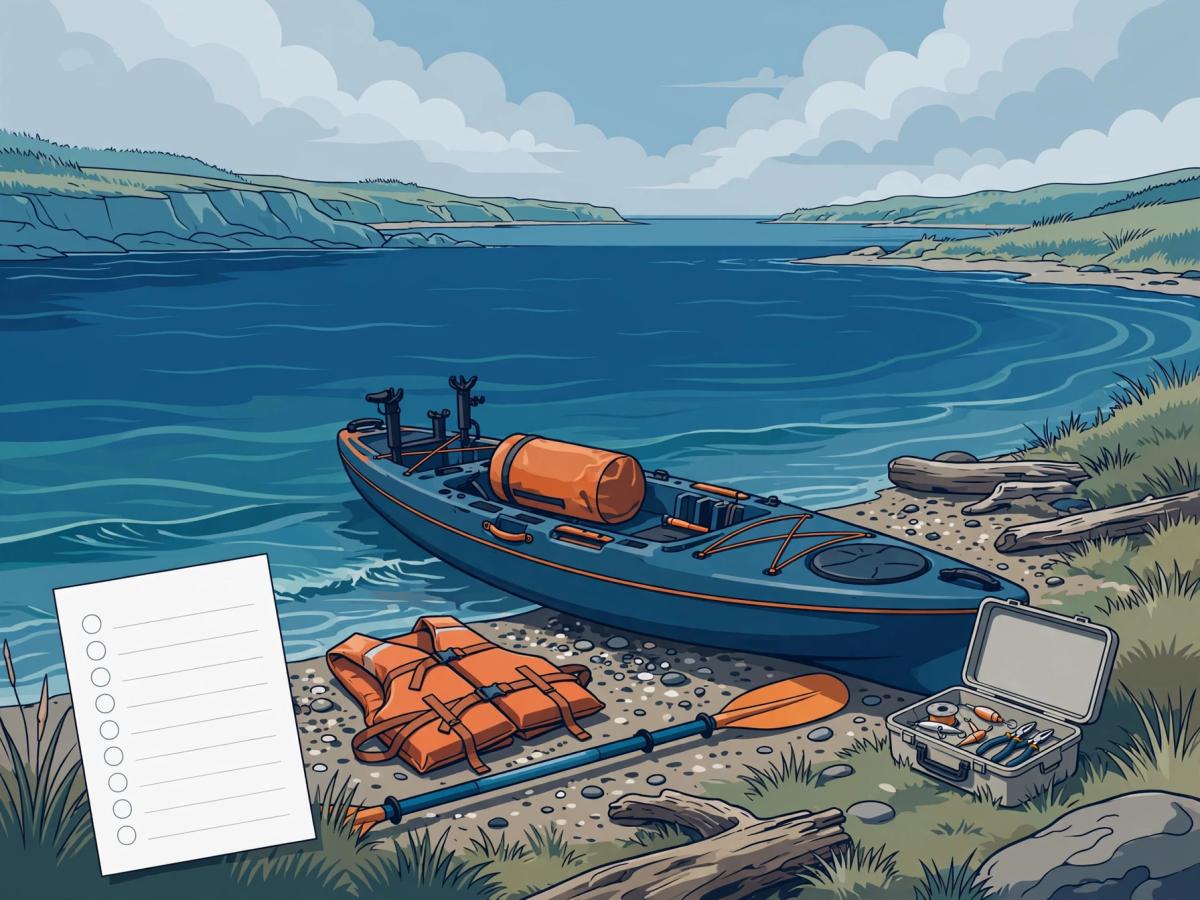
Plan the water before you launch
A kayak trip begins before the kayak touches the water. Saltwater changes around wind, tide, current, boat traffic, temperature, and visibility, and a launch that feels comfortable at one part of the day can feel very different later. A useful plan gives you a way to notice those changes early and choose a smaller trip, a shore-based option, or a day at home when the conditions ask for it.
By the end of this lesson, you will be able to:
- Review the forecast and broad tide or current information before loading the kayak.
- Match a route and return plan to your skill, craft, communication, and daylight.
- Make a calm go or no-go decision without treating a calm-looking surface as a guarantee of safety.
Start with the conditions, not the destination
Look at the marine or water-specific forecast rather than relying on a general weather icon. Pay attention to wind direction, expected speed, gusts, temperature, rain, thunderstorms, visibility, and the timing of changes. Wind that builds during the return portion matters more than the same wind at your back on the way out. A forecast can also be wrong for a particular shoreline, so compare it with what you see at the access point.
Review tide or current information when the area is affected by moving water. You do not need to turn the first planning exercise into a prediction of where fish will be. You need to notice when moving water, a narrow channel, or an exposed crossing could make the return harder. Ask a simple question: if the wind or current becomes stronger than expected, where can I turn around, land, or wait safely?
Make the route easy to explain
Choose a launch and fishing area that lets you describe your plan in plain language. Note the access point, the direction you expect to travel, the areas you may explore, and the route you will use to return. Include a time when you expect to be off the water. A route with several familiar exit points gives you more choices than a route that depends on completing one long crossing.
Tell a person who is not on the trip where you are going, when you plan to return, and what they should do if they cannot reach you. This is a float-plan habit, not a promise that anyone can monitor every minute. Update that person when the plan changes. If the launch area has a sign-in process or local reporting practice, follow it.
A first trip can stay close to the launch. Paddle a short loop, learn how the kayak responds, and keep enough daylight and energy for the return. The goal is to finish with choices still available. Distance alone does not make a trip better, and an ambitious route can turn a small weather change into a tiring problem.
Protect the things that help you decide
Wear a properly fitted life jacket from the time you prepare to launch until you are back on land. Keep a communication device protected from water and reachable without opening a complicated case. A second way to signal for help may be appropriate for your area and craft, so check current local boating guidance rather than copying a generic list.
Store keys, identification, medication, food, and other essentials where spray and a capsize are less likely to ruin them. Keep water available. Sun, wind, and paddling can drain attention before you feel thirsty. Secure loose clothing and equipment so a gust or quick movement cannot send an important item overboard.
Put the life jacket and communication plan ahead of rods and tackle. If you cannot reach the items that help you stay safe while seated, the packing plan needs to change. A simple arrangement that you can use with cold or wet hands is more useful than a larger collection of equipment hidden under bags.
Make the go or no-go decision
Use three questions before you launch:
- Can I handle the expected water with this kayak and my current skill? Include wind, current, waves, distance, temperature, and the route home.
- Can I communicate and get out if the plan changes? Consider protected communication, known access points, daylight, and the person who has your plan.
- Can I turn around without pressure? Leave time and energy for a shorter route or an early return.
If the answer to one question is unclear, choose a smaller plan. If conditions exceed your skill or equipment, do not launch or continue. A shore-based fishing session, a launch inspection, or a weather-planning practice can still make the day useful. Calm water is not always safe, especially when cold water, current, wind, distance, or limited exits are part of the trip.
Field exercise: write the return plan first
Use a familiar access point or a map of a place you may visit. Without choosing tackle, write down:
- The forecast details you would check and the time you would check them.
- The launch, short route, alternate exit, and planned return time.
- The person who would receive your float-plan message.
- The condition that would make you stay close, turn around, or fish from shore.
- The items you would protect from spray and keep reachable while seated.
Read the plan aloud. If another person cannot picture where you will be or how you will return, make the route simpler. This exercise builds a decision habit before a real trip supplies pressure.
Practical safety and local rules
Wear a properly fitted life jacket and follow current local boating and fishing requirements for your craft and water. Requirements for lights, signaling equipment, registration, access, fishing seasons, size limits, or protected areas vary by location and can change. Check the current official guidance for the water you plan to use. Tell someone the plan, protect communication devices, and stop when weather, water, fatigue, or visibility moves beyond your skill or equipment. A planned shore-based alternative is a responsible choice.
Recap
- Read the water-specific forecast, wind changes, visibility, and broad tide or current information.
- Choose a route with known exits, a clear return time, and a person who has the plan.
- Keep a fitted life jacket, protected communication, water, and essentials reachable while seated.
- Make the trip smaller or stay ashore when conditions or uncertainty exceed your skill or equipment.
Test Your Knowledge
Ready to see how much you've learned? Take this quick 4-question quiz to complete the lesson.
Take the Quiz to Finish
Complete the quiz above to unlock the lesson completion.