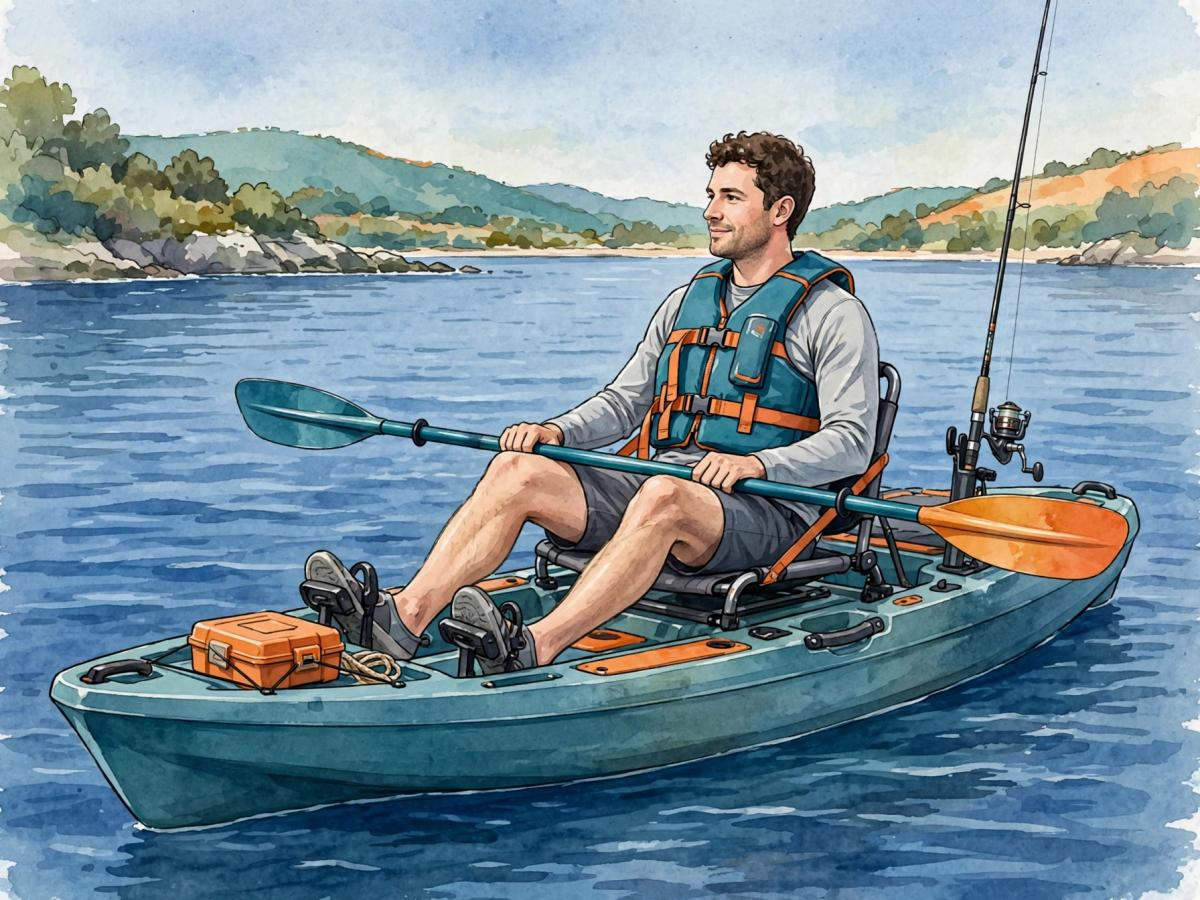
Stay stable and comfortable
A fishing kayak asks you to make many small movements from a narrow, moving platform. Reaching for pliers, turning to look behind you, lifting a rod, or taking a drink can change your balance. Stability improves when your body stays low, your feet are supported, your paddle remains available, and the things you need are secured within easy reach.
By the end of this lesson, you will be able to:
- Use a low, supported seated position and calm paddle movements.
- Arrange rods and tackle so reaching does not require a sudden twist or stretch.
- Notice fatigue, heat, cold, wind, and water changes before they remove your choices.
Let the kayak support your balance
Sit with your hips settled in the seat and your feet supported where the kayak is designed to place them. Keep your center of weight low. Relax your shoulders and use your torso for small turns instead of leaning your upper body far outside the kayak. A stable position feels quiet. It gives your paddle and hands a predictable starting point.
Your paddle can help you brace and move, but it is not a reason to reach beyond your comfortable balance. Keep both hands available for a controlled paddle movement when the water or your position changes. Practice looking over each shoulder while keeping your hips centered. If you have to lift your body, twist hard, or pull on a fishing rod to stay balanced, return to a neutral seated position before doing anything else.
Kayaks differ in width, seat design, cockpit shape, and intended use. Follow the craft maker's instructions and stay within the movements the kayak was designed to support. A technique that feels comfortable in one kayak may be a poor choice in another.
Move one thing at a time
Fishing creates a chain of small distractions. A lure catches on a guide, a wave pushes the bow, or a fish changes direction while you reach for a tool. Slow the chain down. Secure the rod you are not using before picking up another item. Keep hooks covered or contained whenever you are moving them around the kayak.
Use rod holders only when the rods are stable and the lines cannot interfere with your paddle, legs, or another person. Point rod tips where they will not catch on branches, dock hardware, or nearby anglers. A tether can keep a tool from disappearing, but it should not create a loop that catches your paddle or feet. Test every tether while seated and moving slowly.
Keep the highest-use items in the same places each trip. Pliers, a hook-removal tool, water, a communication device, and a landing aid should be reachable without opening several containers. A simple routine reduces the amount of looking, twisting, and searching that happens when conditions are already changing.
Make comfort part of the safety plan
Water reflects sun and can make wind feel cooler than the air temperature suggests. Use sun protection that works for your skin, wear clothing that fits the forecast, and keep a dry layer protected from spray. Drink water before you feel depleted. Small, regular sips are easier to manage than waiting until you are distracted by thirst.
Notice your hands and legs. Cold, heat, cramps, and fatigue change how carefully you can control a paddle or handle a hook. If concentration is slipping, stop fishing and organize yourself while seated. Eat a small snack if you brought one. A break close to a safe access point is a useful part of a trip, not wasted fishing time.
Keep your phone, keys, medication, and other essentials protected. If a dry bag or case is difficult to open with wet hands, test the arrangement on land. You should be able to reach the items that help you communicate and return without standing or making a large movement.
Know when to return
The safest return decision is often made while you still feel comfortable. Watch for building wind, increasing chop, changing current, darker weather, reduced visibility, or the simple feeling that every movement takes more effort. Fatigue can make a familiar paddle home feel longer. Turn around while you have energy and daylight rather than waiting for the conditions to make the decision for you.
When you pause, point the bow or side of the kayak in a stable direction for the water you are on, keep the paddle under control, and make small changes. Avoid sudden reaches to catch a drifting object. If equipment goes overboard, your first responsibility is your own balance and communication. Let an item go when trying to retrieve it would put you at risk.
Standing or leaning far outside the kayak is not a beginner balance exercise. Only consider movements that the craft is designed to support and that you have practiced in appropriate conditions. For many anglers, seated fishing and a shore-based alternative provide better access to the same observations with less exposure.
Field exercise: rehearse the seated reach
On dry land, place a rod, pliers, water bottle, protected phone, and small tackle container where you expect to keep them. Sit in a position that matches your kayak. Without standing, practice each of these slowly:
- Pick up and secure a rod.
- Reach for pliers without leaning outside your comfortable balance.
- Take a drink and return the bottle to its place.
- Turn your shoulders to look behind you while keeping your hips centered.
- Move the paddle from one side to the other without tangling a line.
Move one item at a time and notice which reach makes you twist or lift. Move that item closer, secure it differently, or remove it from the plan. The purpose is to build a calm arrangement, not to prove how far you can reach.
Practical safety and local rules
Wear a properly fitted life jacket throughout the trip. Check current local boating requirements for your kayak, access area, signaling equipment, and fishing activity. Do not launch or continue when wind, current, cold water, visibility, fatigue, or equipment problems exceed your skill. Protect communication devices and tell someone your route and return plan. If stability or comfort is deteriorating, return early or choose a shore-based alternative. Never stand or lean beyond the kayak's design or your practiced ability.
Recap
- Keep your hips low, feet supported, and movements small and deliberate.
- Secure rods, hooks, lines, and tools before reaching for something else.
- Treat hydration, sun protection, clothing, and fatigue as part of the trip plan.
- Return while you still have energy and choices, and stay within the kayak's design.
Test Your Knowledge
Ready to see how much you've learned? Take this quick 4-question quiz to complete the lesson.
Take the Quiz to Finish
Complete the quiz above to unlock the lesson completion.