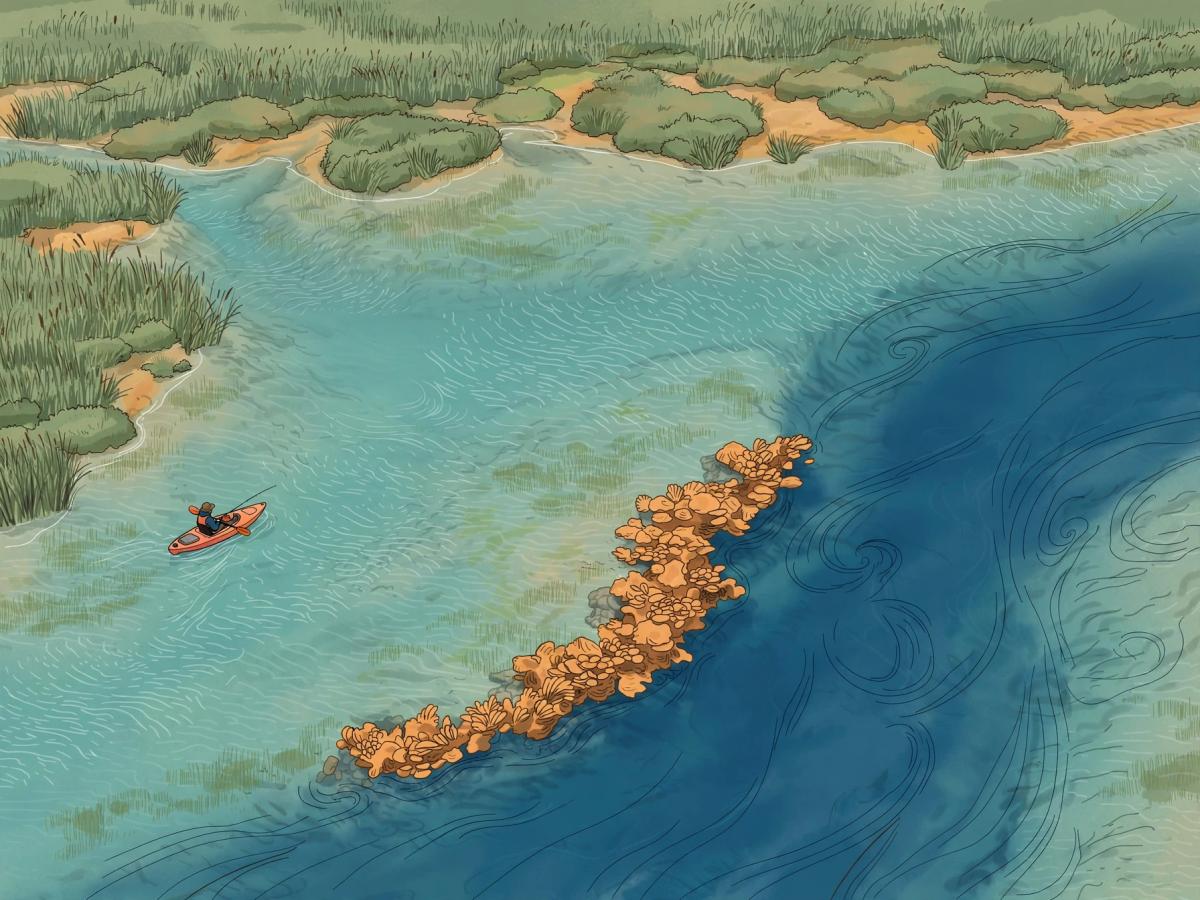
Read tides, current, and structure
Reading saltwater from a kayak starts with observation. A marsh edge, a narrow channel, a shallow flat, a wind ripple, or a line where moving water meets still water can tell you how the area is shaped and how the day is changing. These signs can help you choose where to look and how to move, but they do not promise a fish location. Fish respond to species, forage, weather, water level, and local conditions in ways that vary from place to place.
By the end of this lesson, you will be able to:
- Separate visible water features from assumptions about where fish must be.
- Compare wind, current, depth, and access before choosing a route or position.
- Use a bank or shore-based alternative when moving water exceeds your skill or equipment.
Begin with edges and changes
Look for places where one kind of water meets another. A marsh edge may create a line between vegetation and open water. A channel may appear darker or smoother than a nearby shallow flat. Wind can make one section rough while a protected bank stays textured but quieter. A current line may show a seam between water moving at different speeds or directions.
Observe before paddling directly into a feature. Notice how the wind affects the surface, whether the current strengthens near a narrow opening, and where you can safely pause or turn around. The first pass is a reading pass. You are collecting information about the water, not rushing to cast at every visible edge.
A visible line can move as tide, wind, or boat traffic changes. Treat each observation as a current condition. If the surface no longer matches the picture you formed earlier, update the plan instead of defending the first impression.
Use tide and current as movement clues
Tide and current change how a kayak travels. The same paddle effort can produce a different speed over the bottom, and a short crossing can become tiring when the moving water turns against you. Broad tide information can help you decide when to stay near the launch or when to avoid a narrow route. It should support judgment rather than act as a promise of feeding activity.
Watch floating leaves, foam, grass, or small pieces of natural debris from a safe position. Their direction and speed can show how water is moving at the surface. Compare that movement with the shoreline and with water that looks protected. Surface clues do not reveal every underwater flow, so keep the route conservative and leave room for stronger movement than expected.
Wind and current can work together or against each other. When they oppose one another, the surface may become more confused and the return may require more effort. A calm pocket behind a bank can also end quickly around a point or opening. Plan the return from the least favorable reasonable direction, not only from the easy drift you hope to get on the way out.
Notice structure without treating it as a guarantee
Structure includes changes in depth, drop-offs, points, submerged edges, docks, pilings, rocks, vegetation, and shaded banks. From a kayak, you can often see a change in color, surface texture, shoreline shape, or the way current bends around an object. Use these clues to decide where to make a careful observation or a short presentation, then compare what happens with the conditions around it.
Marsh edges and shallow flats may warm, cool, or move water differently from deeper channels. A current line near an opening may carry food, but the presence of a line does not tell you which species are present or how they will respond. Ask what you can verify: Is bait visible? Is the water moving? Is there a safe position and exit? Can you make a cast without crossing another person's path or placing yourself near a hazard?
Change one decision at a time. If you move from an exposed flat to a protected edge, keep the presentation simple so you can learn what the change did. If you change depth, direction, and lure at once, the trip teaches you less. A short note about wind, water movement, surface clues, and result is enough for a first log.
Keep the route ahead of the cast
A productive-looking feature can be a poor place to stop if it leaves you in a current line, close to boat traffic, or far from an exit. Position the kayak where you can keep clear of docks, channels, other boaters, and shallow hazards. Keep your paddle ready and avoid letting a cast pull your attention away from the route home.
When conditions or features become difficult to read, back away and choose a simpler angle. You can study a shoreline from land, a public pier, or another legal access point when the kayak route asks more of you than the fishing does. A shore-based alternative can teach the same observation habit without requiring a crossing or a moving-water maneuver.
Field exercise: draw the water before fishing it
Choose a familiar shoreline, public access area, or safe map view. Make a simple sketch with four layers:
- Mark the shoreline, marsh edge, channel, flat, visible structure, and likely access points.
- Add the expected wind direction and the broad tide or current direction.
- Circle the places where water movement may change and mark a safe turn-around or exit.
- Write one observation you would make before casting at each feature.
On the water or from shore, compare the sketch with what you see. Record one difference. The exercise is successful when the plan changes to fit the water, not when the water matches the drawing.
Practical safety and local rules
Wear a properly fitted life jacket and check current local boating and fishing requirements for access, seasons, protected areas, and equipment. Moving water, wind against current, boat traffic, cold water, and hidden structure can create hazards even when a shoreline looks calm. Do not paddle into conditions beyond your skill or craft. Keep communication protected, maintain an exit plan, and use a bank or shore-based option when that is the safer way to study the water.
Recap
- Read edges, surface texture, current lines, and structure as clues, not guarantees.
- Watch how wind and water movement change the route and the return effort.
- Position for a safe casting angle with clear distance from hazards and other boaters.
- Change one decision at a time and use shore access when the kayak route exceeds your ability.
Test Your Knowledge
Ready to see how much you've learned? Take this quick 4-question quiz to complete the lesson.
Take the Quiz to Finish
Complete the quiz above to unlock the lesson completion.