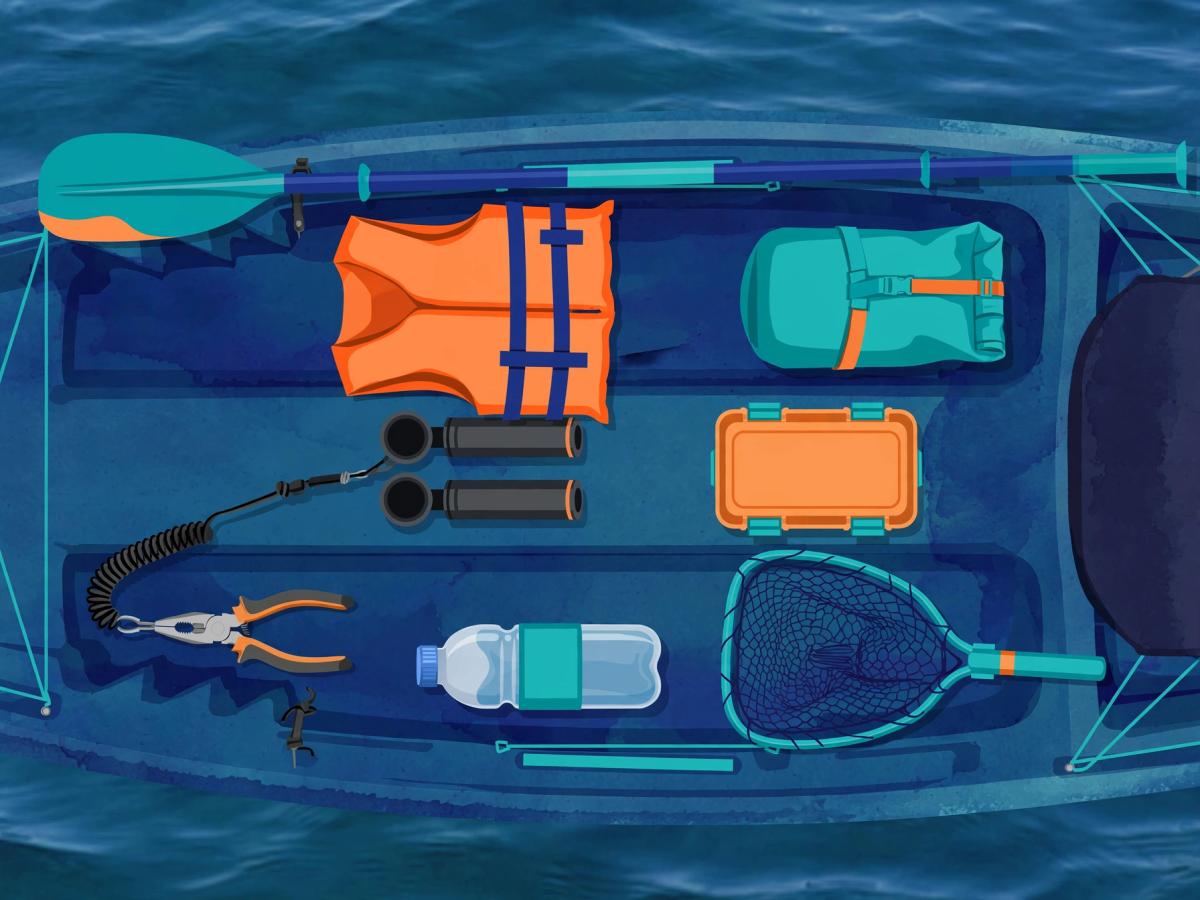
Pack tackle for a small craft
A small craft rewards a short list and a repeatable arrangement. Every extra box, loose hook, or unsecured rod competes with your feet, paddle, balance, and attention. The goal is not to carry every possible option. The goal is to bring the small set of tools and tackle that supports the day's plan while keeping the kayak clear enough to fish, paddle, and return safely.
By the end of this lesson, you will be able to:
- Choose a compact tackle selection that matches the water and the planned presentation.
- Secure rods, hooks, pliers, line, and containers so they stay out of the paddle path.
- Test your arrangement from a seated position before launch.
Start with a fishing plan
Choose one or two broad presentations for the trip before opening every tackle box. Think about the species and water you expect, the depth or structure you can reach safely, and the conditions that may change the plan. A smaller selection makes it easier to see what you have and easier to put everything back where it belongs.
Use a compact tray or container for the lures and terminal tackle you expect to use. Keep spare pieces contained rather than scattered in a cockpit or on a deck. If you bring a backup, make it a deliberate backup with a clear purpose. A small craft does not need a full wall of choices to teach you something about the water.
Separate sharp items from things you need to grab quickly. Hooks, cutters, and loose weights can injure a hand or catch clothing when the kayak moves. A closed box is easier to control than an open pile of tackle, and a cover protects both you and the gear.
Secure the pieces that can cause trouble
Rods belong in holders or secured storage when they are not in your hands. Keep rod tips clear of branches, dock hardware, other anglers, and your paddle arc. Check that a rod can be removed without pulling a line across your feet. A lost rod is frustrating, but a line around a paddle or leg can become a safety problem.
Keep pliers or a hook-removal tool reachable and tethered in a way that does not create a loop around your body, paddle, or seat. Test the tether on land. A tool that is technically attached but difficult to release or return is not well organized. Keep the tether short enough to control the tool and long enough to use it without a sharp pull.
Cover hooks while moving them between containers. Close a tackle box before paddling. If a lure has multiple hooks, give it a dedicated place where the hooks cannot catch a bag, net, or life jacket. Make a habit of looking at the deck before each paddle movement.
Keep safety and comfort within reach
Carry water where you can reach it while seated. Protect communication devices, keys, identification, medication, and other essentials from spray. A dry bag or case is useful only when you know how to open it with wet hands and can return it to a secure place. Keep a small amount of line management and hook-removal equipment available without emptying the whole kayak.
A landing net or other landing aid can reduce frantic reaching when a fish is close, but it needs a secure location and a path that does not cross your feet. Put it where you can reach it without leaning beyond your comfortable balance. If a net is awkward or catches everything around it, simplify the arrangement before launch.
Leave clear movement space. Your feet, paddle, seat, and emergency items need priority over a third box of lures. If the kayak has a tank well, hatch, or deck area, use it according to the craft's design and keep the load balanced. Do not place weight where it blocks a drain, interferes with controls, or changes the kayak's handling.
Load in the order you will use it
Pack the items that support launch, communication, and return first. Then place the day’s fishing tools in their assigned locations. Keep a closed tackle box stable, rods secured, pliers reachable, the landing aid controlled, and water available. Before you leave the shore, sit in the kayak and point to each item without looking around for it.
Ask four practical questions:
- Can I paddle on either side without hitting a rod or box?
- Can I reach the hook tool and communication device while seated?
- Can I close every container before moving the kayak?
- If I return in a hurry, can I secure the same items without sorting through loose gear?
If the answer is no, remove something or move it. A tidy plan is easier to repeat, and a repeatable plan leaves more attention for the water.
Field exercise: make a dry-land cockpit map
Place a towel or mat on the ground to represent the kayak's seated area. Add two rods, a compact tackle box, pliers, a landing net, water, a protected communication device, and one dry bag. Sit beside the layout and label three zones:
- Reach zone: items you can use while seated without a large twist.
- Secure zone: items that stay closed, tethered, or in a holder until needed.
- Clear zone: the space reserved for feet, paddle movement, and a calm return.
Rehearse picking up a rod, closing the tackle box, using the pliers, taking a drink, and putting every item back. If any movement crosses a hook or paddle path, redesign the layout. Repeat until the arrangement feels boring. Boring is useful when the kayak is moving.
Practical safety and local rules
Wear a properly fitted life jacket and check current local boating and fishing requirements for your kayak, access area, signaling equipment, and fishing activity. Secure sharp tackle, rods, tools, and containers before paddling. Protect communication devices and keep them reachable. Keep clear movement space, stay within the craft's loading and handling guidance, and stop to reorganize when clutter or a tangled line makes the kayak unsafe.
Recap
- Pack for the day's plan instead of carrying every possible lure.
- Secure rods, hooks, tools, and containers so they cannot enter the paddle or foot path.
- Keep water, communication, a landing aid, and hook tools reachable while seated.
- Test the arrangement on land, then remove anything that steals safe movement space.
Test Your Knowledge
Ready to see how much you've learned? Take this quick 4-question quiz to complete the lesson.
Take the Quiz to Finish
Complete the quiz above to unlock the lesson completion.