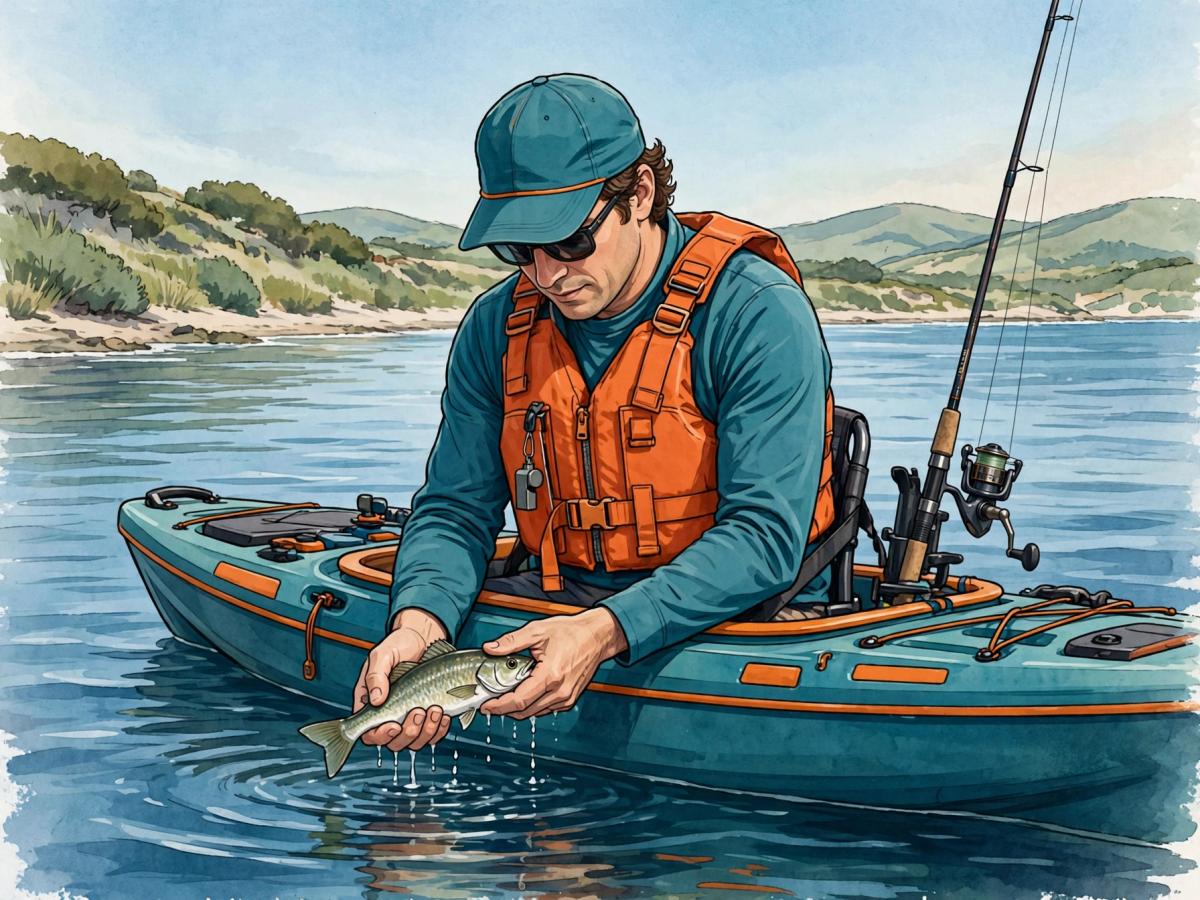
Handle fish and return safely
The moment after a fish reaches the kayak is a change in the task. Paddling and casting become handling, hook awareness, and balance work. A good plan keeps the fish low, your body centered, and the release or legal-harvest decision clear before you lift anything. The kayak, the fish, and your hands all move more than they would on shore, so simple handling is often the strongest handling.
By the end of this lesson, you will be able to:
- Prepare a seated landing and handling routine before the fish arrives.
- Use wet hands, low support, and careful hook removal to reduce avoidable harm.
- Check local rules and stop when a fish, hook, weather change, or kayak position makes handling unsafe.
Plan the moment before the hookset
Keep a landing aid, pliers or hook-removal tool, and a secure place for the rod within reach before you start fishing. Decide whether you are practicing release or considering legal harvest according to current local rules. That decision should happen before the fish is in your lap, when you have time to check seasons, size limits, species rules, and protected-water requirements.
When a fish is close, slow the sequence down. Secure or control the rod, keep your center of weight low, and bring the fish alongside the kayak rather than reaching far across the water. If a landing net is part of your plan, keep it controlled and use it without crossing the paddle or foot path. A fish that swims away before you have the right position is easier to accept than a sudden reach that compromises your balance.
Stay aware of hooks. A lure can swing when the fish moves, the kayak turns, or the line goes slack. Keep the hook and fish away from your legs, clothing, paddle, and communication gear. If a hook is buried in an unsafe place or the fish cannot be controlled, stop and ask for appropriate help rather than forcing the removal.
Keep handling low and supported
Wet your hands before touching a fish you intend to release. Support the fish close to the water and avoid holding it high over the kayak. A low position shortens the distance if it moves and reduces the chance that a drop becomes an injury. Keep the fish horizontal when the species and your safe grip allow it, with support under the body rather than squeezing the gill area or soft tissue.
Limit time out of the water. Have the tool, camera, or measuring step ready before lifting the fish. If the fish needs extra time or you need to study the hook, keep it supported in the water when possible. A quick, calm release is a better goal than a complicated series of poses or measurements.
Handle the fish according to the species and local guidance. Fins, teeth, spines, and delicate areas differ. Avoid placing fingers where a species can injure you, and avoid touching sensitive areas unnecessarily. If you do not know the safest grip, keep the fish in the water and seek local instruction rather than guessing.
Remove the hook with a quiet routine
Control the fish and the lure before reaching for the hook. Use pliers or a hook-removal tool to keep your fingers away from points. Work with the hook path in mind. A fish can turn suddenly, and a loose second hook can become a hazard even after one point is free.
If the hook comes out cleanly, keep the fish supported and return it to the water promptly. If the hook is deeply set, difficult to reach, or connected to a lure that cannot be controlled safely, do not trade your own safety for a perfect removal. Follow current local guidance for that species and situation, and get help when appropriate. A line cut or a professional local recommendation may be safer than repeated handling.
After release, watch the fish from a low position when possible. Give it the time and water movement it needs to swim away under its own power. Do not chase it with your hands or keep it out longer because a photo did not work.
Make legal decisions before the trip
Fishing rules change by location and can include species identification, seasons, size or slot limits, bag limits, gear restrictions, protected areas, and release requirements. Check the current official rules for the exact water before you launch. Keep a way to confirm the rules available without exposing a phone to spray, and avoid making a harvest decision from memory when the rule matters.
If harvest is legal and you choose to keep a fish, make sure your storage plan and handling method match the local requirement and the kayak's safe capacity. A legal decision still needs a safe handling plan. If storing a fish would block movement, bring hooks into an unsafe area, or compromise the return, release it when lawful or end the fishing session.
Know when to stop
Stop handling when balance is deteriorating, wind or current is moving the kayak, weather is changing, hooks cannot be controlled, or fatigue makes careful work difficult. Return the fish to the water and secure your equipment before making the next decision. You can also stop fishing for the day. Ending with a controlled release and a safe return is part of a successful trip.
Do not chase a fish into a position that forces you to stand, lean outside the kayak, or reach across another hazard. A shore-based practice session can help you learn fish handling, tool use, and hook awareness without adding a moving craft. Practice the sequence on land with a soft, unhooked object before trying to make it smooth on the water.
Field exercise: rehearse the low-handling sequence
On dry land, place a towel on the ground to represent the water and set out a rod, a landing aid, pliers, and a small container. Rehearse this sequence without a real fish or hook:
- Secure the rod while keeping the paddle and your feet clear.
- Bring the imaginary fish low and close to the safe side of the kayak.
- Pick up the tool without twisting beyond your comfortable seated balance.
- Keep the fish supported while you describe the hook path.
- Return the fish to the water area and put every item back securely.
Then say out loud the conditions that would make you stop: a buried hook, unstable kayak, worsening weather, unknown local rule, or worsening fatigue. The exercise is complete when the stop decision feels as prepared as the release sequence.
Practical safety and local rules
Wear a properly fitted life jacket and follow current local boating and fishing requirements for the species and water. Use wet hands, low-over-water support, careful hook control, and limited air exposure for release when appropriate. Protect yourself from hooks, teeth, fins, and sudden fish movement. Do not stand or lean beyond the kayak's design. Stop when handling becomes unsafe, and use local expert help or a shore-based alternative when needed.
Recap
- Prepare the landing and hook-removal tools before the fish arrives.
- Keep handling seated, low, supported, and brief, with wet hands for a release.
- Check current local rules before deciding to release or legally harvest.
- Stop when hooks, balance, weather, fatigue, or uncertainty make handling unsafe.
Test Your Knowledge
Ready to see how much you've learned? Take this quick 4-question quiz to complete the lesson.
Take the Quiz to Finish
Complete the quiz above to unlock the lesson completion.