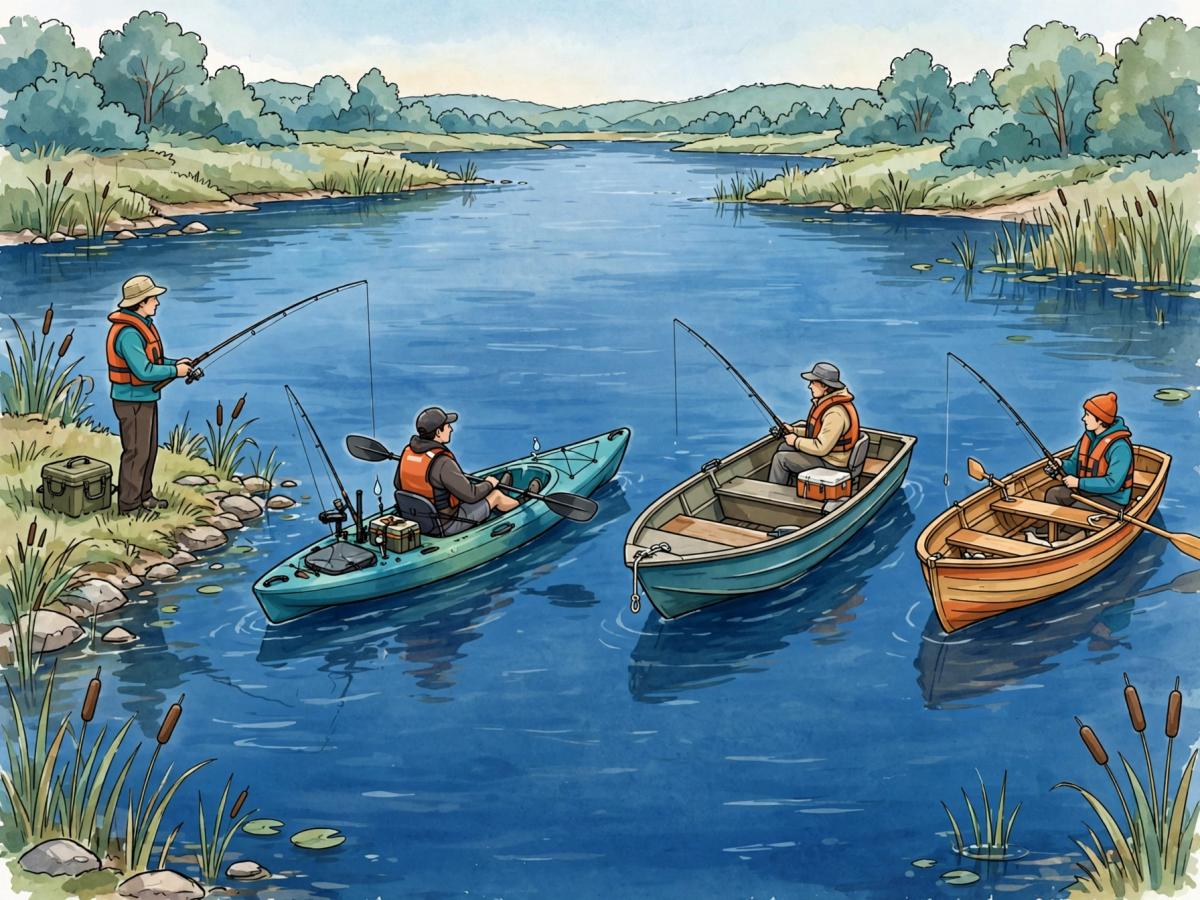
Choose the right platform
The best fishing platform is the one that fits the water, the access, the people, and the decisions you can make safely. Shore fishing, a kayak, a small jon boat, and a simple skiff each open some opportunities and add some responsibilities. Choosing well starts with the trip you can explain and manage, not with a particular purchase or a promise that one platform catches more fish.
By the end of this lesson, you will be able to:
- Compare common fishing platforms by access, water, skill, group needs, and safety.
- Separate a platform's useful strengths from the conditions it may not fit.
- Build a simple decision process without recommending a specific craft.
Start with the water and access
Shore access keeps the launch and return simple, but the shoreline may limit casting angles, depth, cover, or the amount of water you can reach. It can be an excellent way to learn a place, watch changing conditions, and practice a presentation before adding a moving platform. Check that access is legal and that the bank, rocks, current, and weather are appropriate for standing and walking.
A kayak can reach quiet edges and shallow water with little equipment, while placing every movement, rod, and safety decision close to the angler. It asks you to manage balance, weather, current, communication, and storage from a seated position. The craft's design and your training set the boundaries. A kayak may fit a short protected route and be a poor match for an exposed crossing or changing conditions.
A small jon boat can provide a stable work area for some waters and groups, with room for a second angler and more equipment than a kayak. Stability, draft, propulsion, weight, and access still vary by craft and setup. A simple skiff may suit open shoreline access or a group that needs more room, but it also brings additional movement, controls, traffic awareness, and required equipment. Describe the actual craft before assuming what it can do.
Match the platform to your skill
Skill is more than casting ability. It includes launching, returning, staying oriented, managing wind and current, using the craft's controls, communicating, and handling a problem while tired or wet. A platform that seems easy at the dock may demand more when the wind changes, the route becomes crowded, or an item goes overboard.
Choose a route that lets you practice one new responsibility at a time. A short shore session can teach the water. A protected kayak outing can teach seated organization. A small boat trip with an experienced operator can teach launch routines and safe positioning. Do not use a longer route to prove that you are ready. Use a shorter route to gather evidence about what the platform asks of you.
For motorized or otherwise powered craft, learn the controls and safety procedures for the exact platform under appropriate instruction. Follow the owner's guidance and current local requirements. Hookwise can help you think through the decision, but a broad description cannot replace craft-specific training.
Consider the people and the return
List who is coming, what each person can do, and what happens if someone becomes cold, tired, motion sick, or uncomfortable. A platform that fits one angler may not fit a group with different mobility, balance, or experience. Make room for life jackets, communication, water, and the gear needed to return safely, not only for rods and tackle.
Look at the launch, parking, carrying distance, boarding process, and exit points. The trip includes moving the craft on land and getting back out of the water. A platform that reaches a distant bank but is difficult to launch safely may create more risk than access. Include daylight, weather, wind direction, current, nearby traffic, and the time needed to return and secure the craft.
Think in terms of a minimum useful trip. If the platform lets you complete a short outing with energy left, clear communication, and a simple return, it may fit your current needs. If the platform requires conditions, equipment, or maneuvers beyond your ability, choose a smaller route or another platform.
Use a decision table, not a wish list
Write four headings: access, water, people, and safety. Under access, note where you can legally launch or fish and how the craft reaches the water. Under water, note exposure, depth, current, wind, and exits. Under people, note seating, mobility, storage, and experience. Under safety, note life jackets, communication, required equipment, training, and return options.
Compare platforms using the same questions. This keeps a broad choice grounded in a real trip. The comparison may point toward shore access for a first visit, a kayak for a protected route, a jon boat for a manageable group, or a skiff for a different water and trained operator. It may also point toward waiting until you can learn more. That is a useful result.
Field exercise: choose the trip before the platform
Describe one fishing trip you would enjoy without naming a craft. Include the water, access, distance, number of people, weather you would accept, amount of gear, and the time you want to be home. Now compare shore access, a kayak, a small jon boat, and a simple skiff.
For each platform, write:
- One way it may fit the trip.
- One condition or skill it would require you to manage.
- One reason you might shorten the trip or choose another option.
- The safety items and local requirements you would verify.
Choose the platform or shore plan that leaves the most decision room. Do not choose the one that makes the biggest promise. The exercise is about fit, not a shopping recommendation.
Practical safety and local rules
Wear a properly fitted life jacket whenever the platform and local guidance call for it, and check current local boating and fishing requirements before using a craft. Required equipment, registration, access, operating rules, and fishing regulations vary by location and platform. Do not use a boat or watercraft in conditions that exceed your training, craft, equipment, or group's ability. Follow craft-specific instructions and use shore access when it is the safer match.
Recap
- Compare platforms by water, access, skill, people, equipment, and return options.
- Shore access is a useful way to learn a place without adding craft movement.
- Kayaks, jon boats, and skiffs each bring different balance, storage, controls, and safety work.
- Choose the trip that leaves the most decision room, not the platform with the biggest promise.
Test Your Knowledge
Ready to see how much you've learned? Take this quick 4-question quiz to complete the lesson.
Take the Quiz to Finish
Complete the quiz above to unlock the lesson completion.