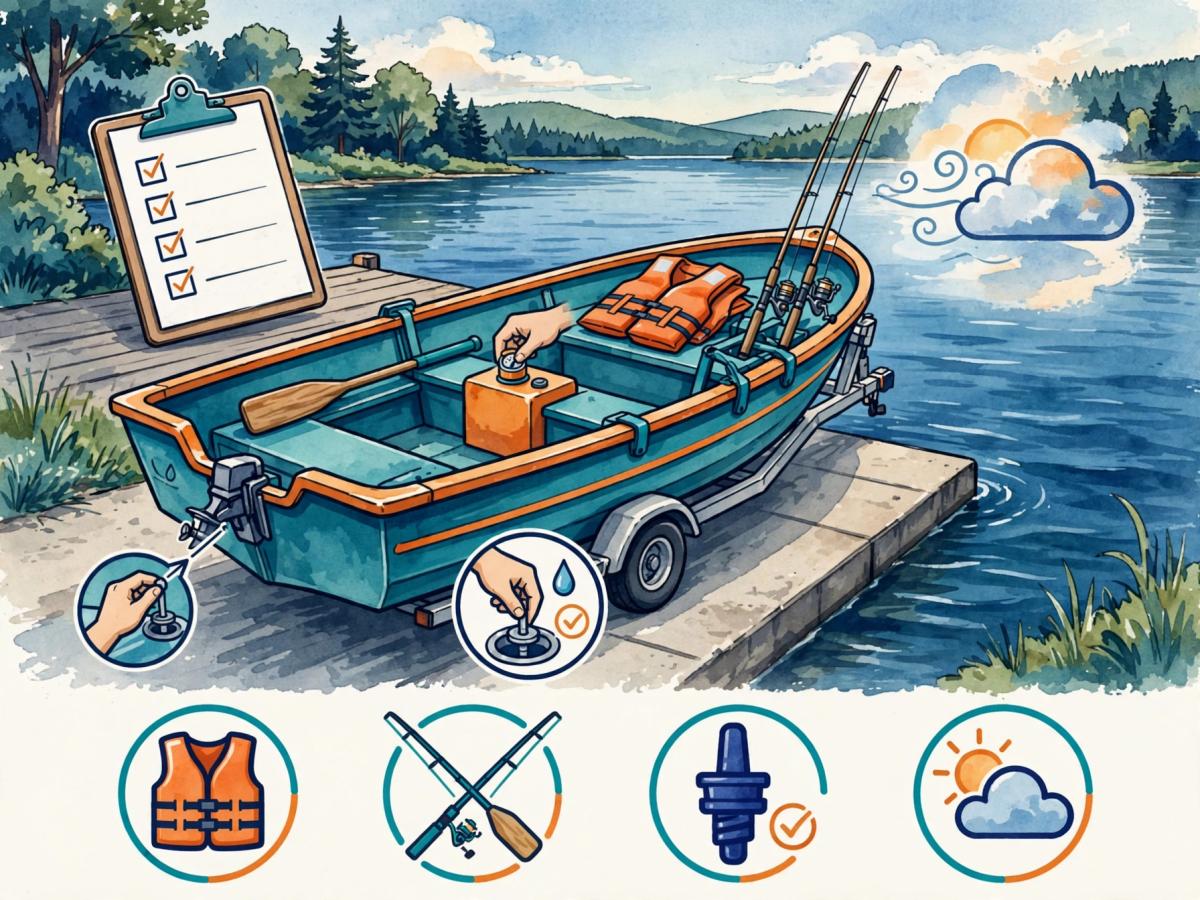
Make a calm pre-launch check
A pre-launch check is a short pause that protects the rest of the day. It catches the small problems that are easy to fix on land and difficult to solve after leaving the ramp. The exact list depends on the craft and local rules, but the habit stays useful: check people, hull, propulsion, communication, weather, equipment, and the walk back around the platform before you go.
By the end of this lesson, you will be able to:
- Make a calm walk-around before launching a small boat or other watercraft.
- Check life jackets, drain plugs, fuel or battery status, backup propulsion, and communication.
- Secure rods and gear while leaving time to stop when a problem is found.
Put people and life jackets first
Count the people, confirm that each person has a properly fitted life jacket, and make sure everyone knows where it is and how it closes. Wear it according to current local guidance and the conditions of the trip. Children and guests may need extra explanation or a different fit. A life jacket stored under a pile of tackle is difficult to use when the day changes quickly.
Tell the group the basic plan: where you are going, when you expect to return, what to do if the weather changes, and how to keep the deck or cockpit clear. People make better decisions when they know the plan before the motor starts or the boat leaves the dock.
Check the hull and water-management pieces
Walk around the craft slowly. Look at the hull, fittings, lines, seats, and any visible damage that could affect the trip. If the craft uses a drain plug, confirm that it is installed correctly before launching. If it has a bilge or other water-management system, check it according to the craft's instructions. The point is to know what the platform needs to stay usable, not to guess at a generic checklist.
Look inside for water, loose gear, or anything that could move underfoot. Close hatches and secure covers. Confirm that storage areas can be opened without a rod, line, or tackle box blocking them. A small issue on the trailer or dock deserves attention before the craft is in the water.
Confirm propulsion and a backup
For a powered craft, check fuel, battery status, connections, and the condition of the controls according to the owner's guidance. Do not assume a gauge or battery reading tells the whole story. For a craft that uses a paddle or oars, place the primary and backup propulsion where they can be reached without climbing over loose equipment.
A backup is useful only when it is present, usable, and appropriate for the craft. Do not launch with a propulsive problem that you cannot explain or manage. If you are not trained on the controls, seek craft-specific instruction before operating them. Follow current requirements for safety equipment, lighting, registration, and signaling.
Review weather, water, and communication
Check the water-specific forecast shortly before launch and compare it with what you see. Look for wind direction, gusts, rain, thunderstorms, visibility, temperature, current, and the timing of changes. A launch can feel easy while the return becomes harder later. Leave room for a shorter trip and an early return.
Protect a communication device from spray while keeping it reachable. Tell someone on shore the route and expected return. If you use a radio or another communication system, know how it works before you need it. A communication plan is part of the boat check, not an afterthought.
Secure rods and fishing equipment
Stow rods, tackle boxes, nets, tools, and coolers so they cannot slide, tip, or enter the steering, paddle, or walking path. Cover or contain hooks. Keep life jackets accessible and leave space for people to sit, move as the craft allows, and reach emergency items. The goal is a clear platform that remains clear after a wake, turn, or change in weather.
Use a short list of tackle for the planned water. More equipment creates more places for a problem to hide. Put the items you need first where they are reachable and keep containers closed while moving. Before leaving the ramp, ask another person to look at the arrangement. A second set of eyes often sees a line crossing a control or a plug left on the dock.
Finish with a walk-around
Walk around the craft again before leaving the ramp or dock. Confirm the drain plug if the craft uses one, the lines and connections, the life jackets, propulsion, communication, rods, and storage. Look at the launch area for anything you left behind. If a required item is missing, a control does not work as expected, or the weather no longer fits the plan, stop there.
A calm pre-launch check is allowed to end the trip before it starts. Move the outing to shore, shorten the route, get instruction, replace a missing item, or return another day. A launch that is delayed is easier to fix than a problem that begins after you leave the access point.
Field exercise: rehearse the walk-around
On a trailer, driveway, or dry dock, make a checklist with seven headings:
- People and fitted life jackets.
- Hull, drain plug if applicable, hatches, and water management.
- Fuel, battery, controls, and backup propulsion.
- Weather, water, route, and daylight.
- Communication and float-plan contact.
- Rods, hooks, tackle, tools, and clear movement space.
- Final walk-around and launch-area clean-up.
Walk the list in the same order twice. On the second pass, ask what would make you stop. Keep those stop conditions in the written checklist. A good check does not make you feel rushed. It gives you permission to find and fix a problem on land.
Practical safety and local rules
Wear properly fitted life jackets and check current local boating requirements for the exact craft and water. Required equipment varies by location, vessel, time, and activity. Check current fishing rules as well. Do not launch or continue when the hull, propulsion, weather, communication, equipment, or group readiness is uncertain. Use craft-specific instructions and qualified local guidance when a control or system is unfamiliar.
Recap
- Start with people, life jackets, the craft, propulsion, communication, and weather.
- Check a drain plug, fuel or battery, backup propulsion, rods, hooks, and storage when applicable.
- Use a repeatable walk-around and keep a clear stop condition.
- Fix problems on land or choose a smaller or shore-based plan when the check raises doubt.
Test Your Knowledge
Ready to see how much you've learned? Take this quick 4-question quiz to complete the lesson.
Take the Quiz to Finish
Complete the quiz above to unlock the lesson completion.