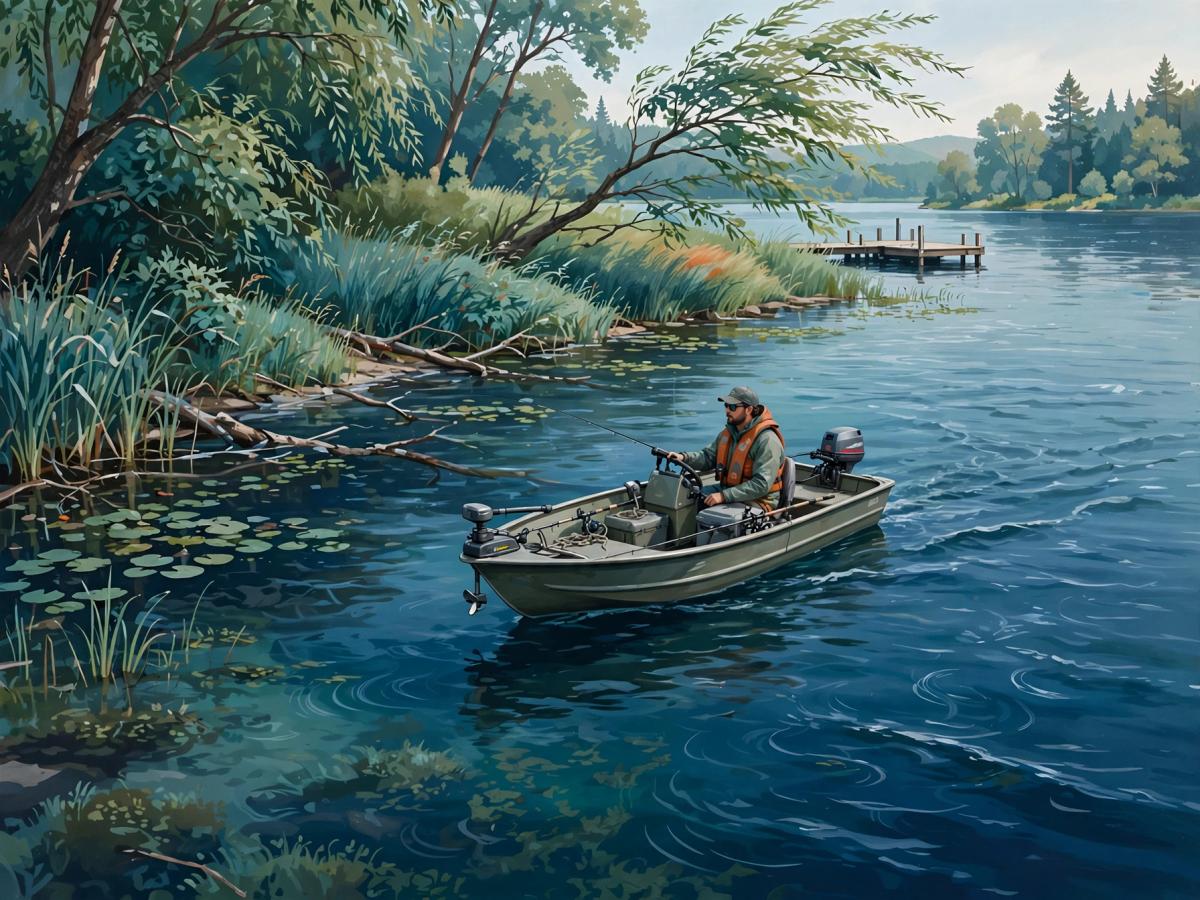
Position with wind and current
A fishing position is more than a place where a cast looks attractive. It is a place where the water, wind, current, depth, cover, boat traffic, and route home fit together. A good position gives you room to observe, make a controlled presentation, and leave without forcing a risky maneuver. Conditions vary by craft and water, so use broad clues and stay within the controls and techniques you know.
By the end of this lesson, you will be able to:
- Read wind, current, depth, cover, docks, and boat traffic before settling into a position.
- Choose a casting angle that keeps the craft and other people in mind.
- Maintain an exit plan and move to shore or simpler water when the situation exceeds your skill.
Read the surface before choosing a spot
Pause where you have a clear view of the water. Look for wind ripples, smoother water behind a bank, current seams, floating debris, changing color, shallow edges, and the way water moves around a point or dock. Observe for a few minutes before using the motor, paddle, or anchor system. The first job is to understand what the surface is doing.
Wind direction affects the surface and the effort needed to hold or return to a position. Current can move the craft even when the water looks smooth. Wind and current can cooperate, oppose one another, or change around a corner. Leave room for the strongest reasonable movement and avoid assuming that a protected pocket continues around the next bend.
Use visible signs to ask useful questions: How will the craft drift? Where will the wind push the line? Can I turn around without crossing another boat's path? What part of the shoreline remains reachable if the weather changes?
Connect depth and cover with access
Depth changes, vegetation, rock, docks, shade, points, and channel edges can create different fishing angles. They also create different hazards. Shallow water may be easy to read but can hide a propeller or damage a craft. Docks and pilings can catch lines and bring you near other users. A current line can look attractive while making the position difficult to hold.
Choose the feature you can approach and leave safely. Keep a respectful distance from docks, private property, swimmers, anchored boats, and other anglers. Follow local access rules and navigation guidance. If the ideal casting angle would put the craft into a hazard or another person's path, change the angle or choose another feature.
A broad, simple presentation can teach more than repeated repositioning. Make a cast, observe how the wind and current affect the line, and decide whether one small change improves control. Fish behavior still varies, so a good position creates an observation opportunity rather than promising a catch.
Keep other boaters in the plan
Scan before moving and continue scanning while fishing. Look behind the boat, across the channel, and toward launch routes or areas where other water users may appear. Keep rods and lines controlled when moving. A fishing angle is never more important than safe distance and clear communication with nearby people.
Use the controls appropriate to the craft and your training. A powered boat, a drift, a paddle, and an anchor each create different responsibilities. Follow the owner's guidance and current local navigation rules. Do not copy a maneuver from another boat when you do not know how that craft handles.
If you are unsure who has priority, where the channel runs, or how close you can safely pass, slow down, keep clear, and seek local instruction. A conservative position gives you more time to respond than a tight position next to structure or traffic.
Build an exit plan before the first cast
Before settling in, identify the direction you would leave if wind increases, current shifts, a storm approaches, or another boat enters the area. Keep a clear route around shallow hazards, docks, and anchored craft. Know where you could land, return to the ramp, or move to shore if the platform and access allow it.
The best position can change after one cast. If the craft drifts into a difficult angle, stop fishing, secure the rod, and reset. Do not keep casting while the boat moves toward danger. If you have to choose between a fishable angle and a safe route, keep the route.
Shore access can be the right answer when wind, current, traffic, or platform handling asks more than the day should. You can still study the same cover, depth clues, and surface movement from a legal, stable shoreline.
Field exercise: draw three casting angles
From a safe bank, dock area, or map view, choose a visible point, marsh edge, dock, or channel mouth. Draw three possible positions and label:
- Wind and current direction.
- The casting angle and the line path.
- The distance from structure, other boaters, and shallow hazards.
- The route you would use to leave if the wind or current increased.
Now cross out the angle that gives the best-looking cast but the worst exit. Compare the other two. This exercise teaches you to value control and departure space before the first presentation.
Practical safety and local rules
Wear properly fitted life jackets and follow current local boating and fishing requirements for the craft and water. Keep safe distance from docks, swimmers, private areas, anchored vessels, channels, and other boaters. Use only controls and maneuvers you know, follow craft-specific instructions, and maintain an exit plan. Stop or move to shore when wind, current, traffic, visibility, or depth exceeds your skill or equipment.
Recap
- Pause and read the surface, wind, current, depth, cover, and traffic before positioning.
- Choose a casting angle that leaves distance from hazards and a clear route out.
- Keep lines and rods controlled while moving and follow craft-specific operating guidance.
- Reset or choose shore access when the fishable angle removes safe control.
Test Your Knowledge
Ready to see how much you've learned? Take this quick 4-question quiz to complete the lesson.
Take the Quiz to Finish
Complete the quiz above to unlock the lesson completion.