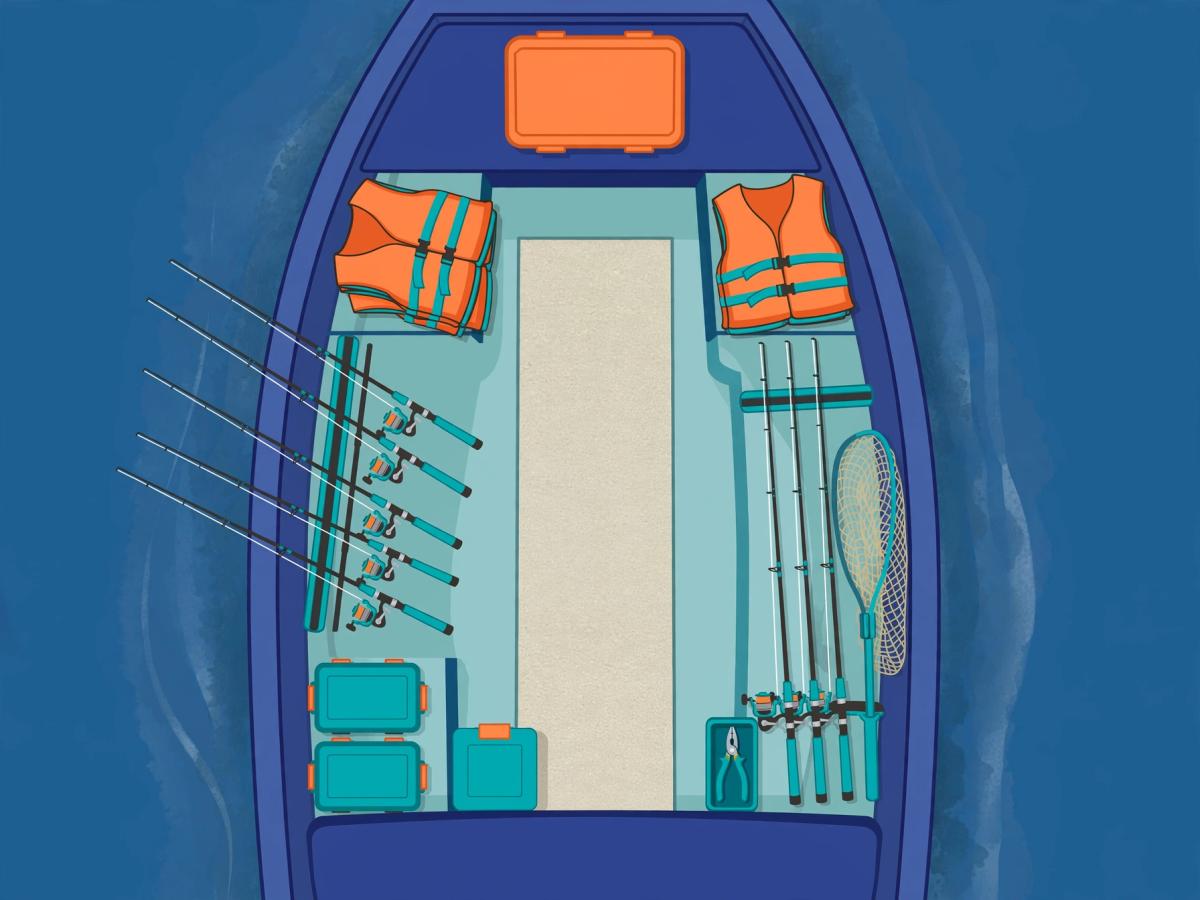
Keep a small boat organized
Organization on a small boat is a safety system. A rod across a seat, an open tackle box, a loose hook, or a cooler in the only clear path can turn a simple movement into a trip hazard. The best arrangement gives every important item a place, keeps sharp gear controlled, and leaves room for the people and movements the craft can safely support.
By the end of this lesson, you will be able to:
- Create clear walking or seated space that matches the boat's design.
- Secure rods, cover hooks, close tackle, and keep tools reachable.
- Protect life jackets and dry storage while reducing clutter that causes preventable problems.
Start with the space people need
Look at the boat from the position each person will use. Some small boats allow careful movement between seats, while others are intended for seated travel and fishing. Follow the craft's design. Do not create a walking path where the boat does not provide safe support, and do not block the space needed to sit, paddle, steer, or reach emergency equipment.
Keep the center of the boat and the controls free of bags, rods, and loose containers. Place heavier items where the craft's guidance allows and keep the load balanced. A cluttered or uneven arrangement can change how people move and how the boat responds. If you have to step over three items to reach a life jacket, the layout needs to change.
Make the route from each seat to the required safety items obvious. Life jackets, communication, first-aid supplies, and any required signaling equipment should not disappear under tackle. A person who is tired or wet needs the same clear arrangement as a person standing at the launch.
Give rods and hooks a home
Secure rods in holders, sleeves, or the storage the boat provides. Keep tips away from faces, lines, paddle paths, and other anglers. Rods should not slide under feet or across a seat when the boat turns or crosses a wake. Before moving, decide which rods stay stored and which rod is active.
Cover or contain hooks while moving. Close tackle boxes and return lures to their assigned compartments instead of setting them on a seat. If you need to change a lure, keep the hook under control and make the change where there is enough stable space. A sharp point that is easy to see is still a hazard when a boat rocks.
Keep line from crossing the walking or steering area. Cut or coil loose pieces and place them in a container. Line can catch a foot, a control, or a propeller. Cleaning up a small piece immediately is easier than finding it after it has wrapped around something important.
Keep tools reachable, not scattered
Pliers, cutters, a landing aid, water, and communication should be reachable from the seat where they will be used. Reachable does not mean loose. Give each tool a secure spot and return it after use. A tether can help with a small tool, but it should not create a loop that catches a person, rod, or control.
Use dry storage for items that water can damage. Test the closure and keep the key, phone, medication, and other essentials in places the group can identify. Labeling or using consistent locations can help guests return gear to the right place without opening every container.
Limit the number of open containers. Open bags collect spray, hide hooks, and make it harder to notice what has moved. Close a box before the boat changes position. If another angler needs a tool, hand it over deliberately and confirm where it will go back.
Reset after every change
Organization is not a one-time task at the ramp. After a lure change, landing, snack, weather shift, or move to another spot, take a short reset. Store the active rod, close the tackle, return the tool, collect line, and make sure life jackets and communication remain accessible.
The reset is especially important after a fish. Wet hands, a landing net, a moving rod, and a loose lure can occupy the same small space. Keep the fish and hook under control first, then put the deck back in order before starting again. If the boat becomes crowded, remove a container or end the fishing portion of the trip.
Guests may not know where things belong. Explain the clear path, the no-loose-hook rule, and where life jackets and communication are kept. A short briefing is friendlier than correcting a preventable mistake after someone trips.
Field exercise: create a boat layout card
Draw the top view of your boat or a simple rectangle representing the space you use. Mark the seats, controls, rod storage, tackle, life jackets, communication, water, tools, landing aid, dry storage, and clear paths. Use three symbols:
- A circle for items reachable from a seated position.
- A square for items that stay closed or secured until needed.
- A shaded area for space that must remain clear.
Now imagine a wake, a lure change, a landed fish, and a quick return to the ramp. For each event, list the two or three items that must be secured first. Keep the card with your trip checklist and adjust it when the real boat teaches you something new.
Practical safety and local rules
Wear properly fitted life jackets and follow current local boating requirements for the exact craft and water. Keep required safety equipment accessible, secure rods and sharp tackle, and leave space for the movements the boat is designed to support. Follow loading guidance, protect communication and dry storage, and stop to reorganize when clutter affects balance, controls, or visibility. A clear boat supports safer decisions, but it does not replace training or local rules.
Recap
- Match the layout to the boat's design and the movements people can safely make.
- Secure rods, cover hooks, close tackle, and keep line out of walking and control paths.
- Give tools, life jackets, communication, and dry storage consistent, reachable places.
- Reset the boat after each change so clutter does not build into a preventable problem.
Test Your Knowledge
Ready to see how much you've learned? Take this quick 4-question quiz to complete the lesson.
Take the Quiz to Finish
Complete the quiz above to unlock the lesson completion.