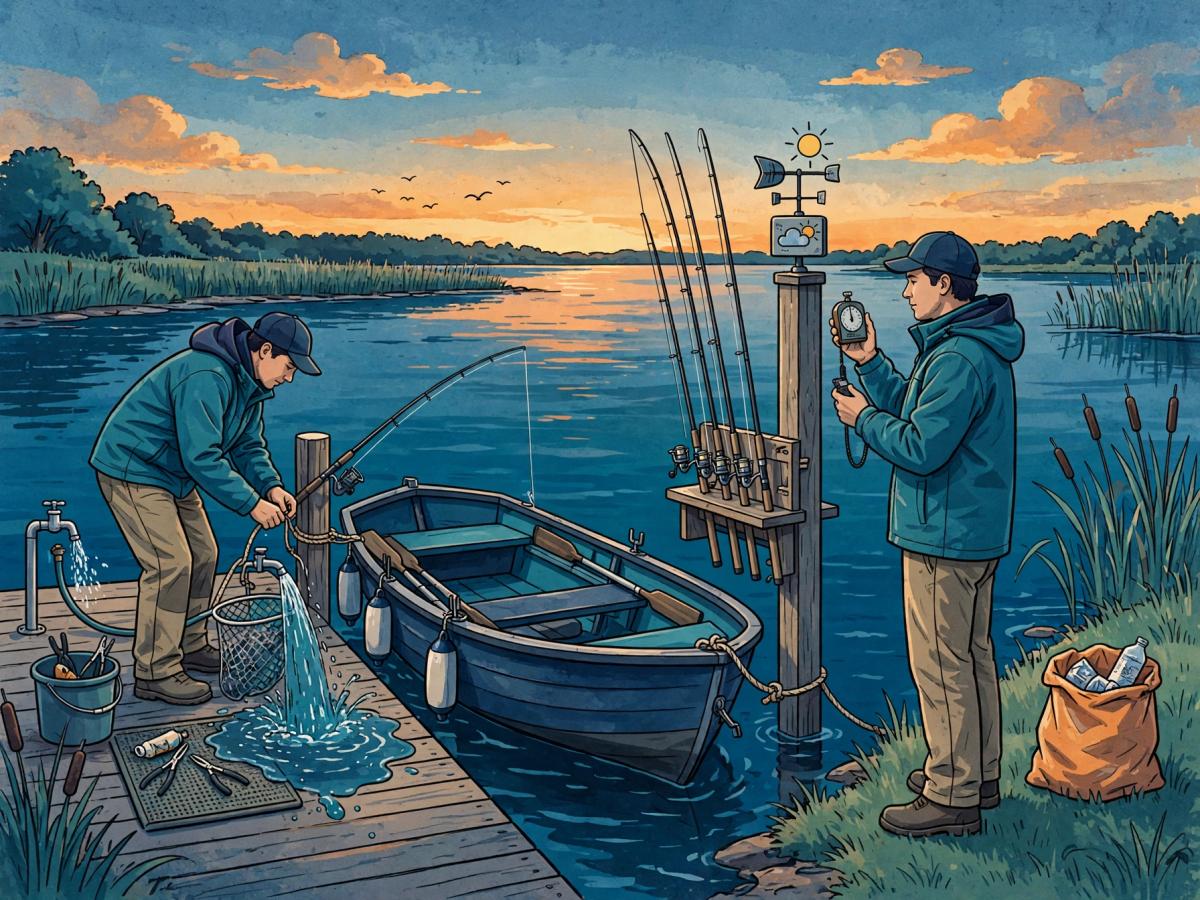
End the day safely
A fishing day is not finished when the last cast ends. The return, the ramp, the trailer or storage area, and the gear you leave behind all deserve attention. A calm end-of-day routine protects the people, the watercraft, and the place you used. It also makes the next outing easier because equipment is checked and stored while the details are still fresh.
By the end of this lesson, you will be able to:
- Start the return while daylight, weather, energy, and access still leave choices.
- Secure the craft and equipment without creating a rushed ramp problem.
- Rinse, store, and inspect gear while removing trash, line, and tackle from the shoreline.
Leave before the margin disappears
Watch the time, sky, wind, visibility, and energy before the final cast. A route that is simple in daylight can feel different as light fades or weather builds. Start the return with enough time to travel, secure the craft, clear the launch area, and handle a small delay. If the conditions change, end the fishing portion early.
Tell the person who has your float plan that you are returning or that the plan has changed. Keep communication protected and reachable until you are safely off the water. If the group is tired, cold, or distracted, simplify the return. Store rods and loose tackle before the platform becomes busy with landing work.
Do not stretch a trip because the fishing has improved late in the day. The return is part of the outing. A fish, a final cast, or a beautiful sunset is never a reason to ignore weather, visibility, fatigue, or a difficult launch.
Secure the craft at the access point
Follow the access site's instructions and give other users the room they need. Secure the boat, kayak, trailer, or other watercraft before sorting gear. Use the craft's intended tie-downs, supports, and storage points. Keep people away from moving parts, traffic, and slippery surfaces, and ask for help when the craft is heavy or awkward.
Check that rods, hooks, tackle boxes, tools, batteries, fuel containers if applicable, and personal items are secure before transport or storage. Close hatches and dry storage. Confirm that the items you need for the next step are separate from the items that can stay packed. A rushed pile on the dock is easy to lose and hard to inspect.
If the craft uses a drain plug or another water-management piece, handle it according to the craft's guidance and the access site's requirements. Do not guess at a system you do not understand. When in doubt, use the owner's instructions or qualified local help.
Rinse and store with a purpose
Water, mud, salt, and plant material can remain in a craft, on a line, in a reel, or inside a tackle box. Rinse and dry equipment according to its material and the owner's guidance. Saltwater deserves particular attention because residue can remain after the surface looks clean. Use the access site's wash area and local practices where available.
Open wet storage so it can dry, but keep small parts together. Remove standing water when the craft and instructions call for it. Hang or lay out life jackets so they can dry without being damaged, and inspect them before storing. Put communication devices, medication, and other essentials in their proper protected places rather than leaving them in a hot vehicle or wet bag.
A rinse is not a substitute for inspection. Look for damaged line, bent hooks, loose connections, cracked containers, missing tools, and anything that could affect the next trip. Record a repair or replacement while you remember the exact problem.
Leave the water and shoreline cleaner
Before leaving, scan the boat, dock, bank, parking area, and path for line, hooks, bait containers, packaging, and other trash. Pick up what belongs to you and safely collect abandoned fishing line when you can do so without touching a sharp or contaminated item. Use a container for loose hooks and line rather than a pocket or cup that can spill.
Follow local waste and cleaning rules. Do not rinse bait, fuel, oil, or chemicals into the water. Keep fish remains and other material out of areas where local rules prohibit disposal. The clean-up is part of being welcome at a launch and protecting the shoreline for the next person.
If another group is waiting, finish the immediate safety and clean-up steps, then move the craft and gear so the access point stays usable. A tidy exit respects people who are arriving as much as it respects the water.
Close the loop with a short note
Write down the conditions that mattered: wind, weather changes, water level or current clues, access conditions, equipment problems, and the moment you decided to return. This is not a record of guaranteed fish locations. It is a practical memory of the trip and the decisions that made the ending comfortable or difficult.
Share only the information that is appropriate for the place and your local rules. A short note can help you choose a better launch time, pack fewer loose items, or leave more daylight next time. It can also remind you to repair a line, replace a damaged tether, or learn a craft system before the next outing.
Field exercise: build a ten-minute landing routine
On land, set a timer for ten minutes and rehearse the end of a simple trip:
- Announce that the return is beginning and secure active rods and sharp tackle.
- Check the weather, daylight, energy, and route home.
- Secure the craft and personal items at the access point.
- Separate wet gear, dry storage, and items that need inspection.
- Rinse or wipe equipment as appropriate and leave it where it can dry.
- Walk the craft, dock, shoreline, and parking area for line, hooks, trash, and forgotten items.
- Write one note about the conditions or repair needed.
Repeat the routine slowly. Remove steps that do not fit the craft and add the current local requirements you need to verify. The goal is a calm, repeatable close, not a race.
Practical safety and local rules
Wear properly fitted life jackets until the trip is safely over and follow current local boating, access, waste, and fishing requirements. Keep daylight, weather, visibility, energy, and a clear return route in the decision. Secure the craft before sorting gear, use intended tie-downs and storage, and ask for help with heavy or awkward equipment. Handle hooks, line, fuel, chemicals, and damaged items carefully, and leave the launch and shoreline clean.
Recap
- Begin the return while daylight, weather, energy, and access still leave choices.
- Secure people, craft, rods, hooks, and personal items before sorting or cleaning.
- Rinse, dry, inspect, and store equipment according to its material and craft guidance.
- Remove line and trash, respect local disposal rules, and record one useful trip note.
Test Your Knowledge
Ready to see how much you've learned? Take this quick 4-question quiz to complete the lesson.
Take the Quiz to Finish
Complete the quiz above to unlock the lesson completion.