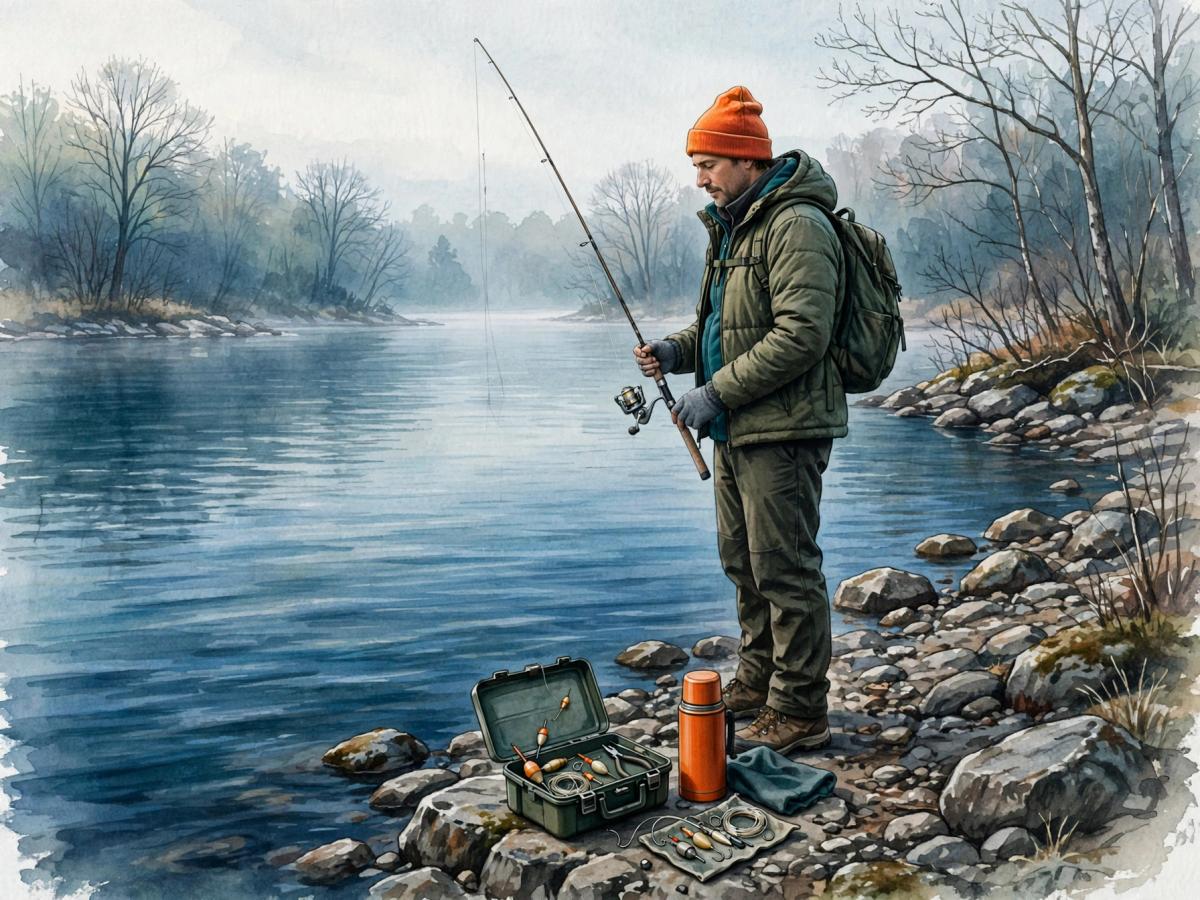
Seasonal Fishing: Cold-Weather Patience and Safe Planning
Cold-weather fishing can be quiet, beautiful, and demanding. Open water may still be available, but cold air, cold water, short daylight, wet hands, and slick banks reduce the margin for mistakes. This lesson stays with open-water planning. It does not teach ice fishing, ice travel, or how to judge whether ice can support a person.
Cold conditions can also reward patience. Fish may respond differently as water cools, but their locations and activity vary by species, water body, depth, weather, and food. A short trip with a clear purpose is often a better learning session than trying to cover a whole shoreline in uncomfortable conditions.
Learning goal
By the end of this lesson, you will be able to prepare for a cold open-water trip, choose a safe and useful observation window, and recognize when patience means slowing down or leaving rather than pushing through discomfort.
Start with access, not a fishing theory
Before choosing a presentation, inspect the route to the water. Look for ice on the bank, wet leaves, mud, steep slopes, exposed rock, thin edges, and places where a retreat could become difficult. A spot that was easy in summer may be unsafe after a freeze or high water.
Keep your position well back from unstable edges. You do not need to reach every castable pocket. Choose solid ground with room to turn, set down equipment, and leave. If the route requires a crossing, climbing, wading, or stepping onto uncertain surfaces, choose a different area or skip the trip.
Tell someone where you are going when appropriate. Carry a charged phone, a small light, and enough clothing to remain warm while you pack up. Plan how you will get home before the cold makes your fingers slow.
Dress for the stop, not only the walk
Cold-weather clothing should keep you warm while standing still beside water. Use layers that can manage wind and moisture, and protect your hands without making hook handling careless. Keep spare dry layers in a protected bag when practical. A hat, neck covering, and dry socks can matter during a short session.
Avoid cotton layers that stay cold when wet, and do not let wet gloves or sleeves become a reason to handle hooks quickly. If you lose feeling in your fingers, stop and warm up before tying, casting, or removing a hook. Cold reduces dexterity and judgment before an angler always notices.
Bring warm water or another suitable drink, even when you do not feel thirsty. Keep the session short enough that you can leave while you are still comfortable and coordinated.
Use patience as a method
Cold water can make a fast-moving plan difficult to interpret. A presentation may need more time in an area, or fish may use a different depth or cover than they did during warmer weather. That does not mean you should sit in one place indefinitely. It means each test should last long enough for you to see what it can tell you.
Choose one reachable area and one presentation you can control. Watch line angle, sink time, bottom contact when appropriate, current, wind, and any visible movement. Keep your conclusion modest. No response may mean the presentation, depth, timing, species, or location was wrong. It does not prove that the water has no fish.
Plan two or three short windows instead of a single open-ended session. For example, observe one protected edge, make one change, then move only if the route remains safe. This creates a natural stopping point and keeps discomfort from becoming the decision-maker.
Notice cold-weather changes
A sunny bank, a sheltered pocket, a creek inflow, a wind-protected wall, or a slight depth change may offer a different condition. These clues are worth observing, not treating as universal winter locations. Water can remain cold in the sun, and an inflow can be unsafe or unsuitable depending on flow and water quality.
Track recent weather. A stable cold period may be easier to read than a day that swings from warm to freezing. Rain, snowmelt, wind, and rising water can change clarity, current, and access. If the bank is changing faster than you can safely manage, the correct adjustment is to leave.
Avoid making a trip depend on a temperature number or a forecast that may change. Use the forecast to prepare, then use the shoreline to decide whether the plan remains sensible.
Build a short open-water plan
Write down four decisions before leaving:
- Safe access: Where will you stand, and what is your exit route?
- Weather limit: At what wind, precipitation, loss of light, or body warning will you stop?
- First test: Which one reachable condition will you observe first?
- Backup or ending: What is the safer second option, and when will you pack up regardless of activity?
A plan like this protects the purpose of the trip. You are there to practice observation and decision-making, not to prove toughness or stay until a bite happens.
Try this: one-hour cold-weather loop
Choose a familiar open-water area with stable access. Before casting, take five minutes to check the route, footing, wind, water edge, and visible movement. Set a timer for a short first window. Fish one manageable position, record two observations, and make one small adjustment. Take a warming break before deciding whether to continue.
If you move, compare the second position only if the route is still safe in the current light and weather. End the exercise early if your hands lose feeling, your layers become wet, your balance changes, or you begin rushing. A safe early stop is a successful decision.
Safety and local rules
This lesson is for open water only. Never step onto ice, walk onto ice, test ice with a rod, or assume that a frozen-looking surface is safe. If ice changes access, choose a different shoreline activity or wait for safer open water. Do not wade cold water beyond your skill and equipment.
Check current local rules, licenses, seasonal closures, protected species rules, access permissions, and harvest limits. Cold weather does not suspend regulations. Scan behind and above you before casting, keep hooks secure while handling layers, and give other people room on narrow banks.
Leave immediately for lightning, dangerous wind, rising water, worsening footing, loss of daylight, numbness, confusion, or any feeling that you cannot manage the route home. Contact local emergency services when a serious situation requires help.
Recap
Cold-weather patience begins with safe open-water access. Dress for standing still, plan short windows, watch for changing footing and weather, and choose one manageable test at a time. Cold-weather clues can guide observation, but species, water, food, weather, and local conditions vary. Ice travel is outside this lesson and should never be assumed safe.
Test Your Knowledge
Ready to see how much you've learned? Take this quick 4-question quiz to complete the lesson.
Take the Quiz to Finish
Complete the quiz above to unlock the lesson completion.