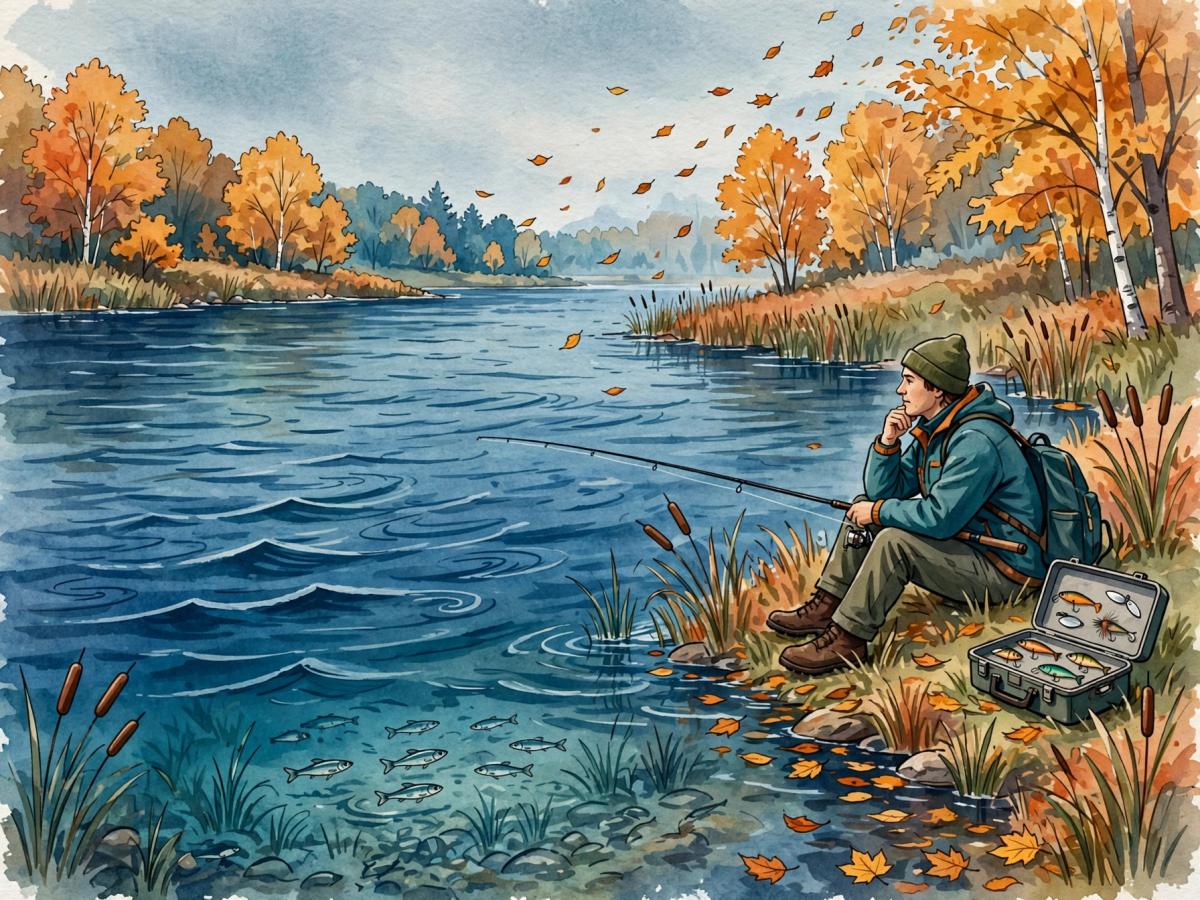
Seasonal Fishing: Fall’s Changing Signals
Fall can make the shoreline feel full of information. Light changes earlier, leaves collect along the bank, wind becomes more noticeable, and water begins moving toward colder conditions. You may see small bait or birds in one area and nothing in another. These signals can guide a first choice, but they do not create a guaranteed fall pattern.
The most useful fall habit is to notice the direction of change. A water body can move from warm to cool over several weeks, while a windy afternoon can create a local difference in a few hours. Start with what you can see today, then use your next choice to test a simple idea.
Learning goal
By the end of this lesson, you will be able to organize fall observations into a first plan, recognize when wind or visible forage deserves attention, and avoid confusing a seasonal clue with a universal rule.
Cooling is a process, not a switch
As daylight shortens and air temperatures change, water may cool at different speeds. Shallow coves, open flats, deep basins, and areas near current can respond differently. Some places may still feel relatively warm after a bright day, while exposed water changes quickly after a cold night.
Pay attention to the recent sequence rather than a single cool morning. Did several nights turn colder? Was the wind steady? Did rain add water or change clarity? Is the water level falling, rising, or staying steady? These details help you describe the condition without pretending every fish follows the same response.
If you measure temperature, record the depth, time, and location when safe. If you do not measure, keep your language observational: “the shaded bank feels cooler” is different from claiming that all fish have moved deeper.
Let light and leaves inform your eyes
Fall light can be lower and more angled. That changes the look of clear water, shadows, and bank cover. It may make a sunny edge easier to inspect in the morning and a sheltered edge more comfortable later, depending on wind and cloud cover.
Leaves can be useful information about season and water movement, but a pile of leaves is not automatically fish cover. Wind can push leaves into a quiet corner. Current can collect them along a seam. Rotting material can affect water color and smell. Observe whether the leaf line also creates a change in depth, current, shade, or visible food.
Avoid casting into clutter if it creates repeated snags or forces you to stand in an unstable place. A nearby clean edge may give you a better test and a safer retrieve.
Wind and visible forage
Wind can move small floating food, insects, and surface debris. It can also make one bank rougher, reduce visibility, and complicate line control. A windward shoreline can deserve a look if it is accessible and safe, but it is a clue to inspect rather than proof that fish are feeding there.
Visible forage is another useful signal. Look for minnows, insects, birds, surface dimples, or bait flickers. Ask how long the activity has lasted and whether it is connected to a depth or cover change. A single splash may be random. Repeated activity in a repeatable area is more worth testing, while still not guaranteeing a result.
Make your first presentation easy to watch. Fall wind and low light can hide small movements. A clear, controlled approach helps you learn whether the signal is worth another look.
Choose the first comparison
A fall plan can compare one meaningful pair:
- a windward bank and a protected bank,
- a sunny edge and a shaded edge,
- a leaf line with a depth change and a leaf line without one,
- visible forage and a nearby quiet area, or
- shallow water and a reachable, slightly deeper edge.
Choose the pair that your water and access make realistic. Fish the first option long enough to observe, then test the second with only one major change. If the wind makes casting unsafe or the bank becomes slick, abandon the comparison. The lesson is about decisions, not completing a checklist.
Keep the plan flexible
Fall can change quickly. Bring a layer that handles wind, keep your hands warm enough to tie and handle hooks, and avoid making the trip depend on one narrow location. A small backup plan might be a second bank, a different angle from the same safe position, or an earlier end time.
If a condition changes, update the question. Wind that was calm may now push into a new corner. Leaves may cover the edge you intended to fish. A cold rain may make the bank unsafe. A flexible angler does not need to defend the original plan. The new condition is the reason to make a new, smaller choice.
Try this: fall signal log
Choose one safe area and write three observations before casting: the direction of wind, the light on the water, and any visible forage or leaf movement. Add one possible interpretation, clearly labeled as a guess. Fish one short window, then write what changed. Test a nearby contrast with only one adjustment.
At the end, note what you learned even if you did not catch a fish. You may learn that the wind made line control difficult, that the visible forage disappeared, or that the safer bank offered better visibility. Those are useful decisions for the next trip.
Safety and local rules
Fall banks can be slippery under wet leaves, and shorter daylight can make the return route harder to see. Wear stable footwear, carry a light for packing up, and keep your route within your ability. Scan behind and above you before casting, especially where branches have dropped or foliage has thinned.
Check current local rules, access permissions, licenses, seasons, species protections, size limits, and daily limits. Regulations may change during seasonal transitions. Keep clear of closed areas and respect other anglers, hunters, boaters, and property boundaries. Do not wade or approach water beyond your skill and equipment.
Recap
Fall fishing rewards careful attention to direction and contrast. Cooling water, changing light, wind, leaves, and visible forage can guide a first test, but none is a fixed formula. Compare two realistic options, change one variable, and let safety, access, species, and local rules shape the plan.
Test Your Knowledge
Ready to see how much you've learned? Take this quick 4-question quiz to complete the lesson.
Take the Quiz to Finish
Complete the quiz above to unlock the lesson completion.