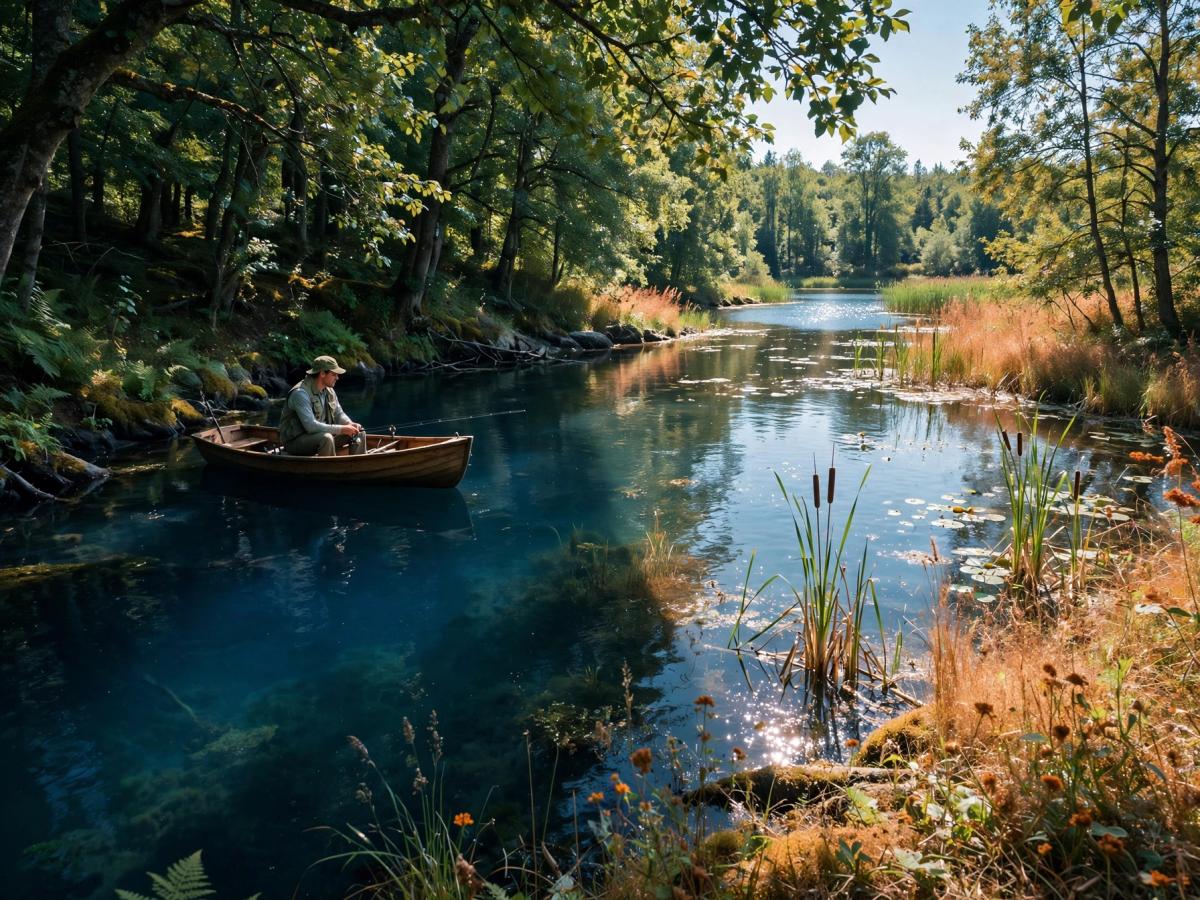
Seasonal Fishing: Summer Shade and Low-Light Windows
Summer fishing asks you to manage two things at once: the changing water and your own comfort. Bright sun, warm air, boat traffic, low water, storms, and long daylight can change a familiar shoreline from one hour to the next. Shade and lower light can be useful clues, and deeper or cooler water may be worth considering, but no summer shortcut works everywhere.
The goal is a session you can read and finish safely. Choose a time and place that suit the forecast, look for meaningful contrasts, and keep enough flexibility to leave or change plans when heat, storms, or water access become a problem.
Learning goal
By the end of this lesson, you will be able to identify summer contrasts worth testing, plan a low-light or shade window, and protect your energy and judgment during a hot-weather trip.
Shade changes what you can observe
A dock, tree line, bank shadow, bridge, overhanging vegetation, or cloud can reduce direct light. Shade may offer a different visual environment and can change how comfortable fish and anglers are, but the effect depends on water clarity, depth, species, wind, and the time of day.
Treat shade as an edge to examine. Look at where it begins and ends, how far it extends into the water, and whether small bait, insects, or other movement is visible. A narrow shadow beside open water gives you a comparison. If the shadow is crowded, blocked, or unsafe to cast around, choose a safer angle instead of forcing the spot.
Low light can also make it harder to see hooks, line, rocks, and other people. The best fishing clue is never more important than a clear path and secure footing.
Use timing as a window, not a promise
Early morning, late afternoon, cloud cover, and a passing weather change can reduce bright light. These windows may be comfortable and may alter movement in some waters. They do not guarantee a bite, and they should not make you ignore the conditions that matter more on your specific water.
Choose a window that gives you enough setup time and a safe exit. If you are unfamiliar with the shoreline, arriving before the light fades can be more valuable than extending the trip after visibility drops. Bring a light that leaves your hands free when you need to check a hook, step over an obstacle, or pack up.
Track the practical details. Note when shade reached the bank, when the wind changed, and when visible activity appeared. You may find that a comfortable window is more useful for careful observation than a dramatic sunrise or sunset claim.
Consider depth and temperature carefully
In warm conditions, deeper or moving water can be cooler in some places. A channel edge, spring-fed inflow, shaded drop, or water with current may deserve a look. The actual temperature can vary across a small area, and fish species do not all use those areas in the same way.
Choose a depth change you can reach and fish safely. If a steep bank requires unstable footing or a boat position you do not know how to control, it is not the right first choice. You can learn a great deal by comparing a shallow shade edge with a nearby deeper boundary from solid ground.
If you can take a water reading without leaning over or entering unsafe water, record it with the time and location. Avoid turning one number into a rule. The direction of change, recent weather, oxygen conditions, water movement, and available food may all influence what you see.
Heat changes your decision quality
Heat affects more than comfort. It can make you rush a knot, miss a hook point, misjudge a step, or stay longer than planned. Drink water before you feel thirsty, protect your skin, take breaks, and use shade for yourself. Wear clothing that fits the weather and keep an eye on storm development.
Plan a shorter session if the forecast is hot or humid. A purposeful hour with two observation points can teach more than several unfocused hours in direct sun. Tell someone where you are going when appropriate, keep a charged phone available, and know where you can leave the shoreline quickly.
Stop when you feel dizzy, weak, confused, unusually chilled, or unable to focus. Move to a safe place and seek help as needed. Lightning, high wind, and fast-changing storms are reasons to leave the water, not reasons to wait for one more cast.
Build a summer condition plan
Start with three questions:
- Where is the useful contrast? Look for shade beside open light, moving water beside still water, a shallow edge beside a drop, or a quieter bank beside a disturbed area.
- When can I observe it safely? Plan around heat, visibility, storms, and access rather than chasing a famous hour.
- What will I change first? Decide whether your first adjustment will be depth, angle, speed, or distance from the edge. Change one thing so the result still means something.
Keep the first presentation easy to see and control. If you cannot tell where it is or what it is doing, the session becomes harder to learn from. Choose simplicity over a complicated setup you cannot manage in heat or low light.
Try this: shade comparison
Choose a shoreline with one shaded section and a nearby open section that you can reach without unsafe climbing. Before fishing, write down the light, wind, water clarity, temperature trend if known, and any visible forage or movement. Fish the shaded edge for ten minutes, then compare the open edge with the same basic presentation. Change only one variable after the comparison.
Record comfort and visibility as well as fish activity. If the shade is crowded, the wind makes casting unsafe, or the heat is affecting your focus, end the test and choose a safer plan. A good field exercise teaches you how to make decisions, not how to endure conditions.
Safety and local rules
Check local seasons, access rules, licenses, species protections, and limits before the trip. Summer can bring swimming areas, special closures, heavy recreation, and changing water levels. Give swimmers, boaters, families, and other anglers generous space.
Scan behind and above you before casting. Low light can hide branches and people. Mind slippery algae, wet wood, steep banks, and sudden drop-offs. Do not wade beyond your skill or equipment, and leave the water before a storm or loss of visibility makes the route home uncertain.
Recap
Summer plans work best when they respond to contrasts rather than chase guarantees. Shade, lower light, moving water, and possible depth or temperature differences are clues to observe. Protect your hydration, visibility, footing, and judgment. Choose a safe window, make one comparison, and adjust one decision at a time.
Test Your Knowledge
Ready to see how much you've learned? Take this quick 4-question quiz to complete the lesson.
Take the Quiz to Finish
Complete the quiz above to unlock the lesson completion.