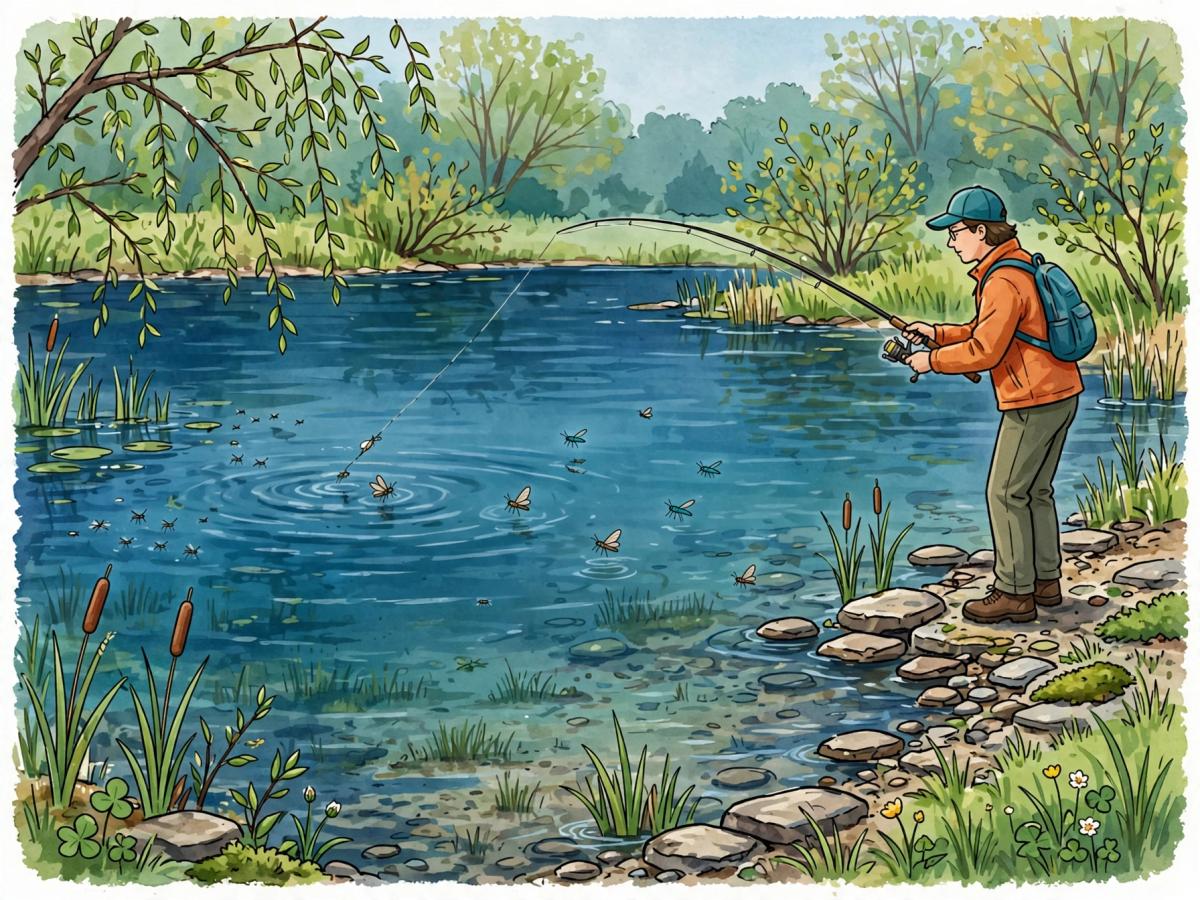
Seasonal Fishing: Spring’s Shallow Water
Spring can make a shoreline look newly alive. Sun reaches banks that felt dormant a few weeks earlier. Small insects appear, plants begin to grow, and bait may become easier to spot. Those changes can make shallow water worth examining, but spring is a transition, not a guaranteed pattern.
A sheltered pocket may warm while the main basin remains cold. A cloudy, windy day can erase a warm afternoon advantage. Species, water body, elevation, recent weather, and local rules all change the picture. Your job is to notice the change and make a reasonable first test, not to force every spring trip into one script.
Learning goal
By the end of this lesson, you will know what to look for along a spring shoreline, how to choose an accessible first area, and how to adjust without assuming that every shallow bank holds active fish.
Why shallow water can change first
Shallow water has less volume, so sunlight and wind can influence it quickly. A protected bank with dark rocks, sand, wood, or newly growing plants may warm differently from a deep, open section. Inflows and small channels can also create a local change in temperature, clarity, or food.
That does not mean shallow water is always warmer or always better. Wind can mix a bank and cool it. Cold rain can reverse a short warming trend. Strong current can make an edge difficult to fish safely. Look for a combination of clues rather than relying on depth alone.
Choose a bank you can read from a safe position. Notice whether the water is clear enough to see a few inches below the surface, whether the bottom changes, and whether there are signs of life such as insects, minnows, birds, or fresh plant growth. You are building a picture of the area before choosing a cast.
Find the edge of a change
A spring edge is often more useful than the word “shallow.” Look for the boundary between sun and shade, open water and vegetation, sand and rock, a creek mouth and the larger water, or a calm pocket and a moving seam. Fish may use these boundaries differently depending on species and conditions, so treat them as places to compare, not as automatic answers.
Cast along the edge when you can do so without crowding people or snagging branches. A presentation that travels beside a boundary can help you learn whether anything is using it. If you can see the bottom, notice where it becomes darker or drops away. That small depth change may give you a second option without requiring a long move.
Keep your approach quiet. Spring banks can be soft, muddy, or fragile. A slow walk and a few minutes of observation are often more useful than stepping directly to the water and covering every direction at once.
Read new activity without overstating it
New insects, small bait, birds, swirls, or surface dimples can tell you that something is using the area. They do not identify the species or prove that a fish will take your presentation. Use visible activity to choose a short test and watch for a response.
If the water is clear, avoid standing directly over the edge when a step back gives you the same casting angle. If the water is stained, pay closer attention to sound, movement, and the direction of wind or current. Different visibility calls for different observations. There is no single spring presentation that fits every water.
If nothing happens, keep the conclusion small. You may have tested the wrong depth, angle, time, or presentation. You have not proved that the whole shoreline is empty.
Weather can reset the plan
A few warm afternoons can create shallow activity, but an overnight freeze, cold rain, or strong wind can change the shoreline again. Check the recent weather rather than relying on a warm forecast alone. Think in terms of what the water received and how quickly it can respond.
Bright sun can make a protected bank easier to inspect and may create a visible temperature difference. Clouds and wind may reduce that contrast while moving food or changing surface conditions. A cool, stable day can be more informative than a rapidly changing one because you can compare a longer window without chasing every signal.
Plan a backup area before you arrive. A deeper edge, sheltered bank, or safe section with a different exposure gives you a measured second choice if the first bank feels cold, muddy, crowded, or unproductive.
Build a spring first choice
Use this simple sequence:
- Observe: Pick a safe bank and spend five minutes noting sun, wind, water clarity, bottom, cover, and visible life.
- Choose one edge: Select one boundary, such as a warming bank beside a slightly deeper drop.
- Make a modest test: Use a presentation you can control and watch, keeping the cast close enough to learn from the water.
- Change one variable: If the first window gives no information, change depth, angle, or location while leaving the other choices steady.
This method prevents the common spring mistake of moving every few minutes because the season feels full of possibilities. A calm comparison helps you understand what changed.
Try this: map a spring bank
Before fishing, sketch the shoreline as a simple line. Mark sun, shade, wind direction, visible vegetation, any inflow, and the safest place to stand. Choose two edges to compare. Fish the first for ten minutes, then change only the angle or distance from the edge for the next ten minutes. Write down what you actually saw, including no visible activity.
If you return later, compare the sketch with the new conditions. Did the sun reach a different section? Did water clarity change? Did plants or insects appear? This turns a vague idea about “spring shallow water” into a practical observation habit.
Safety and local rules
Spring access can be deceptively difficult. Mud, slick rocks, high water, cold wind, and unstable banks can turn a short walk into a fall risk. Wear footwear suited to the surface, keep both hands available when climbing, and do not step onto soft edges or wade because a spot looks close.
Check current local rules before fishing. Spring closures, spawning protections, access limits, license requirements, and species regulations differ by water. Avoid disturbing shallow areas that are closed or protected, and give other anglers space. Scan behind and above you before every cast, especially when vegetation is new and branches are easy to miss.
Recap
Spring shallow water is a useful observation topic because it can respond quickly to sun, wind, rain, and new life. Look for edges and changes, not a universal depth. Make one careful test, keep a backup plan, and change one variable at a time. Conditions, species, water bodies, weather, and local rules decide what the shoreline can tell you.
Test Your Knowledge
Ready to see how much you've learned? Take this quick 4-question quiz to complete the lesson.
Take the Quiz to Finish
Complete the quiz above to unlock the lesson completion.