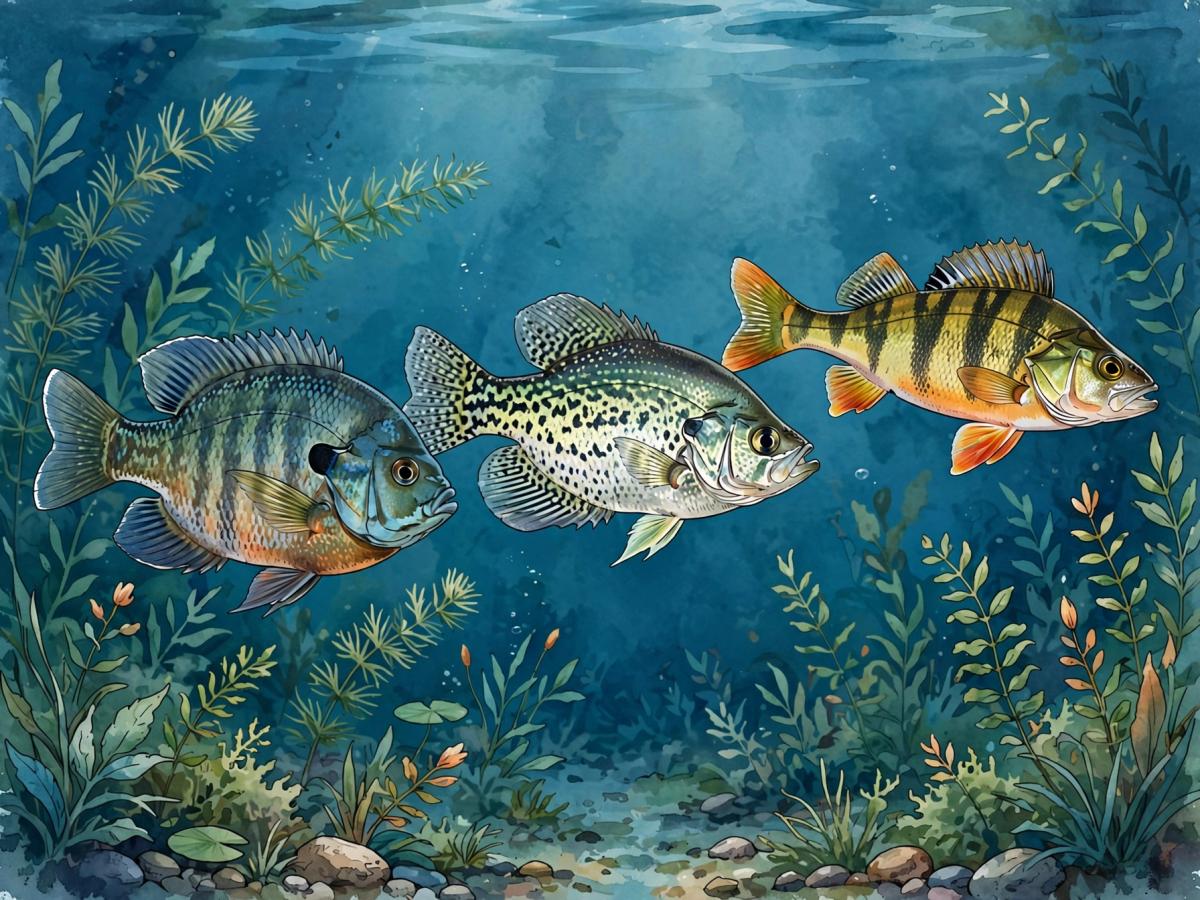
Panfish Fishing: Meet the Bluegill, Crappie, and Perch
“Panfish” is a practical fishing word, not one exact species. In many freshwater communities it brings bluegill, crappie, perch, and other approachable fish to mind. The grouping is useful because these fish are often pursued with light tackle and small presentations, but local names, species, sizes, and regulations vary.
Learning the group starts with curiosity rather than a promise of easy action. Notice body shape, mouth position, markings, fins, habitat, and the water you are on. Then confirm an identification with a current local guide or regulation source before making a rule or harvest decision.
Learning goal
By the end of this lesson, you will be able to describe practical differences among common panfish forms, use identification as part of trip planning, and choose observations that help you learn without assuming every small fish behaves the same way.
A useful group with different forms
Bluegill and related sunfish often have a deeper, taller body with a small mouth relative to the body. Their colors can shift with water clarity, light, season, spawning condition, and local population. Do not rely on one bright mark or a single photograph for an identification.
Crappie are often more slender than bluegill and have a relatively larger mouth. Black crappie and white crappie can look different, and young fish or changing light can make features harder to read. A crappie label should be confirmed rather than guessed from size alone.
Yellow perch are commonly recognized by a longer body and dark vertical bars, with a noticeable spiny dorsal fin. Other perch-like fish and local species can create confusion. Handle fins carefully and check a local guide before deciding what you caught.
These descriptions are starting clues, not a substitute for a regional identification guide. A fish may look different from an illustration because of age, water, season, genetics, or the angle at which you see it.
Identify before you decide
Species identification affects more than the name in your notebook. Regulations can set different size limits, seasons, daily limits, or harvest rules for different fish. Some waters also contain protected or easily confused species. If you are uncertain, keep the fish in the water as much as possible, take a quick reference photo only when safe and permitted, and seek reliable local guidance before making a harvest decision.
Pay attention to the whole fish. Note body depth, mouth size, stripe or spot pattern, fin shape, scale color, and any visible ear or gill-cover markings. Use several features together. The location and habitat can support an identification, but they should not override what the fish actually looks like.
Avoid announcing a confident species name while the fish is still moving in the water or when lighting is poor. A careful “I need to check that” is a useful fishing skill.
What the group can teach you about approach
Panfish are often approachable because small hooks, light line, bobbers, bait, and small lures can all be used in suitable conditions. That does not mean every panfish responds to the same depth, food, cover, or presentation. Bluegill around one shoreline may act differently from crappie in an open basin or perch in moving water.
Use the species clue to choose what to observe, not to skip observation. Look at water depth, shade, weeds, reeds, brush, docks, bottom changes, and visible forage. Ask which feature is present and which is only assumed. The answer may change with weather, season, fishing pressure, and water level.
A small presentation should still be matched to the local situation. If the fish are tiny or cautious, a large bait may be difficult to manage. If the water is windy or deep, a float setup may require a different adjustment. Start with something you can see and control.
Make an identification note
A simple note can include:
- the water and date,
- body shape and mouth size,
- markings or stripes,
- fin features you observed without squeezing the fish,
- depth, cover, and weather, and
- which official guide or local source confirmed the name.
This practice helps you remember what you saw and keeps a guess from becoming a fact. It also builds respect for the local water. A panfish lesson should make you more attentive to differences, not less careful because the fish are familiar.
Try this: compare three forms
Before your next trip, study one current local fish guide and compare the bluegill, crappie, and perch entries. Write down two features for each fish that you can actually see without handling it roughly. If you fish, observe the first panfish close to the water and compare several features before naming it.
If you are not certain, practice the correct response: keep the fish wet, avoid a rushed claim, and check the source later. The exercise is successful when your observation gets more precise, whether or not you identify the fish immediately.
Safety and local rules
Check the current rules for the water you plan to fish. Species definitions, size limits, daily limits, seasons, bait restrictions, and release requirements vary. A common name used in one region may refer to a different fish in another. Follow the official local source rather than a general description.
Spiny fins and hooks can injure hands. Keep the fish close to the water, use a steady grip appropriate to the fish, and do not squeeze the body or put fingers near a mouth you cannot identify safely. Keep people, pets, and overhead branches outside the casting path. Do not wade or approach water beyond your skill and equipment.
Recap
Panfish is a useful group that can include bluegill, crappie, perch, and other local species. Start with body shape, mouth, markings, fins, and habitat, then confirm with current regional guidance. Species identification supports responsible decisions about local rules and handling. Observe carefully, keep the fish wet, and treat a confident “I need to check” as part of good fishing.
Test Your Knowledge
Ready to see how much you've learned? Take this quick 4-question quiz to complete the lesson.
Take the Quiz to Finish
Complete the quiz above to unlock the lesson completion.