Panfish Fishing: Build a Simple Bobber Rig
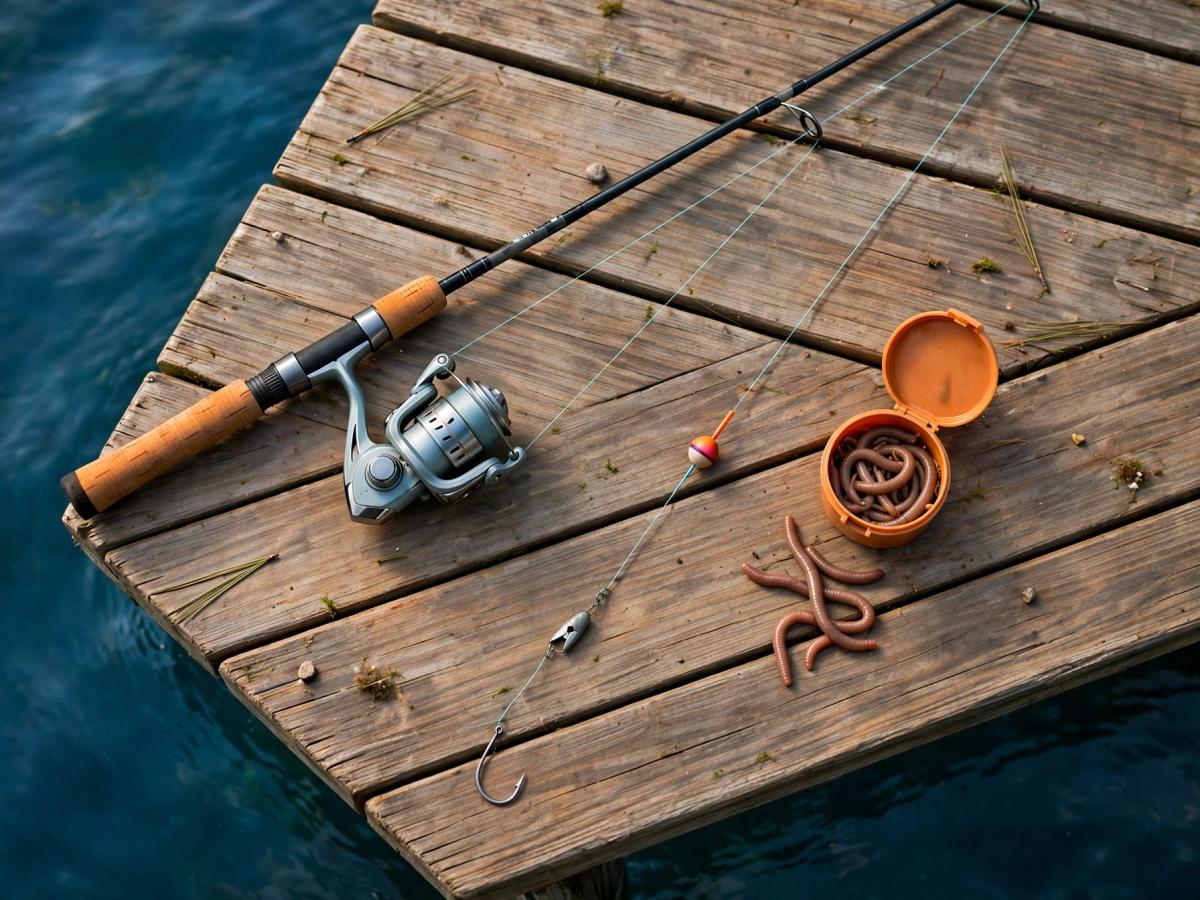
A bobber rig gives a beginner a visible reference. Instead of watching only the line, you can watch the float move, pause, tilt, or disappear. The basic setup can be simple: a rod and reel, light line, a small hook, a bobber, split shot, and bait that suits the water and local rules.
The details still matter. Hook size, float style, weight, bait, line, and depth should fit the fish and conditions you are actually facing. No brand is required, and no single size works for every panfish water. Start with a setup you can control, then adjust one part when the float tells you that the presentation needs a change.
Learning goal
By the end of this lesson, you will be able to name the parts of a simple bobber rig, assemble them in a sensible order, adjust the bait depth, and handle the hook without creating an avoidable injury.
Know the parts and their jobs
The rod and reel deliver and retrieve the rig. A light setup can make a small bait easier to cast and a light bite easier to notice, but choose equipment you can handle safely and that is appropriate for the water. The line connects the rig to the reel and should be strong enough for the conditions and fish you expect.
The hook presents the bait. A small, sharp hook can work with small bait, but “small” is not one universal measurement. Use a hook that fits the bait and local species, and keep its point protected until you are ready to fish. The bobber suspends the bait and gives you a visual signal. A fixed bobber is straightforward for shallow water, while other float styles may be used when depth changes, but learn one simple style first.
A split shot adds a little weight so the bait sinks and the float sits properly. Add only enough to balance the float. Too much weight can pull it under or make a light bite harder to interpret. Bait should be legal for the water and attached securely enough to remain on the hook while still looking natural.
Assemble from the line down
Start by running the line through the rod guides and leaving enough tag end to tie. Attach the hook with a knot you know and can inspect. If you are still learning the knot, practice with a blunt training piece or an unhooked line before working near the hook point.
Place the split shot above the hook, leaving enough distance for the bait to move naturally. Pinch it gently rather than crushing the line. Position the bobber above the weight according to the depth you want to test. Follow the directions for the float style you are using and confirm that it is secure before casting.
Add bait last, with the hook point handled deliberately. Check that the line is not wrapped around the float or weight. Hold the rig away from your body and anyone nearby while you inspect it. A short dry setup check can prevent a frustrating tangle at the water.
Adjust depth with a question
Depth is the distance between the bobber and the bait. If the float rests but you see no useful activity, ask whether the bait is too high, too low, or in a poor area before changing everything. Move the float a small amount, keep the same bait and location, and watch the next short window.
The bottom, weeds, shade, current, and fish species all affect a good depth. In clear shallow water, you may be able to see whether the bait hangs above vegetation or touches it. In deeper or stained water, the float helps you track time and movement even when you cannot see the bait.
A bobber dipping is information, not always a fish. Wind, waves, current, weeds, and a moving bait can all change it. Watch whether the movement repeats, travels, or settles before responding. Gentle pressure and a controlled lift are often more useful than a hard swing when using a small hook.
Bait choice and local limits
Use bait that is legal for the water and appropriate to the panfish you are targeting. A small natural bait or small artificial option may be suitable, but local rules can restrict live bait, imported bait, collection, transport, or disposal. Do not release unused bait into a water body unless the official rules specifically allow it.
Match the bait size to what you can observe and manage. Too much bait can hide the hook or make the rig difficult to cast. Too little may not stay attached. There is no need to make the setup complicated. A clean hook, balanced float, and visible bait give you a better chance to learn from each movement.
Try this: build before you fish
At home or on a stable table, assemble the rig with the hook covered, removed, or replaced by a safe practice piece. Say the parts aloud and check each connection. At the water, confirm the bobber balance close to shore before making a longer cast. Set a first depth and watch the float for several minutes.
If the rig does not sit correctly, change one part. Add or remove a small amount of weight, adjust the float position, or simplify the bait. Write down what you changed and what the float did next. The exercise is about building a rig you can understand, not copying a secret measurement.
Safety and local rules
Hooks are sharp in every season and can injure an angler or another person. Keep the hook covered while walking, look behind and above you before casting, and never swing a rig where people, pets, branches, wires, or boats may be. Use pliers or a hook tool when needed, and keep your fingers away from a hook point.
Check current rules for licenses, hook limits, bait, species, size, daily harvest, and access. Use only legal bait and dispose of it according to the local guidance. Keep stable footing and do not wade beyond your skill and equipment. If a knot, line, or hook becomes unsafe to fix in place, stop and move to a secure area.
Recap
A simple bobber rig can include a rod and reel, light line, small hook, bobber, split shot, and legal bait. Each part has a job. Assemble carefully, balance the float, set a first depth, and treat float movement as information rather than a guaranteed bite. Adjust one part at a time and keep hook safety and local rules in the plan.
Test Your Knowledge
Ready to see how much you've learned? Take this quick 4-question quiz to complete the lesson.
Take the Quiz to Finish
Complete the quiz above to unlock the lesson completion.