Panfish Fishing: Find Cover, Depth, and Safe Access
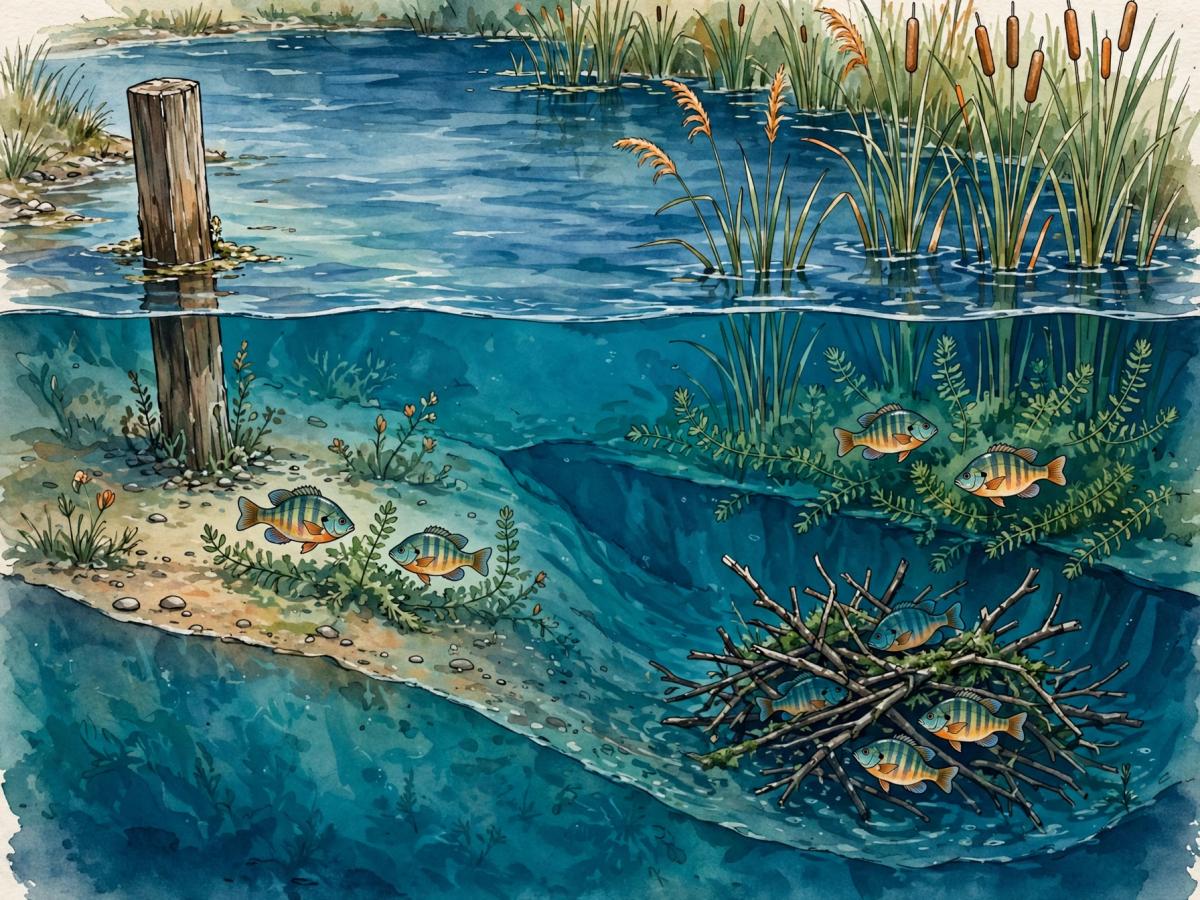
A panfish plan often begins with what the shoreline gives you to observe. Reeds, docks, brush, weeds, shallow flats, a little deeper water, and shade can all create useful comparisons. None of them means fish must be there. The same cover can hold different species or no active fish depending on water level, season, weather, forage, fishing pressure, and access.
The most valuable location skill is learning to separate a visible feature from a confident claim. You can see a reed edge. You can test whether a presentation works beside it. You cannot know from the reed alone that a fish is waiting there.
Learning goal
By the end of this lesson, you will be able to read common panfish features, choose a reachable first comparison, and build a safe casting route without treating cover or depth as a guaranteed location formula.
Start at the bank and scan outward
Before you unpack, look at the water from a stable position. Identify the waterline, the safest casting lane, and anything behind or above you. Then scan outward for changes in bottom color, weeds, depth, shade, current, surface movement, or visible forage.
A shallow flat may be easy to see and cast, while a nearby drop creates a different depth. Reeds can provide an edge between open water and stems. A dock can create shade and a hard boundary. Brush may offer structure but also create snags. Weeds can be sparse, thick, growing, or breaking apart. Treat each feature as a question about conditions and presentation.
Choose a first spot that gives you enough room to cast and retrieve without stepping onto unstable ground. A slightly less interesting feature with secure footing is a better learning area than a perfect-looking edge you cannot reach safely.
Cover can create several choices
The outer edge of reeds is one option. The pocket inside may be too tight for a beginner, and the water beyond the reeds may have a different depth. Start along the outside edge if that is safer and easier to watch. If you can make a controlled cast beside the stems, observe how the float or bait behaves before trying a tighter angle.
Docks and shade may create a visual contrast. Look at the shadow line, the open side, and any change in depth. Do not cast under a dock if people, boats, supports, or overhead obstacles make the lane unsafe. You can often learn from the edge of the shadow without forcing a difficult cast.
Brush and weeds can hold food and shelter, but they can also trap line and hooks. Use a presentation you can retrieve without pulling hard or leaving tackle behind. If the cover causes repeated snags, move a short distance and test a cleaner boundary.
Compare shallow and slightly deeper water
Panfish may use shallow areas, deeper edges, or both at different times. Rather than deciding that one depth is correct, compare a shallow flat with a reachable drop or channel edge. Watch the bottom, water clarity, temperature trend if known, and visible activity. A small change in depth can also change wind exposure, shade, vegetation, and how easy the bait is to see.
Keep the comparison fair. Use the same general presentation for a short window, then change one factor. If the shallow area has weeds and the deeper edge is bare, you are comparing more than depth. Write down the difference so you do not overstate what the result means.
If you cannot see or safely reach the deeper water, do not invent a location. Choose the edges you can observe from stable ground and learn there.
Safe access is part of finding fish
Bank fishing involves more than casting distance. Wet grass, mud, loose rocks, steep drops, algae-covered wood, and hidden holes can make a shoreline dangerous. Keep your feet planted before casting, stay back from undercut banks, and avoid stepping on private or closed access.
Give other anglers space and keep your hook path away from paths, docks, swimmers, pets, and boat traffic. When moving between spots, secure the hook and keep line from trailing where someone can catch it. A route that requires crossing a slippery section may not be worth a new angle.
A safe position also improves your observation. If you are worried about falling, you will rush the cast and miss small float or line changes. Choose a place where you can pay attention to the water.
Try this: build a three-feature map
From one safe shoreline position, sketch three features you can observe without moving: a shallow flat, a cover edge, and a shade or depth contrast. Mark your casting lane and any hazards. Choose the easiest feature first and fish a short window with the same basic presentation. Then test one nearby feature or one distance change.
Write what you observed, not only whether you caught anything. Note the float, weeds, bottom, wind, visible bait, snags, and how safely you could retrieve. If a feature cannot be fished without forcing a cast or risking a fall, mark it as information and leave it alone.
Safety and local rules
Check the current regulations and access rules for the water. Docks, parks, shorelines, and boat ramps may have separate restrictions. Species, size, daily limits, bait, and hook rules vary. Respect posted boundaries and leave vegetation, private property, and other people's gear alone.
Scan behind and above you before every cast. Keep hooks secure while walking, and use a controlled cast near cover. Do not wade or approach water beyond your skill and equipment. Stop if rising water, wind, darkness, slippery footing, or crowding removes your safe casting lane.
Recap
Reeds, docks, brush, weeds, shallow flats, slightly deeper water, and shade are visible features to compare, not promises of fish. Start with a safe casting lane, observe the differences, and change one factor at a time. Safe access is part of good location choice because it protects both the angler and the quality of the observation.
Test Your Knowledge
Ready to see how much you've learned? Take this quick 4-question quiz to complete the lesson.
Take the Quiz to Finish
Complete the quiz above to unlock the lesson completion.