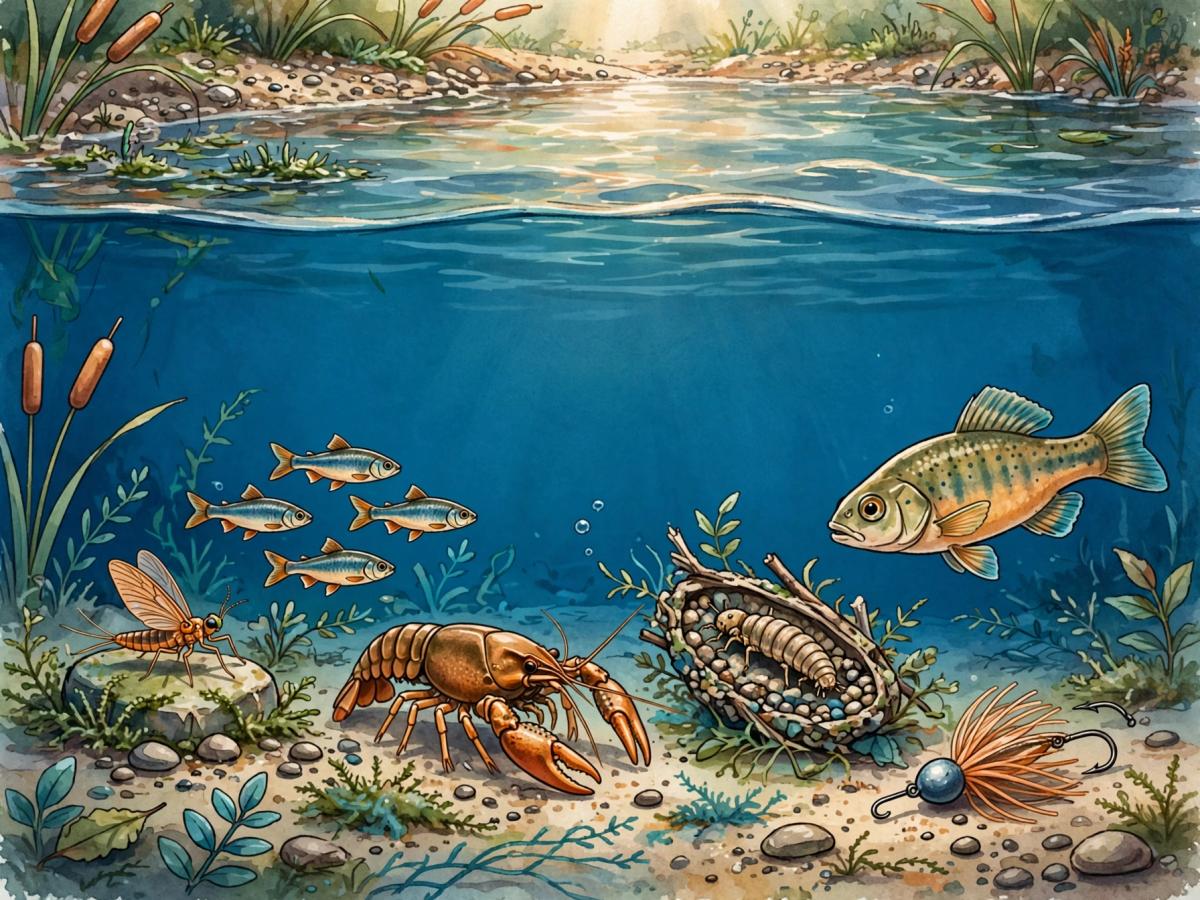
Follow the food you can find
Fish need energy, and the water often gives you clues about where that energy is coming from. Insects may gather near the surface, minnows may hold along a quiet edge, and crayfish or aquatic larvae may stay close to rocks, weeds, or the bottom. You do not need to identify every creature to begin reading the scene.
This lesson is about making a reasonable connection between what is present and how you fish. Look first, choose simply, and let your observations guide the next decision.
Start with a quiet scan
Before changing a lure, spend a few minutes watching. Check the surface for insects, dimples, or small baitfish. Look along the bank for minnows in the shallows, crayfish around rocks, or larvae and other small life near vegetation. A clear view of the bottom can help you notice movement, but cloudy water still offers clues through shoreline activity and surface disturbance.
Birds, baitfish, and insects can sometimes point to activity, but they do not give a complete answer. Notice where the activity is, how large the food appears, and whether it is near the surface, around cover, or close to the bottom. Observe without handling wildlife or disturbing the bank.
Match size and movement first
Beginners often focus on color because it is easy to see in a tackle box. Size and movement give you two more useful questions. If the visible minnows are small and moving in short bursts, a small profile with a controlled presentation may make more sense than a large, fast-moving option. If crayfish are visible near the bottom, a presentation that stays near the bottom and moves in small hops may fit the scene better.
These are starting points, not fixed recipes. Your presentation should fit the water you are fishing and the equipment you can control. A simple choice that stays in the same part of the water as the food gives you a fair chance to learn from the response.
Let evidence guide the next change
When you see a clear food clue, start there. If you do not see one, choose a straightforward presentation and pay attention to the depth, speed, and cover you are testing. Avoid changing color, size, depth, and retrieve all at once. You may catch a fish, but you will have a harder time knowing what part of the change mattered.
A quiet period is useful information too. Maybe the food is present but the fish are elsewhere. Maybe the presentation is moving through the wrong depth. Maybe the water or weather has changed. Keep your conclusion small and make one thoughtful adjustment.
Try this: a five-minute forage inventory
At your next safe fishing spot, pause before casting and write down three observations:
- What food can you actually see, if any? Estimate its size and note whether it is near the surface, middle, cover, or bottom.
- Where is that food located? Mark a weed edge, rock line, current seam, or quiet pocket without assuming fish must be there.
- What simple presentation could travel through the same zone with a similar size or movement?
Fish the first choice long enough to notice how it travels and whether the water gives you new information. If you make a change, write down what changed. The practice is observation, not collecting a perfect answer in one visit.
Safety and local guidance
Keep hooks away from hands, clothing, and other people while you inspect or change a presentation. Make room before casting, and watch for branches, reeds, and uneven banks. If you use or collect live bait, check current local rules first. Some waters restrict collection, transport, or the types of bait that may be used. Do not handle aquatic life unnecessarily, and do not wade or approach water beyond your skill and equipment.
Quick recap
- Look for the food that is actually present before changing your setup.
- Size, location, and movement can matter as much as color.
- Choose a simple presentation that fits the zone you are testing.
- A food clue is a useful starting point, not proof that fish must be there.
Test Your Knowledge
Ready to see how much you've learned? Take this quick 4-question quiz to complete the lesson.
Take the Quiz to Finish
Complete the quiz above to unlock the lesson completion.