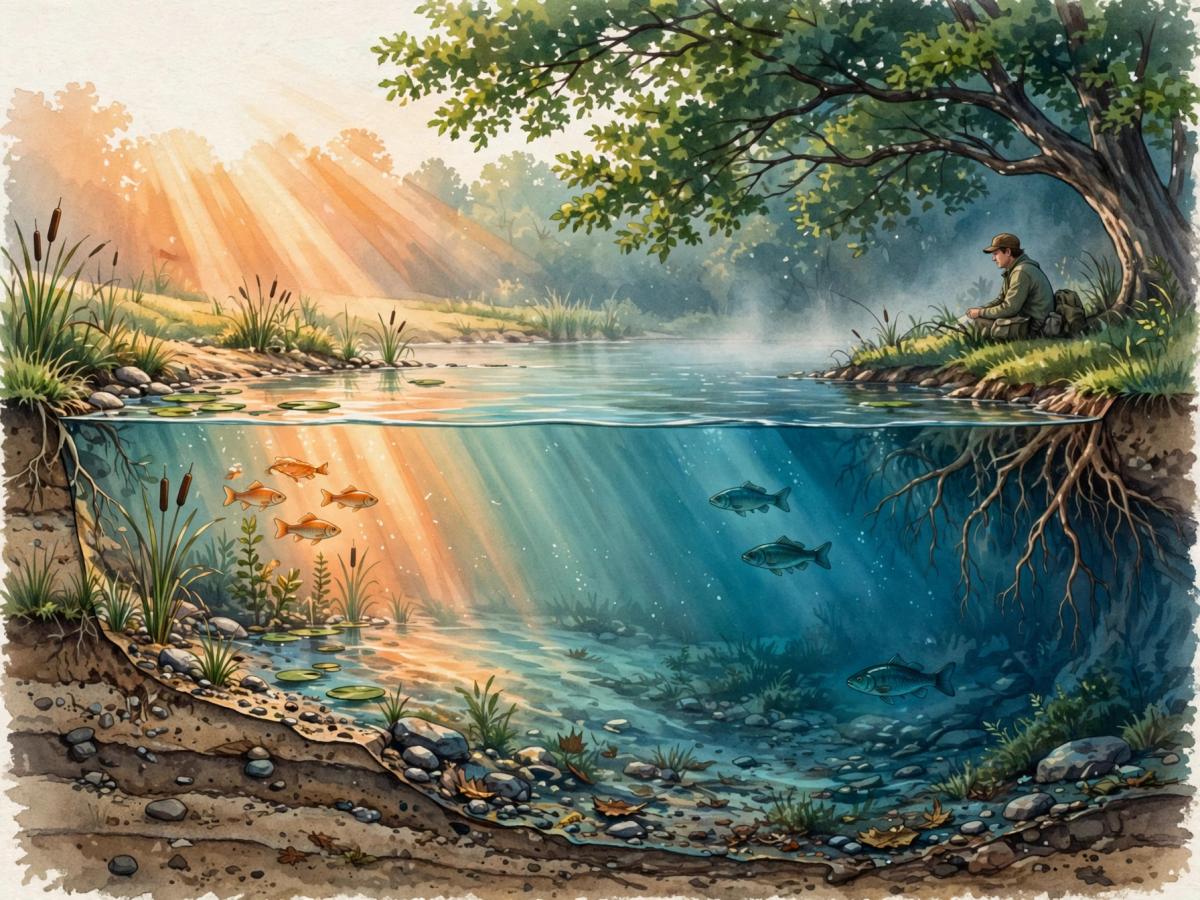
Start with what the water is telling you
A fishing spot can look completely different from one visit to the next. Sunlight moves across the bank, clouds soften or sharpen the light, wind mixes the surface, and water temperature shifts with the season and recent weather. Fish notice those changes, but they do not all respond in the same way.
This lesson gives you a calm way to observe conditions without hunting for a universal "best time." Your job is to collect a few useful clues, make a simple first plan, and stay willing to learn.
A pattern is a clue, not a promise
Anglers often hear that dawn, dusk, shade, or a certain temperature is always best. Those ideas can be useful starting points, but they leave out important details. Species, water body, season, weather, water clarity, and fishing pressure all shape what happens next.
Think of a condition as a question rather than an answer. If a bank has new shade, ask where the shade reaches and what else changed with it. If the water feels cooler after a front, ask whether the fish, forage, or current has moved. Observation keeps you from forcing every trip into the same formula.
Notice the light
Begin with your eyes. Is the sun low or high? Is one bank shaded by trees? Are clouds moving across the water? Can you see shallow rocks, weeds, or the bottom near shore? Light changes what fish can see and where a fish may feel comfortable, but the effect depends on the species and the water.
Shade is especially useful to mark because it moves. A shaded pocket in the morning may be bright later. Rather than assuming fish must be there, compare it with a nearby sunny edge. Look for other clues such as bait activity, a change in depth, or a gentle current seam.
Use temperature as a changing condition
Water temperature can help you compare one part of a trip with another, especially when you record it alongside the date, time, and weather. A thermometer gives you one reading in one place. It does not describe every depth or every part of a lake, pond, river, or shoreline.
If you have a thermometer, take the reading safely from the bank or watercraft you are already equipped to use. Note whether the water is shallow or deeper, in shade or sun, and near moving water or still water. If you do not have one, do not let that stop you from learning. Light, wind, surface activity, and visible forage still give you useful observations.
Put time in context
Dawn and dusk can be interesting windows because light and activity are changing. Midday can also teach you about shade, depth, and where fish or forage remain when the sun is stronger. The useful question is not "What time always works?" It is "What changed during this window, and what did I notice?"
Keep a short record of the conditions you fished. Over several visits, your notes may show a pattern for one place and one kind of fish. Treat that pattern as local evidence, not a rule for every waterway.
Try this: a three-minute conditions check
Before your first cast, pause for three minutes and write down:
- The time, date, and broad weather: sunny, cloudy, windy, calm, or changing.
- Where the shade falls and whether the light is bright, soft, or moving.
- Any visible signs such as minnows, insects, surface dimples, birds working, or a current edge.
- A water-temperature reading, if you have a suitable thermometer and can take it safely.
Choose one area that gives you something to compare, such as a shaded edge beside a sunny one. Make a simple presentation and pay attention to what happens. The goal is a better question for your next cast, not a guaranteed result.
Safety and local guidance
Make room behind and beside you before casting, especially when light is low. Keep your footing in mind on wet banks, rocks, and slopes. Wear weather-appropriate protection and carry a light if local conditions call for it. Check current local rules for access, seasons, harvest, bait, and watercraft before fishing. Do not wade or approach deeper water beyond your skill and equipment.
Quick recap
- Light, temperature, and time are changing clues, not universal answers.
- Species, water, season, weather, and local conditions can change the pattern.
- Compare nearby conditions and keep a short record.
- Use observations to choose your next cast, then let the water teach you more.
Test Your Knowledge
Ready to see how much you've learned? Take this quick 4-question quiz to complete the lesson.
Take the Quiz to Finish
Complete the quiz above to unlock the lesson completion.