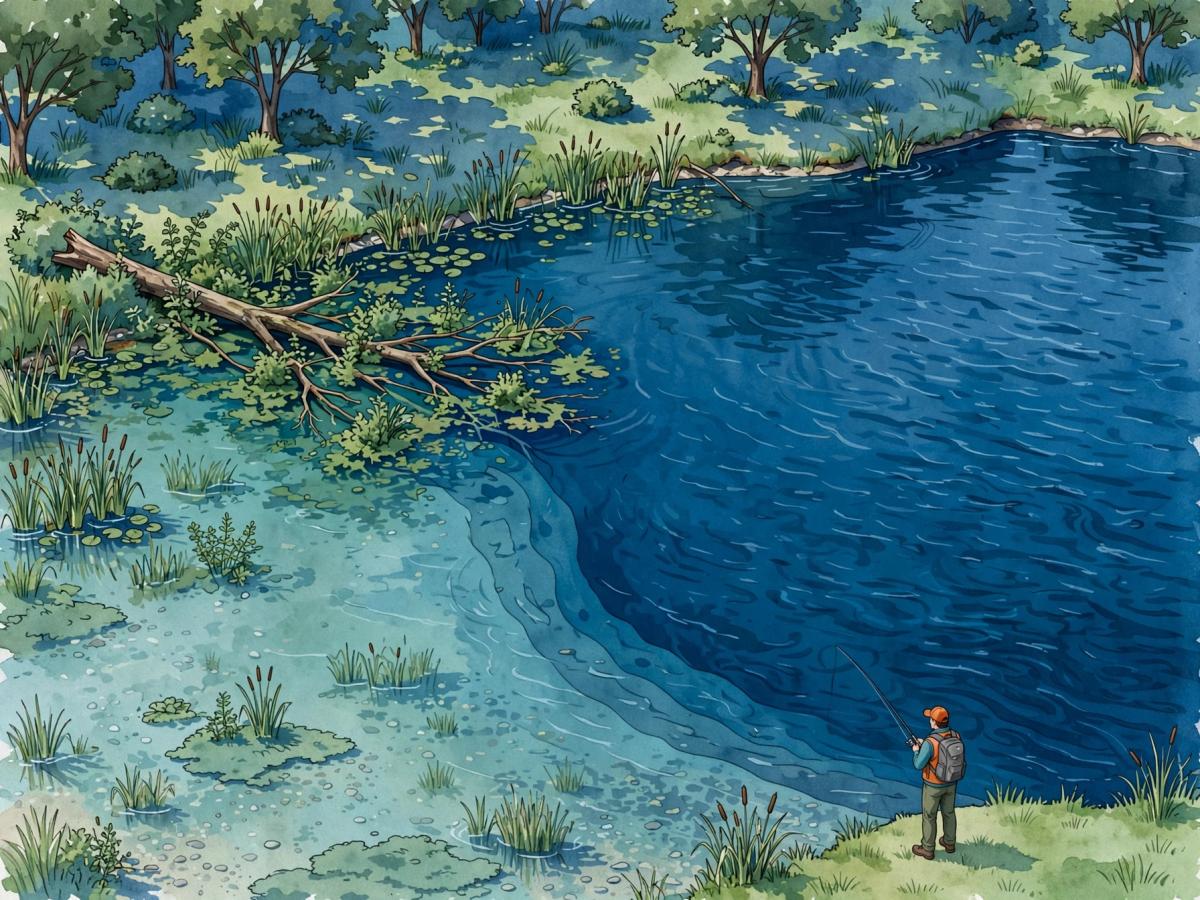
Let the shoreline give you clues
Choosing a place to cast can feel like guessing when every stretch of water looks the same. You do not need to predict the exact place a fish will be. You can make a thoughtful first plan by looking at what the shoreline and water are already showing you.
Take a few quiet minutes before opening the bail. Notice the water, the bank, the weather, and your own access. Then make one reasonable choice, watch what happens, and adjust one part of the plan at a time.
Start with safety and access
Choose water you are allowed to reach. Look for a stable place to stand, a clear path in and out, and enough room to cast without brushing another angler. Slippery mud, loose rocks, steep edges, deep drop-offs, and fast current deserve respect. If a spot looks interesting but getting there would put you at risk, it is not the right first spot.
Check the weather and light before you settle in. Carry the safety gear your location requires, tell someone where you will be, and bring water and sun or rain protection. If you are on a boat or kayak, wear a properly fitted personal flotation device and make the plan fit the conditions you can safely handle.
Look for shade and light
Shade can make a bank, dock, or patch of vegetation different from the bright water beside it. Fish may use shade as cover or a place that feels different from open sun. Watch how the sun is changing the shoreline, then try the edge of shade rather than assuming the darkest water is always best.
Light is one clue, not a rule. Clear water, cloudy skies, time of day, and species all change how a fish uses a place. Treat the observation as a starting point you can test with a few careful casts.
Find cover and edges
Cover gives fish something to hold near or use for protection. Fallen trees, rocks, reeds, docks, and brush along the waterline can all create edges worth noticing. Cast beside cover before casting directly into the thickest part. This gives the bait a chance to work near the edge while reducing snags.
Weeds are useful to read in the same way. Look for the outside edge of a weed bed, a small opening, or a line where short growth meets deeper water. Make a note of what is visible above the surface. The underwater shape may continue farther than you can see, so keep the first cast controlled.
Look for depth changes
A depth change can be a shallow flat that drops into darker water, a channel near the bank, a cut beside a point, or a ledge you can see through clear water. You may not know the exact depth, and you do not need to. A change in color, current, bottom texture, or vegetation can tell you that the water is different.
Start by casting along the edge or across it at a safe distance. If your rig allows you to change depth, make one adjustment and compare. Keep notes about what you observed rather than treating one cast as proof.
Notice the wind
Wind can change the surface, drift floating food, move bait, and make a bank easier or harder to fish. A light breeze may help you notice a productive-looking edge, while strong wind can make casting and boat control unsafe. If the windward bank is accessible and safe, it may be worth a few casts. If the wind is pushing you toward hazards or making line control poor, choose a protected area instead.
The best wind plan is the one that keeps you in control. You are learning how conditions affect a place, not chasing a promise that one direction always produces fish.
Make a simple first plan
Use this five-step shoreline scan:
- Safety: Where can I stand and move without slipping or crowding anyone?
- Structure: What cover, weed edge, shade line, or depth change can I see?
- Wind: Where is the surface moving, and can I cast there safely?
- Presentation: Should the first cast travel beside an edge, across it, or into open water?
- Adjustment: What single change will I make if the first few casts teach me nothing?
Begin with the easiest useful target, not the most dramatic one. Cast parallel to a bank or cover edge, then fan a few casts through different angles. Change depth, retrieve speed, or distance one at a time. After several thoughtful casts, move a short distance if the spot gives you no new information and the next access point is safe.
Try this before your next trip
Draw a simple map of a shoreline you can legally fish. Mark three observations: one shade line, one piece of cover or weed edge, and one possible depth change. Circle the safest access point. Write down your first cast and the reason for it. On the water, compare your sketch with what you see and record one change you made.
This turns a walk to the bank into practice. You are learning to observe, choose, test, and remember.
Safety and local rules
Respect private property, posted closures, marked hazards, and local access rules. Check licenses, seasons, species rules, bait restrictions, and size or possession limits for the water you plan to fish. Conditions can change after rain, wind, heat, or cold. Leave a place that becomes unsafe, and never treat a fishing lesson as a substitute for local advice or your own judgment.
Quick recap
Read the shoreline in layers. Start with safe access, then notice shade, cover, weeds, depth changes, and wind. Choose a first cast that tests one useful clue. Watch, adjust one variable, and move only when the next spot is safe and legal.
Test Your Knowledge
Ready to see how much you've learned? Take this quick 4-question quiz to complete the lesson.
Take the Quiz to Finish
Complete the quiz above to unlock the lesson completion.