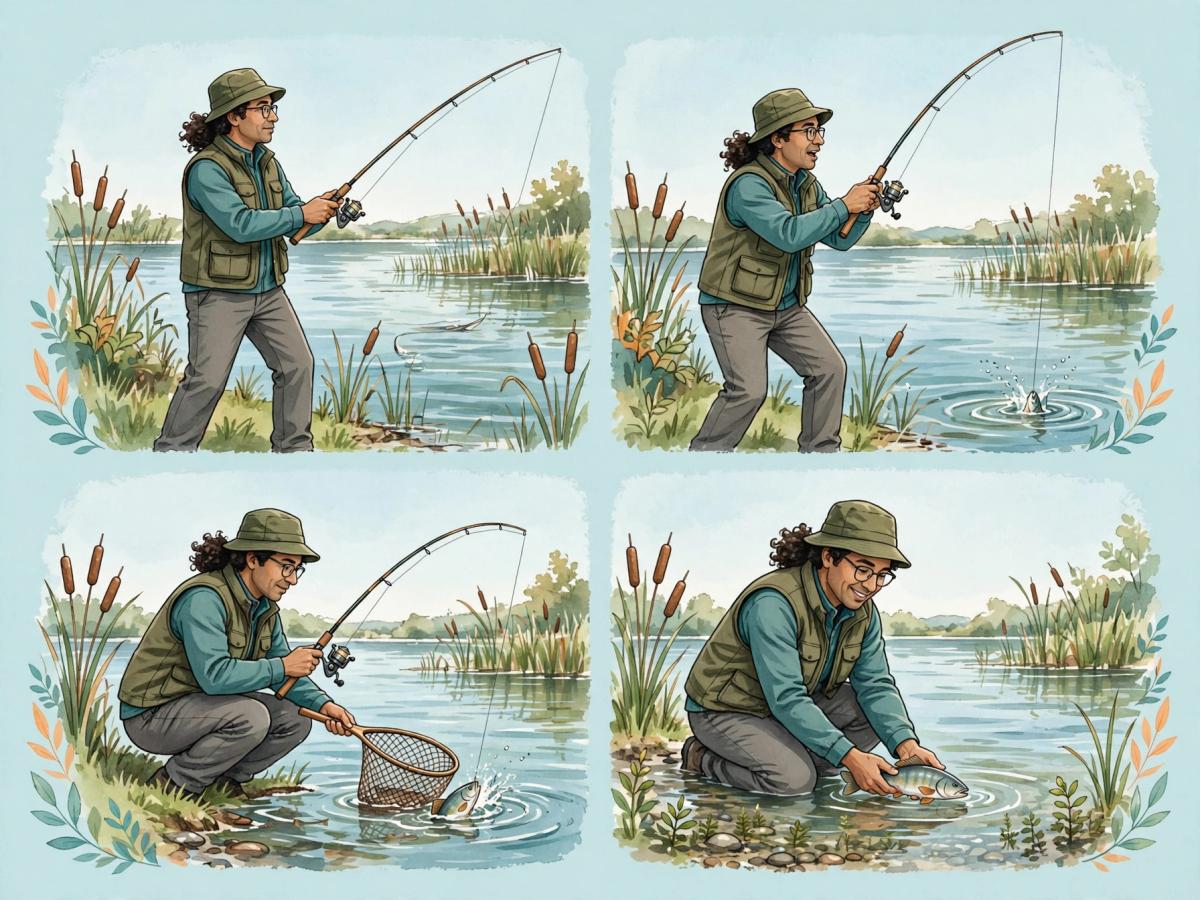
The whole moment, from cast to release
A bite can make a beginner forget every calm thought they had five seconds earlier. That is normal. The useful plan is simple: make room, cast smoothly, respond to pressure, keep the line controlled, and handle the fish with care.
This lesson uses a common spinning setup as its mental picture. Other tackle works differently, so follow the instructions for the outfit in your hands and practice without a hook before trying new motions.
Make room before you cast
Look all around you, not only toward the water. Check behind, beside, and above your casting path for people, branches, lines, fences, pets, and power lines. Tell anyone nearby that you are casting. Keep the hook or lure under control until the space is clear.
Stand on stable ground with enough room to step without slipping. If the bank is steep, muddy, crowded, or close to deep water, choose a safer position or fish with someone who knows the area. A perfect cast is never worth an unsafe footing.
Make a smooth cast
With a spinning reel, hold the rod comfortably and use a finger to control the line against the rod. Open the bail when your setup calls for it. Point the rod toward the target, bring it back in a controlled motion, then swing forward and release the line as the rod points toward the open water. Let the rod do the work. A hard, rushed throw usually creates less control and more tangles.
Start with a short target close to shore. Once the motion feels steady, work farther out. Aim past the place you want the bait to settle, then allow the rig to land quietly. Close the bail by hand after the cast if that matches your reel and helps you keep the line ready. Keep a little awareness in your fingers so you can feel a change instead of watching only the bobber.
Notice the bite and set the hook
A bite may look like a bobber dipping, a line moving sideways, a sudden slack loop, or a tug you can feel through the rod. Do not strike at every ripple. Wait for a clear change that suggests the fish has taken or moved the bait, then lift the rod smoothly and begin reeling to take up slack.
The goal is contact, not a dramatic yank. A violent hook set can pull the bait away or send the hook toward you. Keep the rod pointed safely away from people, and remember that different hooks and species need different amounts of pressure. If the fish is already moving with the bait, a controlled lift and steady pressure are often enough to connect.
Keep the fish controlled
Once you feel a fish, keep the line tight without locking the drag down blindly. Let the rod bend and use the reel to recover line when the fish gives you room. Move your feet instead of trying to win the entire fight with your arms. Guide the fish away from weeds, sharp rocks, and other lines when you can do so without forcing it.
Keep the rod at a comfortable angle and avoid pointing it straight at the fish. If the line goes slack, reel carefully until you regain contact. If the fish runs, let the reel and rod manage some of that pressure. Staying calm protects the line, the fish, and your hands.
Land with a net when it helps
A landing net is useful when the bank is high, the fish is lively, or reaching down would put you off balance. Have it open and within reach before the fish is close. Guide the fish head-first into the net when possible. Do not stab at the fish or swing it through the air with the line.
If you do not have a net, guide the fish into shallow water only where the footing is safe. Avoid dragging a fish across dry ground. Keep the rod, line, and hook under control while you decide whether you will release the fish or keep it within the local rules.
Handle and release gently
Wet your hands before touching a fish. Wet hands help protect its outer coating. Keep the fish low over the water in case it wriggles. Support its body rather than squeezing it, and use pliers to remove the hook when the hook is easy to reach. If the hook is deeply lodged or removal would cause more harm, follow local guidance for that species and situation instead of forcing it.
For a fish you plan to release, return it promptly. In moving water, point the fish into the current and let fresh water flow across its mouth. In still water, support it gently in the water until it can swim away under its own power. Follow local rules for any fish you keep, including size, season, and possession limits.
Try this without a hook
Take a practice plug or another approved hookless casting weight to an open area. Check the full space first. Practice three short casts to a visible target, focusing on the same smooth motion each time. Then practice saying the sequence out loud: clear, cast, watch, lift, reel, guide, wet hands, release.
The words are a memory aid, not a guarantee. Conditions, tackle, fish, and local rules can change the right choice. The habit of pausing before each step gives you room to notice those changes.
Safety and local rules
Keep hooks covered while moving, make a full safety check before every cast, and never cast near overhead power lines. Wear a properly fitted personal flotation device when fishing from a boat, kayak, or other watercraft. Check access permission, licenses, seasons, size limits, and possession rules for the water you are visiting. A general lesson cannot replace local guidance.
Quick recap
Clear the casting space, make a smooth cast, respond to a real change in the line, and keep steady pressure after the hook set. Use a net when it improves balance and fish control. Wet your hands, handle the fish low and gently, and release it promptly when that is your plan.
Test Your Knowledge
Ready to see how much you've learned? Take this quick 4-question quiz to complete the lesson.
Take the Quiz to Finish
Complete the quiz above to unlock the lesson completion.