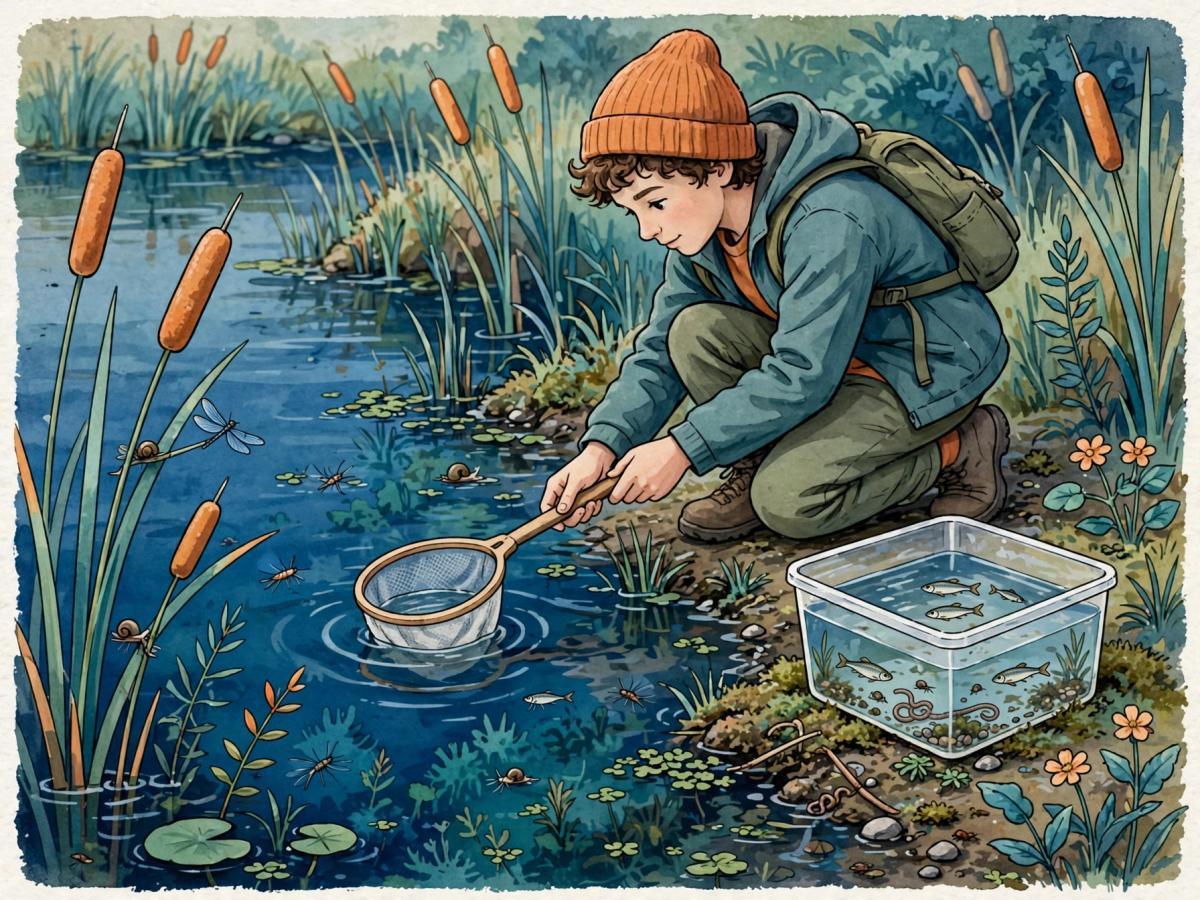
Look closely before you reach
Finding bait is an observation exercise before it becomes a collection exercise. Shorelines, damp ground, leaf litter, shallow edges, and quiet pockets can show signs of worms, insects, minnows, or other aquatic life. The best first move is to notice what is there without immediately turning over rocks, pulling plants, digging into banks, or stepping into water.
A place can look full of possibilities and still be a poor place to collect. Habitat may be fragile. Access may be private or protected. The organisms you notice may not be legal to take, or they may belong in that water rather than in your container. Gentle observation helps you make a smaller, better-informed decision.
By the end of this lesson, you will be able to:
- Scan a shoreline for bait signs while protecting banks and cover.
- Choose a small, legal collection plan instead of disturbing a broad area.
- Leave private, protected, and public places cleaner and calmer than you found them.
Read the shoreline as living habitat
Start from a stable place and look across the whole edge. Notice where damp ground meets dry ground, where vegetation meets open water, and where current slows beside a bank. Small organisms may use these transitions, but a sign is an invitation to observe, not proof that collection is allowed.
Look for movement, tracks, small openings, shed material, insect activity, or minnows holding along an edge. Use your eyes first. A quiet minute often tells you more than repeated disturbance. If you need a closer look, move slowly and keep your feet on durable ground whenever possible.
Banks are more than a place to stand. Roots, grasses, leaf litter, and fallen material can hold soil in place and provide shelter. Pulling plants or breaking the bank can create damage that lasts beyond the fishing trip. Choose observation points that do not require you to climb, slide, or widen a path.
Observe different bait habitats gently
Damp ground and leaf litter: Worms and insects may be present where moisture, shade, and organic material meet. Look beneath loose material only when it can be lifted and replaced without tearing roots or exposing a large patch of soil. Return the cover to its original position. Do not dig into a bank or strip a broad area searching for one specimen.
Shallow edges: Minnows and other aquatic organisms may use protected margins, vegetation, or slower water. Watch from shore before entering. If current, depth, mud, temperature, or footing creates doubt, do not wade to collect. Water that looks shallow can still pull, and a wet bank can become unstable quickly.
Insects and surface activity: A shoreline can hold insects on plants, rocks, and debris. Avoid sweeping through vegetation or disturbing flowers, nests, or other wildlife. If a legal method is available, use it narrowly and stop when you have enough.
Loose cover and rocks: Cover may shelter living things, but it also protects the bank and creates habitat. Do not make a trail of moved rocks or scatter logs. If local guidance allows careful inspection, lift only what you can safely return and put it back the way you found it.
These descriptions are clues for attention, not instructions to collect everywhere. Current rules, land permissions, and the condition of the place come first.
Small collection is a skill
Before you collect, name the amount you need and the legal method you checked. Keep your container ready so the organism is not left on a hot rock or in direct sun while you decide what to do. Use the smallest area and least disturbance that can meet the plan.
Stop when the need is met. You do not need to keep searching because another possible bait spot is visible. Extra collecting can increase mortality, crowding, transport questions, and disposal problems. It also turns one quiet shoreline into a much larger footprint.
Do not collect from a place simply because other people have left evidence there. Litter, trampled vegetation, or a worn bank is a reason to move carefully, not permission to repeat the damage. Never use chemicals, electricity, fire, or other destructive methods. If a method harms the habitat or makes the water unsafe, it does not belong in a responsible bait plan.
Respect boundaries and shared water
Confirm that the shoreline is open to you. Private property lines are not always obvious, and protected areas may have rules that are stricter than nearby public water. Posted notices, gates, seasonal closures, and signs about wildlife should change your route.
Keep a safe distance from other anglers, swimmers, boat launches, nests, and working areas. Do not reach across another person's line or use a collection method where it could interfere with someone else's activity. A quiet place is still shared space.
If you see a sensitive area, treat it as a no-collection zone unless current official guidance clearly says otherwise. Watching and learning from a place can be valuable without taking anything from it.
Field exercise: the three-minute shoreline scan
At your next permitted fishing area, stand in one stable location and spend three minutes scanning without collecting. Write down three observations:
- One transition, such as vegetation to open water or damp ground to dry ground.
- One sign of living activity, such as movement, tracks, insects, or baitfish.
- One reason the area should be left alone, such as unstable footing, fragile plants, private access, or a protected notice.
After the scan, decide whether there is a legal, low-impact way to collect what you need. If not, keep observing or use another permitted source. If you do collect, record how much you took and what you did to restore the small area you inspected.
Safety and local-rule reminder
Use current official rules and permissions for the exact place and method. Stay on stable ground and avoid wading or climbing when the bottom, current, bank, or weather is uncertain. Do not disturb private or protected places. Keep hands away from unknown animals and plants, and wash them after handling bait or shoreline material. Stop if your collection begins damaging habitat or if you cannot identify what is legal.
Recap
- Observe first and keep your feet on durable ground.
- Treat roots, plants, leaf litter, rocks, and fallen cover as habitat.
- Collect only what is legal, needed, and possible to handle well.
- Replace loose cover and avoid widening paths or damaging banks.
- Permission and habitat care are part of finding bait responsibly.
Test Your Knowledge
Ready to see how much you've learned? Take this quick 4-question quiz to complete the lesson.
Take the Quiz to Finish
Complete the quiz above to unlock the lesson completion.