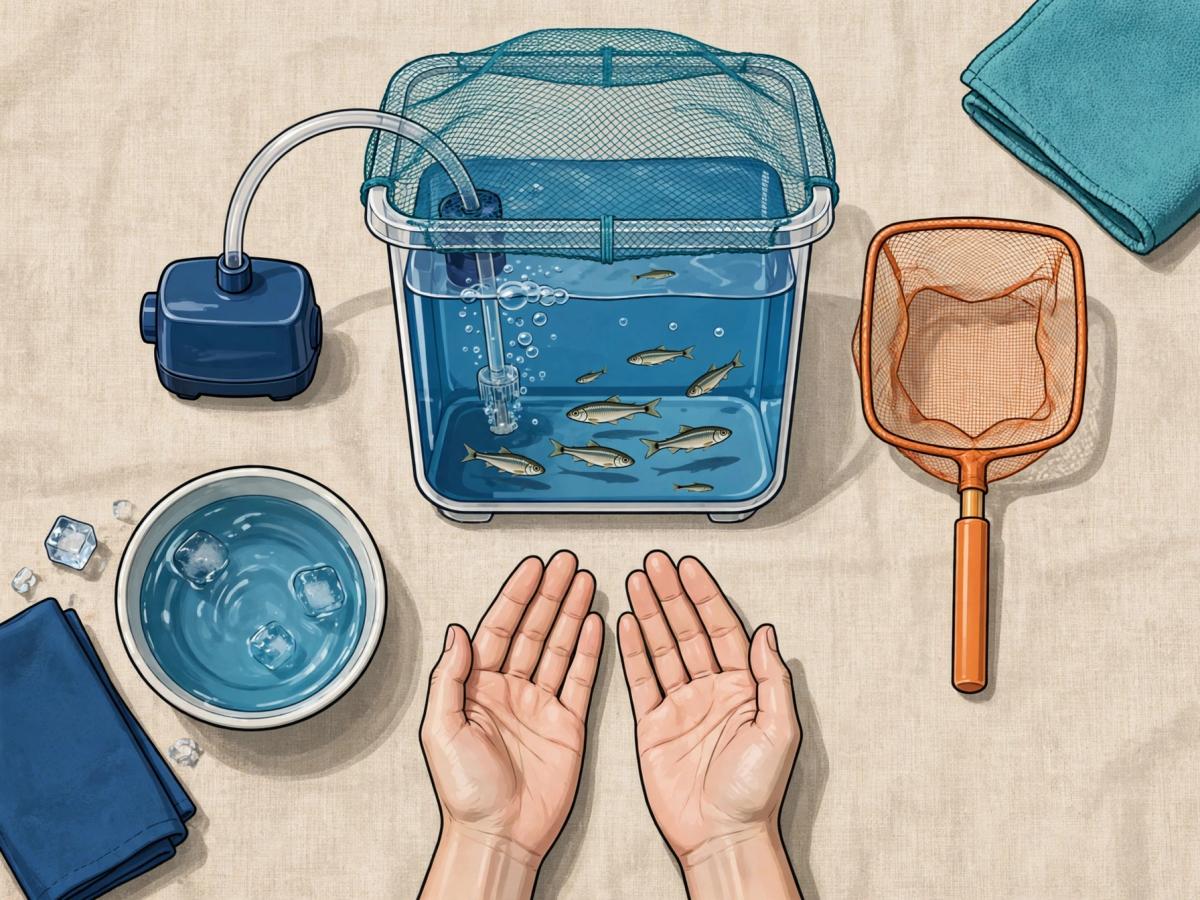
The collection is only the beginning
Bait can be collected legally and still be lost through poor care. A warm container, dirty water, crowded habitat, rough handling, or an unplanned trip between waters can harm living bait and create a problem at the end of the day. Good bait care is a short chain of calm decisions: prepare the container, keep conditions appropriate, check often, and move or dispose of bait only as current guidance allows.
There is no universal storage time or single container that works for every worm, insect, minnow, or other organism. A bait's needs depend on what it is, the temperature, the water or air available, the amount you keep, and the rules for the place where you fish. Use this lesson to build a care routine, then confirm the details for your bait and location.
By the end of this lesson, you will be able to:
- Set up a clean care station before collecting or buying bait.
- Match shade, moisture, water, airflow, and crowding to the organism instead of guessing.
- Keep bait handling, transport, and end-of-day decisions within current local guidance.
Prepare before the bait arrives
Choose a clean container that is large enough for the small amount you plan to keep. Remove residue from previous trips, especially anything that could contaminate water or harm living organisms. A lid can prevent escape, but it should not create an overheated or poorly ventilated space. Make the container easy to inspect without repeatedly handling the bait.
Set up shade before the container is needed. Direct sun can warm a small container quickly, and a vehicle or closed tackle compartment may become hotter than the shoreline. Shade does not mean hiding the container under clothing, where air movement and inspection become difficult. Place it where it will stay secure, visible, and protected from unnecessary heat.
If your bait needs water or aeration, prepare that system before collection. Follow current guidance for the appropriate water source and transport. Do not assume that adding water from the fishing spot is always permitted, or that moving it to another water body is harmless. Water, mud, plants, and organisms can carry unwanted species or disease.
Match care to the organism
Terrestrial bait: Worms and insects need conditions that avoid crushing, drying, overheating, or drowning. Use a container and moisture level appropriate for the organism. Keep the container shaded and secure. Do not seal it in a way that traps heat or removes needed airflow, and do not store it beside a hot surface.
Aquatic bait: Minnows and other water-dependent organisms require suitable water quality, temperature, oxygen, and space. Some situations may call for aeration or frequent attention, while others call for a different legal care method. Follow current species and local guidance rather than treating one bucket setup as universal. Keep the container out of direct sun and do not crowd it.
Mixed bait: Do not place different organisms together simply because they fit in the same container. Their moisture, temperature, oxygen, or handling needs may differ. Separate them when guidance calls for it, and keep the plan simple enough to monitor.
These categories are reminders to ask better questions. They are not a substitute for species-specific or local instructions.
Watch temperature and crowding
Temperature changes can happen before the weather feels uncomfortable to you. A dark container on a dock, a bucket in a vehicle, or a small box beside a sunny bank can heat quickly. Check the container with your senses and observations, keep it shaded, and move it to a more suitable place when conditions shift. Do not add ice, cold water, or other changes unless that approach is appropriate for the organism and consistent with current guidance.
Crowding creates stress and can make it harder to notice problems. Keep the amount modest and check whether the bait is moving or behaving as expected for that organism. Weak or injured bait should not be handled repeatedly just to keep it in the container. Make an end-of-day decision that follows the rules instead of holding it indefinitely.
Secure the container during transport. A tipped container can injure bait, soak gear, and spread water or organisms where they should not go. Keep bait separate from food, drinks, medicines, and personal items. Wash your hands after handling bait and before touching food.
Handle with a light touch
Use wet hands only when the organism and current guidance make that appropriate. Avoid squeezing, dropping, scraping, or repeatedly transferring bait between containers. Handle one small amount at a time and return it to the care container quickly. Keep children and pets away from hooks, sharp tools, and containers that could tip.
When you need to inspect the bait, look at the condition of the container first. Is it shaded? Is the lid secure? Is the water or bedding still suitable? Is the amount too crowded? A quick visual check can prevent a longer, rougher intervention. If the setup is not working, stop fishing and correct the care problem rather than improvising a risky fix.
Clean care equipment after the trip. Remove organic material, rinse and dry when appropriate, and follow current guidance about draining and disinfecting. Never dump bait water, bedding, mud, or organisms onto a different shoreline unless official guidance explicitly permits that action.
Field exercise: build a care checklist
Before your next trip, make two columns on a note:
Before: clean container, shade location, secure transport spot, appropriate moisture or water plan, aeration plan if appropriate, rule check, and the amount you need.
During: temperature and shade, crowding, container stability, bait condition, hook and tool separation, and the time you will reassess the plan.
Then add one end-of-day decision for unused bait based on current official guidance. Keep the checklist beside your tackle. If you cannot answer one line, do not collect that bait yet.
Safety and local-rule reminder
Follow current official guidance for water, transport, possession, release, and disposal. Keep containers stable and away from children, pets, food, and hooks. Do not wade or lean over unstable banks to refresh a container. Stop when heat, weather, water movement, equipment, or bait condition exceeds your ability to manage safely. If you are unsure whether water or organisms may move between locations, keep them contained and seek current guidance before acting.
Recap
- Prepare a clean, shaded care station before collecting bait.
- Match water, moisture, airflow, temperature, and space to the organism.
- Avoid overheating, crowding, rough handling, and improvised fixes.
- Keep water and organisms contained until you know the approved next step.
- Good bait care protects the bait, the angler, and the water.
Test Your Knowledge
Ready to see how much you've learned? Take this quick 4-question quiz to complete the lesson.
Take the Quiz to Finish
Complete the quiz above to unlock the lesson completion.