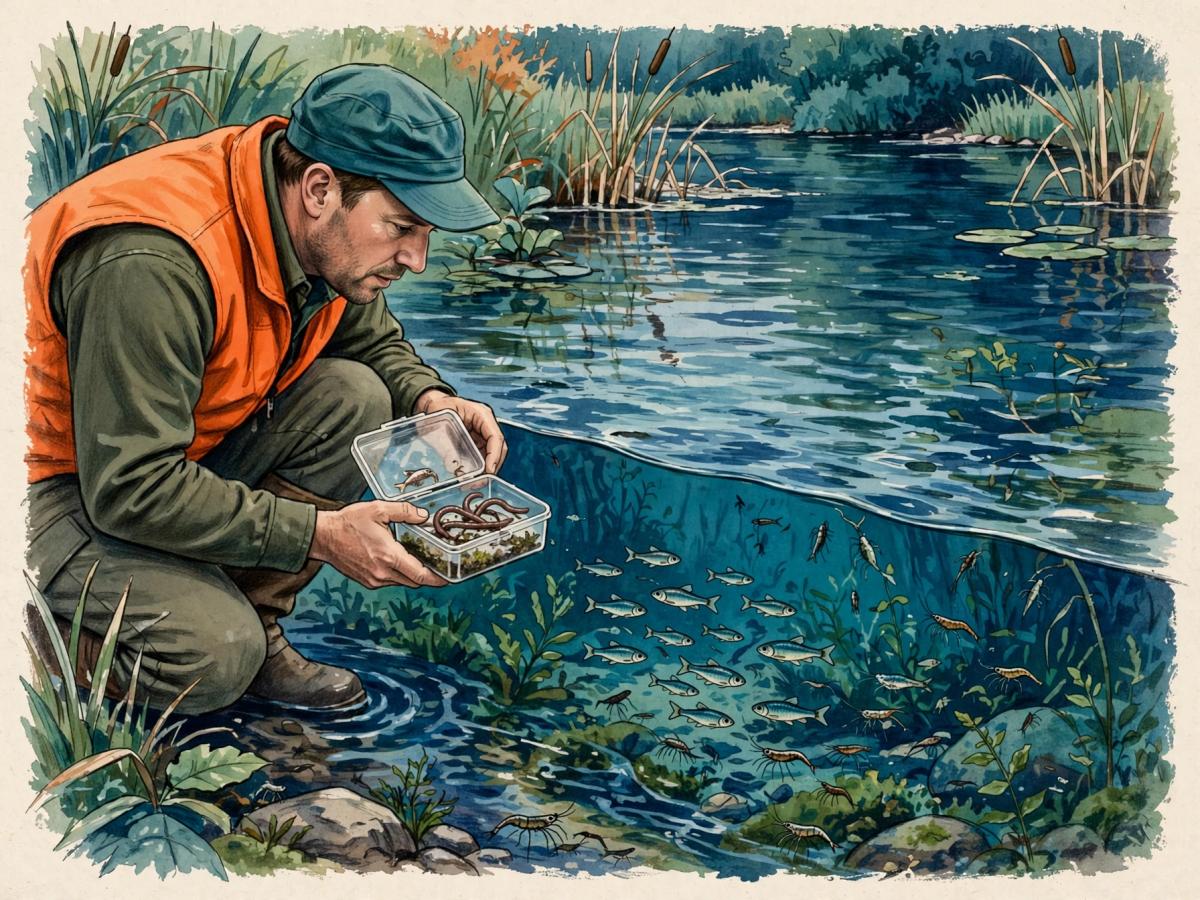
Let the water inform the choice
Bait selection works best as a small observation loop. Look at the water, notice what is present, choose a legal bait and a simple presentation, then pay attention to what changes. This is more useful than carrying one promise into every place. A bait can be legal and well cared for without being the right fit for the species, depth, movement, or conditions in front of you.
The goal is not to find a magic bait. The goal is to make a reasonable first choice and learn from the response. Fish behavior varies by species, water body, season, weather, food, and fishing pressure. Use bait as one part of a plan, not as a guarantee.
By the end of this lesson, you will be able to:
- Observe forage, water movement, depth, cover, and access before choosing a presentation.
- Keep the choice within current legal and responsible bait guidance.
- Change one variable at a time so the next decision has a reason behind it.
Start with what is visible
Before opening the container, give the water a quiet look. Notice shoreline activity, insects, small baitfish, vegetation, current, surface movement, clarity, and depth changes that you can see from a safe position. You do not need to identify every organism. You need enough information to avoid making a choice based only on habit.
Look for repeated clues rather than one dramatic moment. A single splash can be wind, a bird, a fish, or falling debris. A consistent edge of small movement, insect activity, or current may tell you more about what the water is offering. Keep your first presentation simple so you can compare it with the next one.
Your access and safety are part of the match. A bait choice that requires you to stand on an unstable ledge, wade into uncertain current, or cast across other people is a poor choice even if it looks attractive on paper.
Match broad bait traits to conditions
Think in traits, not promises. A bait that stays near the bottom may suit a plan where the fish are likely to be close to bottom structure, but depth and species still need to be checked. A bait that moves naturally in shallow water may fit a quiet edge, but wind, clarity, and cover can change the presentation. A visible offering may help in low light, while a subtle one may fit clearer or calmer water. These are starting questions, not universal rules.
Ask what the bait can do in the water you can fish safely:
- Can it remain where you intend to present it?
- Can you see or feel what is happening without guessing?
- Does its movement fit the current and depth?
- Is the bait legal for this water and target?
- Can you handle it without damaging the bait or the habitat?
Choose the simplest legal option that answers those questions. If the water changes, you can make another decision.
Make one change at a time
A useful adjustment has a clear before and after. Start with one location, depth, presentation, or bait choice. Give it a fair observation period based on the conditions and your ability to monitor the line. If you change the bait, keep the location and presentation similar. If you change location, keep the bait and basic presentation similar. This creates a small comparison instead of a pile of guesses.
Do not turn a quiet period into a verdict that the bait is bad. Ask what else could explain the response. The fish may be elsewhere. The bait may be too high, too low, too still, or moving unnaturally. The water may have changed. You may not be able to observe the bite from that position. Make the next change because of one of those observations.
If you cannot tell what happened, simplify. Move to a safer observation point, reduce the number of variables, or pause and watch the water again. Fishing knowledge grows from clear questions, not from constant motion.
Keep the bait and water in balance
Use only the amount you can care for and the method the current rules allow. Avoid dropping containers, dragging bait through shallow habitat, or letting extra organisms escape. Keep any unused bait contained while you decide what to do at the end of the trip.
A legal bait is not automatically a good fit for every water body. Transport and release rules may limit where it can go. If the bait came from another place, do not assume that moving it again is harmless. When the end-of-day plan is unclear, keep it contained and check official guidance rather than making a quick release.
The same care applies to tackle. Keep hooks organized, check the line, and choose a presentation that does not require unsafe casting around people or cover. A small, controlled plan protects both the angler and the place.
Field exercise: make a one-variable bait log
Choose a permitted, familiar shoreline and spend a few minutes observing before you fish. Record:
- Two visible water clues.
- The legal bait choice you are starting with and why it fits those clues.
- The presentation variable you will hold steady.
- The one change you will make if the first observation does not answer your question.
After the session, write what you actually saw. Avoid writing that the bait worked or failed unless you can describe the conditions and response. A useful note might say, the wind increased and the presentation became hard to observe, so the next step was to move to a protected edge. That note supports your next decision without claiming a guarantee.
Safety and local-rule reminder
Use current official guidance for bait species, collection, possession, transport, release, and disposal. Fish from stable access and keep casts controlled around people, structures, and vegetation. Do not wade or reach into current to improve a presentation. Stop when weather, footing, hooks, line, water movement, or equipment exceeds your ability.
Recap
- Observe the water before choosing bait.
- Think in traits and conditions, not guaranteed outcomes.
- Keep the first presentation simple and change one variable at a time.
- Keep bait contained and follow current movement and disposal guidance.
- A thoughtful bait choice creates a question the water can answer.
Test Your Knowledge
Ready to see how much you've learned? Take this quick 4-question quiz to complete the lesson.
Take the Quiz to Finish
Complete the quiz above to unlock the lesson completion.