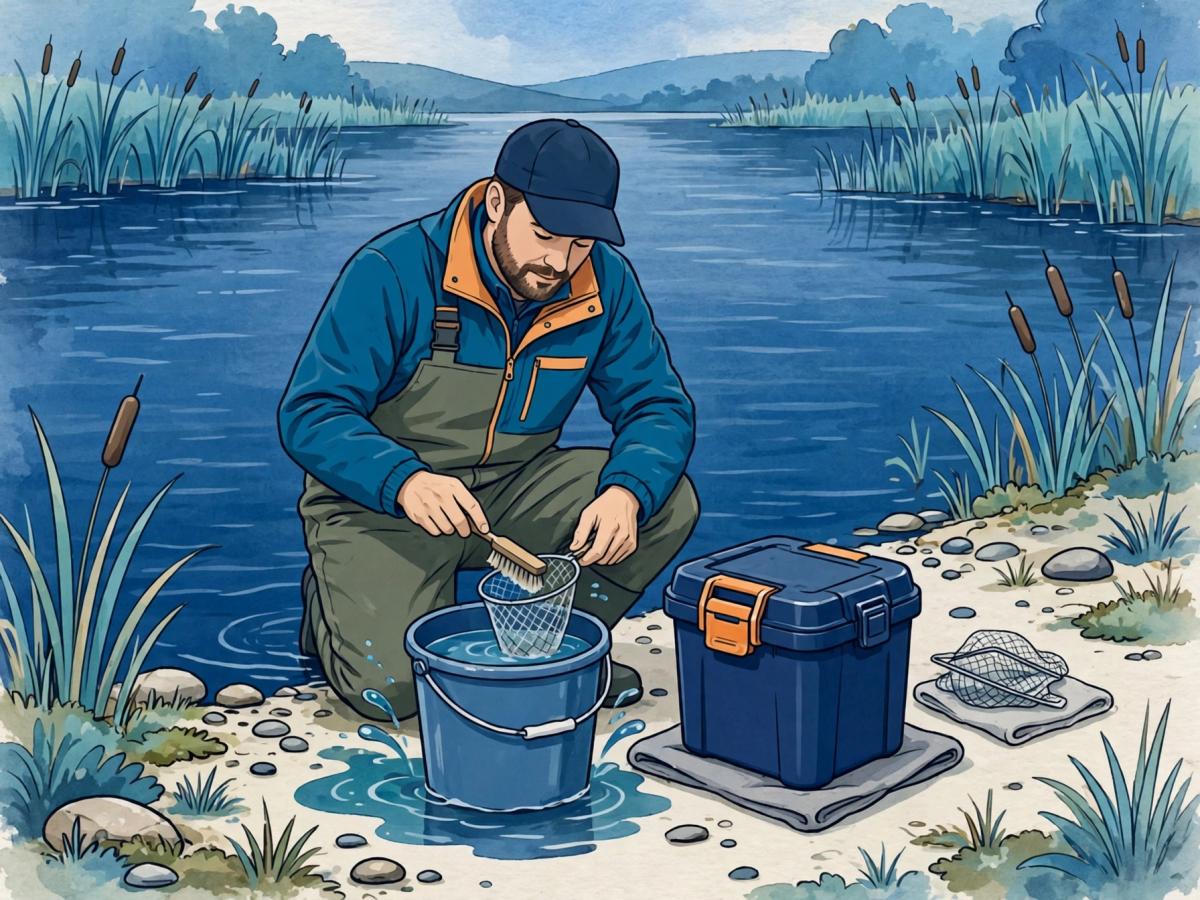
The last five minutes count
A responsible bait trip does not end when the rod is packed. Unused bait, damp nets, containers, line, wrappers, and disturbed ground all need a final decision. The choice may be simple, but it should be deliberate. Do not release an organism, water, bedding, or plant material until current official guidance says what is allowed.
Finishing well protects the next angler, the habitat, and the health of other waters. It also makes the next trip easier because clean equipment tells you what you carried and where it came from. A few quiet minutes at the end can prevent a problem that travels farther than the original shoreline.
By the end of this lesson, you will be able to:
- Decide what to do with unused bait using current local guidance.
- Clean and dry collection equipment without spreading organisms or material.
- Leave a fishing area free of line, packaging, and avoidable disturbance.
Never let the end of the day become a guess
The correct end-of-day action depends on the organism, where it came from, where you are, and the current rules. Some places may allow a specific return action, while others may prohibit release or require a different disposal method. The same decision may not apply at the next lake, river, shoreline, or season.
Check the plan you made before collecting. If it says unused bait must stay contained, keep it contained. If official guidance provides a permitted return or disposal route, follow that route exactly. If the guidance is missing or unclear, do not improvise a release. Keep the bait secure and seek current information or choose the safer approved option.
Never release bait into a different water body because it seems nearby, because the bait looks healthy, or because the container is inconvenient. Water, mud, plants, and organisms can carry unwanted species or disease. A quick release can create a long problem.
Keep a simple closeout order
Use the same order each time:
- Secure hooks, knives, pliers, and other tools.
- Decide what happens to unused bait using current guidance.
- Contain water, bedding, mud, and organisms until that decision is complete.
- Check the bank, dock, boat, or access area for line, packaging, and small pieces of gear.
- Clean collection nets, buckets, and containers according to current spread-prevention guidance.
- Drain, dry, store, or dispose of materials only where allowed.
- Look back at the place before you leave.
The order matters because loose hooks and wet gear create hazards while you are cleaning. It also keeps a rushed disposal choice from happening before you have checked the rules.
Clean to protect the next water
Nets, buckets, gloves, containers, boots, and other equipment can hold wet leaves, mud, eggs, plants, or small organisms. Inspect seams, corners, handles, and mesh. Remove visible material where it can be handled safely. Follow current official guidance for draining, cleaning, disinfecting, and drying equipment. Do not assume that a quick rinse into the nearest water is acceptable.
Keep runoff and waste away from another shoreline unless the current guidance specifically allows it. If you are moving between waters, make sure equipment is handled in the way local spread-prevention instructions require. When in doubt, keep wet material contained until you know the approved next step.
A clean container also protects the bait you may use another day. Residue, heat, and old organic material can make the next care plan harder and may injure living bait. Cleaning is part of preparation, not a cosmetic extra.
Leave the place better
Scan the area slowly. Fishing line can catch wildlife, wrap around feet, or remain hidden in grass. Soft bait containers, labels, wrappers, rubber bands, and broken tackle can be easy to miss. Carry out what you brought in and anything clearly safe to remove from your immediate area.
Do not reshape the bank or remove natural material simply to make the site look tidy. Leave roots, plants, rocks, logs, and cover where they belong. If you disturbed a small amount of loose cover during a permitted inspection, return it carefully. If you find a larger hazard or a marked place that needs attention, use the land manager's reporting route when available instead of creating a new disturbance.
Leaving better does not mean taking ownership of a shared place. It means reducing the footprint of your own visit and respecting the people, wildlife, and anglers who use it next.
Field exercise: the closeout walk
On your next trip, set a timer for five minutes before you want to leave. Walk a small, safe loop around your own fishing area and check three categories:
- Bait: What remains, and what current guidance says to do with it.
- Equipment: What is wet, dirty, tangled, or carrying plant material or mud.
- Place: What line, litter, packaging, or avoidable disturbance needs attention.
Write one sentence about your end-of-day decision. If the answer depends on a rule you have not checked, keep the material contained and mark the next action as a question to resolve before your next trip. The exercise is complete when the plan is clear and the place is ready for someone else.
Safety and local-rule reminder
Use current official rules for release, possession, transport, disposal, and equipment cleaning. Keep hooks and sharp tools secured before handling bait or litter. Do not reach into unstable water or vegetation to retrieve an object. Wear suitable protection for the conditions, wash hands after handling bait, and stop when cleanup would put you in unsafe weather, current, darkness, or footing.
Recap
- Keep unused bait contained until current guidance tells you what is allowed.
- Never release bait or water into a different water body as a guess.
- Clean nets, containers, and wet equipment to reduce spread.
- Remove line, packaging, and litter without disturbing habitat.
- A good trip ends with the place ready for the next visit.
Test Your Knowledge
Ready to see how much you've learned? Take this quick 4-question quiz to complete the lesson.
Take the Quiz to Finish
Complete the quiz above to unlock the lesson completion.