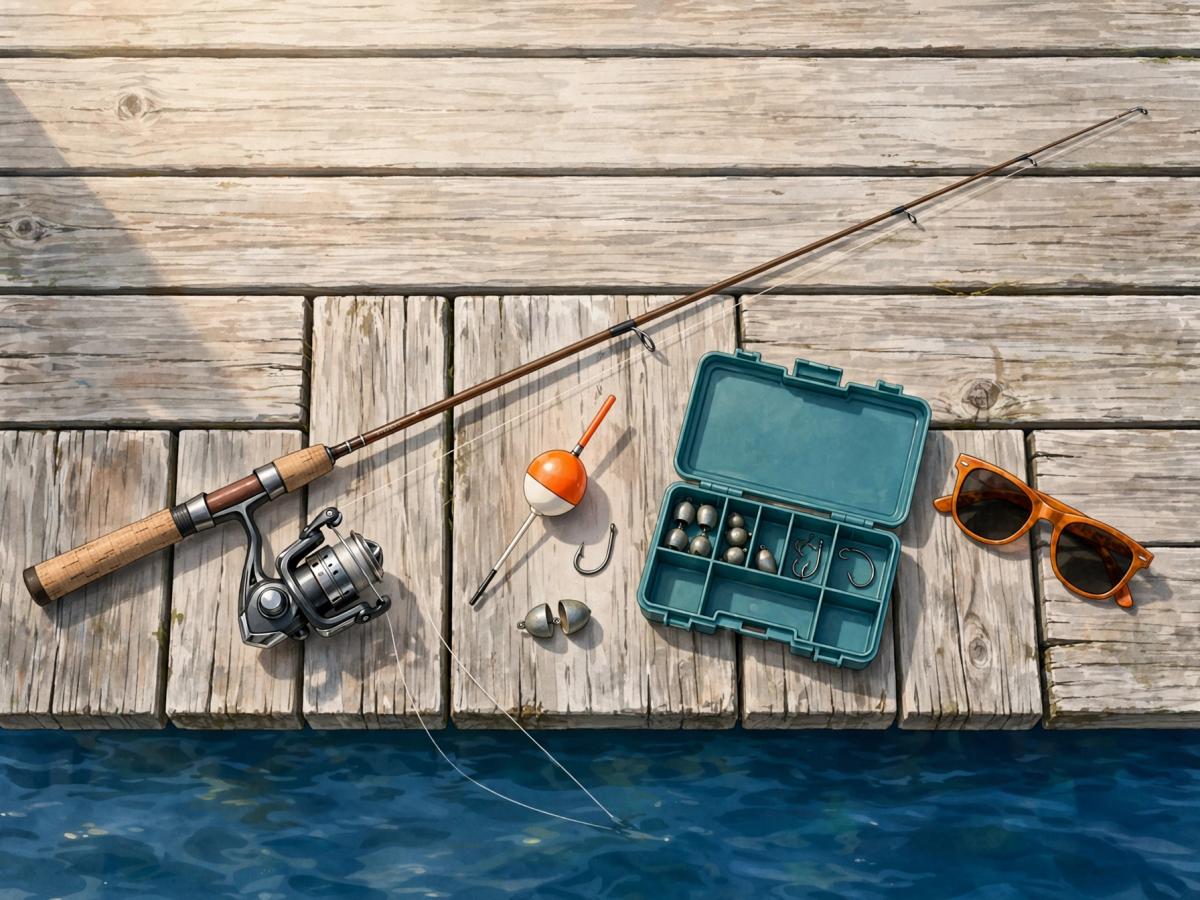
Start with a setup you understand
A first fishing trip gets much calmer when every piece of gear has a job. You do not need a mountain of tackle. You need a rod and reel that feel comfortable, line that is in good shape, a hook, a way to show a bite, something to add a little weight, and bait or a lure suited to the water you plan to fish.
This lesson builds a simple float setup and gives you a way to check your kit before leaving home. The aim is confidence, not a perfect shopping list.
Meet the basic kit
Rod and reel
The rod gives you reach and helps cast, feel, and control the line. The reel stores line and lets you release, retrieve, and manage it. A spinning outfit is often a friendly place to start because the controls are easy to see and the cast is forgiving. Use the outfit you have access to, then learn how its parts move.
Before rigging, look for cracks, loose guides, or a reel that feels rough. Make sure the reel is attached firmly to the rod. A clean, familiar outfit is more useful than a complicated one you are still trying to understand.
Line, hook, and connection
The line carries your bait and tells you what is happening at the other end. Run it through each guide on the rod, from the larger guide near the reel toward the tip. The hook holds the bait or lure. Tie it on with a knot you can inspect and trust. We will practice a few beginner-friendly connections in the next lesson.
Leave enough line beyond the rod tip to rig comfortably, then trim loose tag ends after tying. A frayed section deserves a fresh cut and a new knot.
Bobber and sinker
A bobber, also called a float, keeps bait suspended and gives you a visible signal when a fish takes interest. A sinker adds weight so the bait settles and the cast behaves more predictably. Clip or attach the bobber above the hook, then place only the small amount of weight needed to help the bait reach the depth you want.
The bobber is a guide, not a promise. If it lies flat or sinks immediately, adjust the amount of weight or the depth. Make changes one at a time so you can tell what helped.
Bait, lure, and small tools
Bait is something natural that fish may eat. A lure is a made object designed to attract attention through movement, shape, color, or vibration. Use what fits the species, water, and local rules. Keep the choice simple while you learn how the rest of the setup behaves.
A small tackle kit can hold hooks, bobbers, sinkers, spare line, and a few lures. Add pliers or a hook remover for safer unhooking, scissors or line cutters for trimming, and a towel or rag for messy jobs. Carry water, sun protection, and any safety gear your location requires.
Build a simple float setup
- Check the rod and reel. Make sure the reel is attached, the bail or spool control works as designed, and the line is not badly worn.
- Thread the line. Open the reel control if your reel uses one, then guide the line through every rod guide. Do not skip the small guide near the tip.
- Tie on the hook. Use a practiced knot and leave a short tag end. Wet the knot before tightening, then trim the tag neatly. Keep the hook point away from your fingers.
- Add the bobber. Place it above the hook so the bait hangs below it. Start with a modest depth and adjust after you see how the water looks.
- Add a little weight if needed. Put the sinker below the bobber and above the hook, following the package directions for any clip-on weight. The goal is a natural, manageable presentation, not the heaviest rig possible.
- Add bait or a lure last. Bait the hook securely without hiding every bit of the point. If you are using a lure, check that its hooks are clear of clothing and fingers before casting.
Stand back and look at the whole rig. The hook should be secure, the line should run cleanly through the guides, and the bobber should sit where you expect it to sit. This one-minute check prevents many first-trip tangles.
A small practice that pays off
Lay the pieces on a table and name them out loud: rod, reel, line, hook, bobber, sinker, bait or lure, pliers, and tackle kit. Then point to each part and explain its job in one sentence. Practice the sequence with the hook removed or safely covered. Once the order feels familiar, rig beside the water before you begin casting.
On your first trip, change one thing at a time. If the bobber is too close to the hook, move it. If the line tangles, stop and trace the line back through the guides. You are learning a system, not taking an exam.
Safety and local rules
Check the local license, access, bait, hook, season, size, and possession rules before fishing. Rules vary by place and species, and a general lesson cannot replace the guidance for your water. Make sure you have permission to fish the shoreline. Keep hooks covered while walking, set your tackle where nobody will step on it, and use pliers when a hook is difficult to remove.
Quick recap
A beginner setup works when you understand the job of each part. The rod and reel manage the line, the hook carries the bait, the bobber shows depth and activity, and the sinker helps the presentation settle. Keep the rig simple, inspect every connection, and let local rules and conditions guide the details.
Test Your Knowledge
Ready to see how much you've learned? Take this quick 4-question quiz to complete the lesson.
Take the Quiz to Finish
Complete the quiz above to unlock the lesson completion.