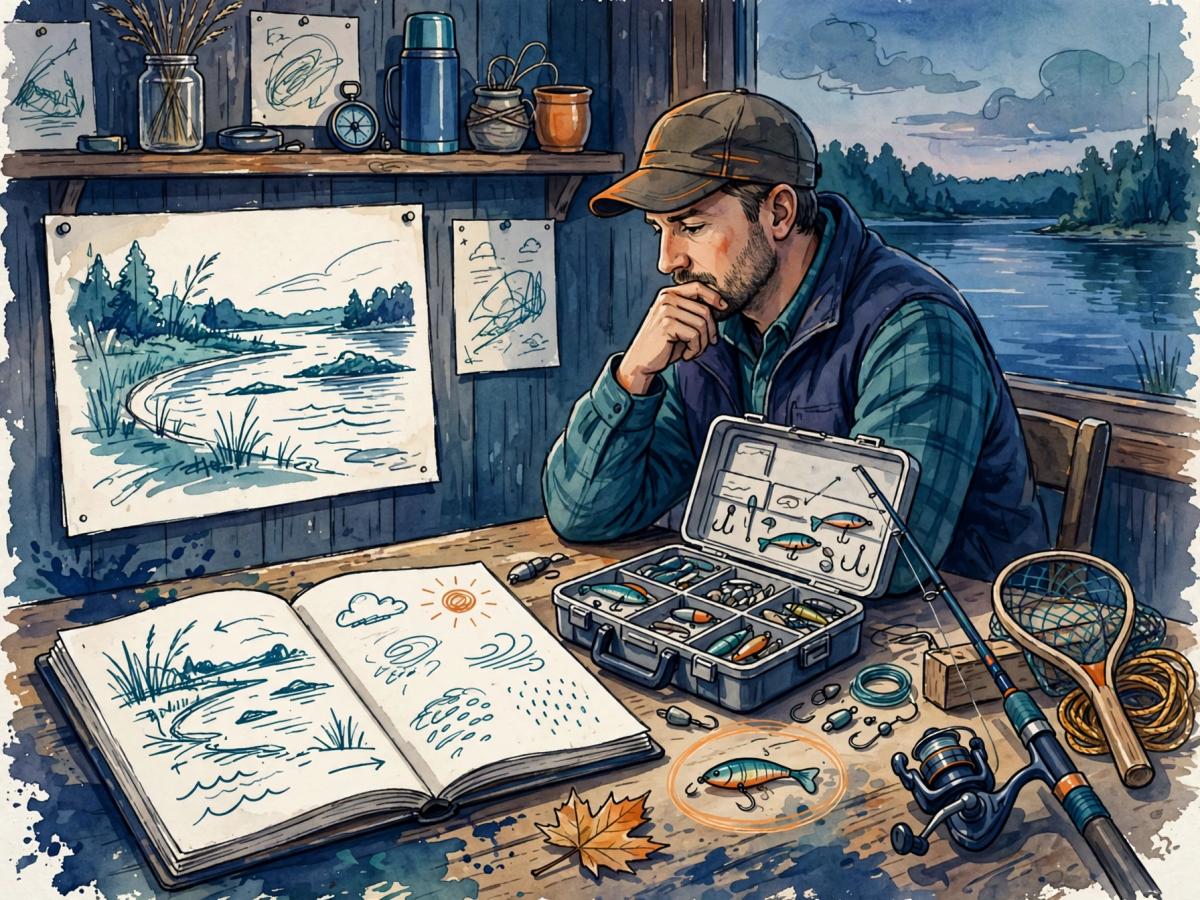
Let one trip improve the next one
A trip ends at the access point, but the learning does not have to end there. A short review can turn scattered impressions into one useful next question. It can also keep a memorable result from becoming a story that controls every later decision.
The discipline is simple: keep what you observed, label what you inferred, set aside conclusions that reached too far, and choose one next test that fits the next water and conditions. This is how an angler becomes more prepared without becoming trapped by yesterday’s answer.
One trip is evidence to consider. It is rarely proof of a universal pattern. Fish behavior can change with species, water body, light, wind, temperature, forage, water level, pressure, access, and presentation. A careful review respects that variation while still finding something useful to carry forward.
Learning goal
By the end of this lesson, you should be able to review a trip while its details are fresh, sort notes into observed evidence and uncertain explanations, keep the clues that deserve another look, discard overconfident conclusions, choose one next test, and prepare for the next outing with a calmer plan.
Review while the trip is still fresh
Begin with the timeline, not the highlight. Write the start and end time, the places or access areas you actually used, and the points where conditions changed. Note when the light shifted, wind increased, water moved differently, people arrived, a presentation changed, or you stopped because a boundary was reached. This sequence matters because a response at the end of a session may not belong to the same conditions as a response at the beginning.
Rebuild the day in small blocks. For each block, write the conditions, the water clue, the approach, the response, and the decision that followed. A block might say: first light, calm surface, small bait near a bank shadow, slow presentation beside the edge, no contact, moved to a deeper transition. Another might say: wind increased, line control became uncertain, shortened the comparison and left the exposed bank. The second block is valuable field evidence even though it contains no fish.
If you wait several days, memory tends to blend the strongest moment across the whole trip. A brief review soon after you secure the gear keeps the quiet details available. It also lets you correct the record while you still remember which observations were direct and which were guesses.
Sort the evidence into three piles
Use three headings: Observed, Plausible, and Unknown.
Observed includes things you directly noticed or recorded. The wind pushed floating debris toward one bank. A presentation contacted bottom in the deeper lane. A fish followed and turned away. The public access was open when you arrived. A bank became slippery after rain. These statements stay close to what happened.
Plausible includes explanations that fit the observations but still need another test. Food may have collected along the windward edge. The fish may have followed because the pace was slower. The deeper lane may have offered a more comfortable position. These ideas are useful because they point toward a next decision, not because they are settled facts.
Unknown includes the questions the trip could not answer. Was the response from the target species? Did the fish follow the presentation or react to a shadow? Would the same edge matter in brighter light? Did the quiet result come from location, depth, pace, or timing? Keeping unknowns visible prevents a convenient explanation from becoming a permanent rule.
This sorting also works when the trip went well. A landed fish is an observation. The claim that every fish in that water will want the same approach is a much larger conclusion. Keep the fish, the conditions, and the response. Put the larger claim in the unknown pile until repeated evidence supports a narrower conclusion.
Keep useful evidence, release the overconfident story
A strong review does not erase what worked. It makes the claim smaller and more accurate. Keep the details that another trip could compare: time, light, wind, water clue, cover or depth, presentation family, angle, pace, response, access, and safety boundary. Set aside words such as always, never, only, best, guaranteed, or the fish were all holding there unless your evidence truly supports them. In most one-trip notes, those words outrun the conditions.
For example, replace the fish were on the shallow bank with the only response I observed came from the shallow edge during the falling shade. Replace the lure was perfect with the slow pass produced one contact in that session. Replace that point always works with the point gave me a safe comparison worth revisiting when conditions are similar.
This kind of edit is not timid. It preserves the useful clue while protecting you from a bad transfer. A pattern can be worth testing again without being treated as a promise. When the next trip disagrees, the smaller claim can adapt. The overconfident story usually creates frustration because it turns changing conditions into a personal failure.
Choose one next test
A next test should be small enough to complete and clear enough to interpret. Start with the biggest unresolved question from the review. If you do not know whether depth or pace mattered, hold one steady and change the other. If you do not know whether wind concentrated food or simply made the surface harder to read, compare a windward and sheltered edge when both are safely accessible. If the response happened beside cover, decide whether the next visit will compare the near edge with the first open water rather than casting randomly at every branch.
Write the test in a sentence with three parts:
- Keep: What will stay similar, such as the general presentation, time window, or casting angle.
- Change: The one factor you will adjust, such as depth, pace, position, or angle.
- Learn: What observation would make the comparison useful, and what would remain uncertain.
For example: Keep the same broad presentation and retrieve pace, change from the shallow edge to the first deeper water, and note whether the presentation moves differently or receives a response under similar light. This is a test, not a guarantee. If the light, wind, access, or safety situation changes sharply, record the change and begin a new baseline instead of forcing the comparison.
Do not make the next trip a referendum on the last one. If the test is unclear, that is information. You can improve the question, not punish yourself for an outcome the conditions controlled.
Make the next trip calmer before you leave home
Use the review to reduce decisions, not to create a longer checklist. Carry forward the one question, the first safe approach, the access check, the safety boundary, and the Plan B. Reset the equipment that affected the trip. Remove damaged line, secure hooks, dry what needs drying, and put the useful presentation where you can reach it without searching through everything. This is organization for attention, not a product recommendation.
Check current access, fishing, watercraft, collection, harvest, and protected-area guidance again. Old notes can remind you what to ask, but they cannot guarantee that a rule, gate, tide, launch, water level, or route is unchanged. Check the forecast and daylight, then decide whether the original question still fits your ability and the place.
Write a return plan when the setting calls for it. Tell the appropriate person the general route and expected return for a solo, remote, kayak, or boat outing when appropriate. Choose a stop point before you go. The next trip becomes calmer when the safety decision is already made instead of being negotiated beside rising wind, poor footing, fading light, or fatigue.
Field exercise: make a next-trip card
Within a day of your next outing, review your notes for fifteen minutes. Draw three columns labeled Observed, Plausible, and Unknown. Move each important statement into one column. Rewrite any claim that uses always, never, only, or guaranteed so it matches the evidence from that trip.
Then make a small next-trip card with these lines:
- Question: What do I want to understand better?
- Keep: What will I hold similar for the first comparison?
- Change: What one meaningful variable will I adjust?
- First safe position: Where can I begin with casting, landing, and exit room?
- Plan B: What condition will change the plan, and what will I do?
- Safety and access check: What current guidance, weather, route, or return plan must I confirm?
Before the next trip, read the card once and check whether the water and conditions still fit it. During the outing, note what changed. Afterward, keep the useful evidence and write a new card only if the question remains worth asking. Over time, the cards form a practical chain of questions rather than a collection of rigid rules.
Safety and local guidance
A review should preserve safety decisions along with fishing clues. Check current local requirements for access, licenses, seasons, methods, bait collection, harvest, release, watercraft, and protected areas before the next trip. Do not treat an old route or launch as permanently open. Keep hooks, lines, tools, fish, and communication devices controlled. Make room for people and casting, use secure footing, and stop when weather, current, visibility, fatigue, or equipment exceeds your ability. If a fish is caught, follow current local handling, release, or harvest guidance rather than letting the next test delay care.
Quick recap
- Review the timeline and conditions while the trip is still fresh.
- Sort notes into observed, plausible, and unknown instead of blending them into one conclusion.
- Keep evidence that another trip can compare and shrink claims that reached too far.
- Choose one next test with a clear keep, change, and learn statement.
- Recheck current rules, access, weather, safety needs, and return plans before carrying the question forward.
- Use each trip to create a calmer next decision, not a promise that one pattern will always repeat.
Test Your Knowledge
Ready to see how much you've learned? Take this quick 4-question quiz to complete the lesson.
Take the Quiz to Finish
Complete the quiz above to unlock the lesson completion.