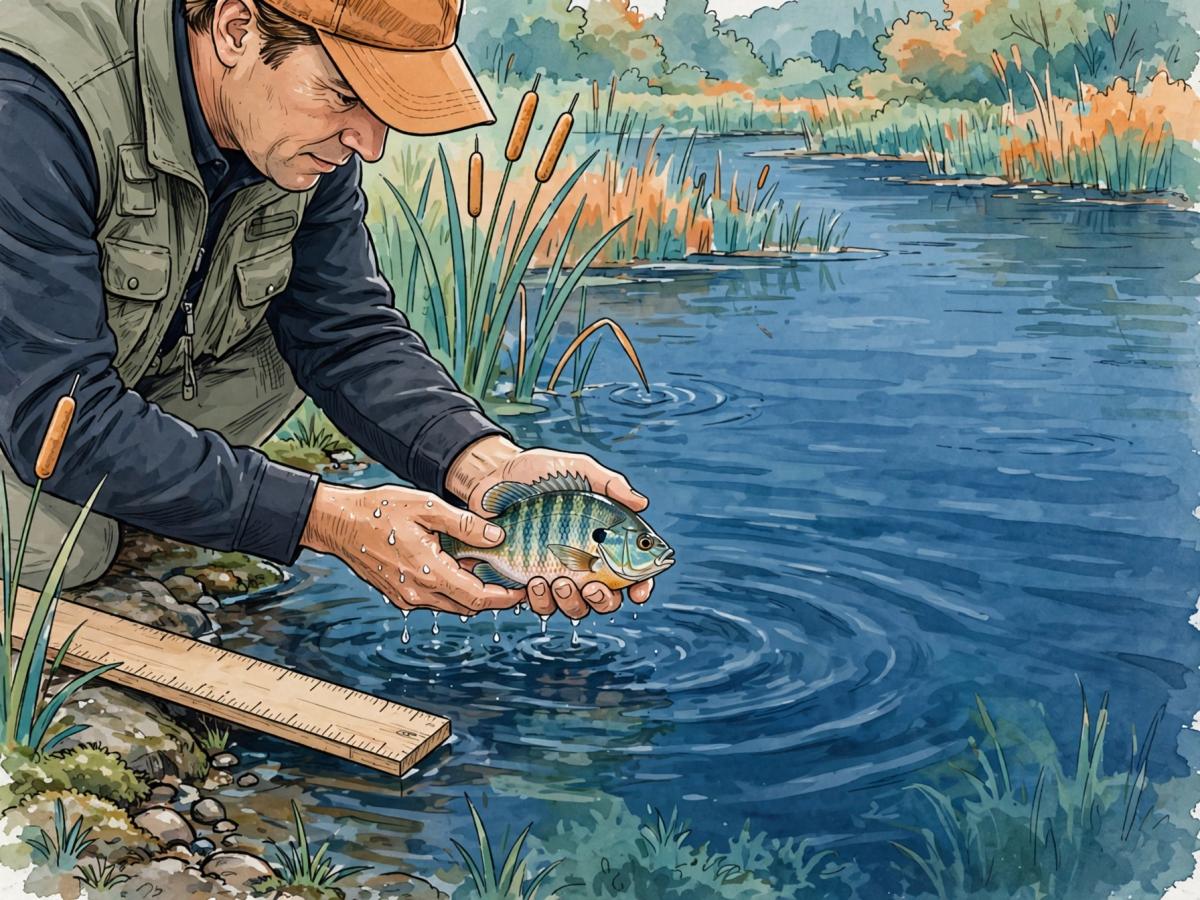
Panfish Fishing: Handle Fish Responsibly
A panfish may be small, but it still deserves careful handling. A wet hand, a steady position, a quick hook removal, and a clear decision about local rules can make the difference between a calm release and a rushed one. Responsible handling protects the fish, the angler, and the quality of the trip.
This lesson focuses on handling and release or legal harvest decisions. It does not teach cleaning fish or make claims about eating them. Follow the rules for the water you are on, and stop when the situation becomes unsafe.
Learning goal
By the end of this lesson, you will be able to prepare a simple handling plan, keep a fish close to the water, remove a reachable hook carefully, and recognize when local rules or safety concerns should change your decision.
Prepare before the fish arrives
The best handling plan starts before the bite. Clear a stable place beside the water, keep pliers or a hook tool within reach, and know where you will set the rod without letting the hook swing. If you want to record a measurement or photo, decide how you can do it quickly and without carrying the fish away from the water.
Wet your hands before touching the fish. Water protects the fish's outer coating better than dry hands. Avoid dropping it on wood, gravel, hot ground, or a dry towel. If you are fishing from a dock or steep bank, make sure you can hold the fish securely without leaning beyond your balance.
Keep the fish close to the water at every step. A short, supported lift is safer than standing up for a long photo or walking to find a better background.
Remove the hook with a calm sequence
If the hook is easy to reach, support the fish gently and use pliers or a hook tool to back the hook along the path it entered. Keep the point away from your fingers and face. Do not twist aggressively or pull against tissue when the hook is deep, near a sensitive area, or difficult to see.
If removing the hook becomes risky, stop. Follow current local guidance for deeply hooked fish or seek help from an experienced angler or local authority. A rushed attempt can injure the fish and the person holding it. If you cannot safely manage the fish, returning it to the water promptly and following local rules is more responsible than forcing a perfect release.
Keep fins in mind. Spiny dorsal fins and sharp hook points can both cause injury. A small fish is not automatically safe to grip tightly. Use a steady, gentle hold and keep the fish supported over the water.
Release and legal harvest are decisions
Before fishing, check whether the species may be kept, the minimum or maximum size, the daily limit, the season, and any special water rules. Rules can vary for bluegill, crappie, perch, and other local panfish. A common name or a memory from another lake is not enough.
If you release the fish, keep it in the water while you finish the hook removal when possible. Support it upright, allow water to move across the mouth and gills without squeezing, and wait until it can swim away under its own control. Do not toss it back from a height or hold it out of water longer than necessary.
If local rules permit legal harvest, make that decision before you are standing over a fish with a hook in it. Keep only what the rules allow and handle the fish humanely. If you are uncertain about the species, size, or rule, release or seek official guidance rather than guessing. This lesson does not cover cleaning or preparation.
Watch the condition of the situation
Weather, cold, heat, wind, slippery footing, low light, and crowded shorelines can make handling unsafe. If your hands are numb, your footing is shifting, or another person is inside the hook path, pause and create a safer position before touching the fish.
A fish that is thrashing near a sharp hook may require a different plan from a calm fish in open water. Do not hold it close to your face. Keep children and pets outside the handling area, and ask for help rather than passing a fish or tool across an unstable dock.
There is no prize for completing a photo or keeping a fish in hand when the conditions are poor. Ending the handling step safely is part of responsible fishing.
Try this: the no-fish handling drill
Before your next trip, practice the sequence with an unhooked line or a blunt training piece: set the rod down safely, wet your hands, locate the pliers, support a fish close to the water, move a hook backward along its entry path, and return the fish without rushing. Do not practice with a live fish just to rehearse.
At the water, make a handling checklist before the first cast. Include pliers, a stable position, local rules, and the decision you will make if the hook is hard to remove. After a fish is released or legally retained, note what worked and what made the process difficult. Improve the preparation, not the amount of time the fish spends out of water.
Safety and local rules
Check current official rules before fishing. Confirm species, seasons, size or slot limits, daily limits, bait and hook methods, and any special release requirements. If regulations are unclear, stop and check the official source. Do not use a general guide as a replacement for local law.
Scan behind and above you before casting, keep hooks secure while walking, and never handle a fish where a fall would put you into unsafe water. Keep wet hands away from electrical equipment and protect your own fingers from fins and hooks. Do not wade or approach water beyond your skill and equipment.
Stop when handling becomes unsafe. Ask for help, return the fish promptly when permitted, or leave the water if weather, footing, visibility, or crowding has changed. Responsible fishing includes knowing when the next cast should not happen.
Recap
Prepare before the bite, wet your hands, keep the fish close to the water, and remove a reachable hook with a calm, supported motion. Check local rules before deciding on release or legal harvest. Do not force a difficult hook removal, carry out an unnecessary photo, or continue when handling is unsafe. Careful decisions matter more than a perfect moment.
Test Your Knowledge
Ready to see how much you've learned? Take this quick 4-question quiz to complete the lesson.
Take the Quiz to Finish
Complete the quiz above to unlock the lesson completion.