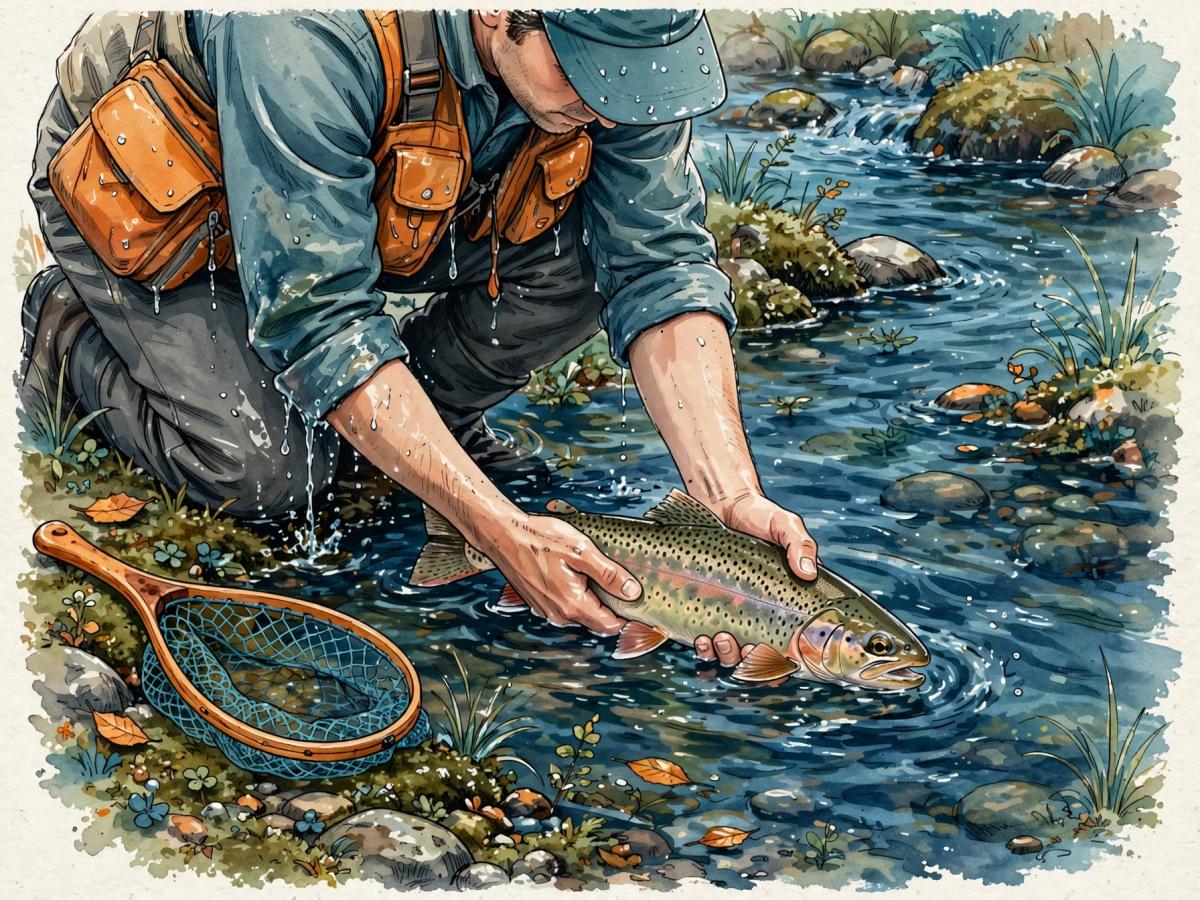
Land and Release With Care
The moment a fish comes close is when a calm plan matters most. Line, hooks, a net, current, and a slippery bank all arrive at the same time. You can make the landing easier by preparing before the fish is beside you and keeping every movement close to the water.
Careful handling begins with respect for the fish and the angler. Species, size, regulations, water temperature, and equipment change what a responsible decision looks like. The habits in this lesson give you a flexible starting point for release or legal harvest without promising a particular outcome for every fish.
Learning goal
You will learn how to prepare your net and forceps, keep hooks under control, support a fish with wet hands, limit time out of water, and check local rules before deciding whether release or legal harvest is appropriate.
Prepare before the fish arrives
Keep the net where you can reach it without stepping toward unstable water. Open it before the final approach, and make sure the handle will not catch on line or brush. Keep forceps accessible and closed. If you are with a partner, agree on who controls the rod and who handles the net. Clear loose gear from the landing area.
Maintain steady pressure rather than jerking the rod. Let the fish move within the space your tackle can safely manage, and keep people clear of the line. A fish may surge when it sees the bank or net. Use the current and the available water to guide it toward you, while remembering that a net does not make fast water or steep banks safe.
When the fish is close, lead it head first into the net if conditions and size make netting appropriate. Avoid chasing the fish with the net or stabbing at it. If a net cannot be used safely, keep the fish in the water and use a controlled hand landing only when your skill and the shoreline allow it.
Control the hook first
Hooks remain dangerous after the fish is landed. Keep fingers away from the fly and the fish's mouth until you can see the hook. A second hook on a multi-hook pattern can swing free. Place the rod where line stays clear, and keep your face and hands out of the hook path.
Use forceps to hold the hook or remove it when you have a clear view. If the hook is deeply set, difficult to see, or unsafe to remove, follow local guidance and seek experienced help. Pulling blindly can cause more harm to the fish and the angler. A barbless hook may simplify removal where permitted, but local regulations and the hook style still govern the choice.
Wet hands, low handling
Before touching a fish, wet your hands. Wet hands help protect the fish's outer coating. Keep the fish low over the water or inside the net, and support its body rather than squeezing it. Avoid pressing on the gill area. Keep the fish horizontal when you can, with one hand supporting the front of the body and the other supporting the belly or rear section in a way that fits the species and its size.
Limit air exposure to the time needed for a safe hook removal or a brief legal measurement. A quick check of local requirements is better than improvising after the fish is out of the water. If the fish is struggling, skip a photo and return it to the water. The fish's condition matters more than a record of the moment.
Release or legal harvest is a local decision
Before fishing, know the current rules for the water and species. Regulations may include seasons, size limits, bag limits, protected species, tackle restrictions, or special release requirements. Identify the fish carefully, and use the official local source rather than relying on memory or a general chart.
If release is the plan, hold the fish in the water facing into a gentle flow only when the water is suitable and the fish can remain supported. Let it regain balance without pushing it back and forth. In still water, keep it upright and supported until it swims away with control. A release is complete when the fish leaves under its own power. Conditions and species can affect outcomes, so handle gently and keep the process short.
If local rules and your plan allow legal harvest, follow the exact requirements for identification, measurement, possession, and transport. Keep only what the law allows and what you can use responsibly. This lesson stops at the decision and handling stage. Cleaning methods and species-specific harvest practices require separate, local guidance.
Try this: a dry landing rehearsal
Use a hookless fly or a soft practice object. Place your net and forceps where you would carry them. Practice clearing the line, bringing the object toward the net head first, setting the rod safely, and moving your hands as if they were wet. Rehearse keeping the object low and supported. Then talk through two decisions: what you would do if the hook were hard to see, and where you would check the current local rule before keeping a fish.
If you fish with a partner, rehearse a short call such as “net” and “hook clear.” Keep the practice slow. The purpose is to remove frantic movements from the moment before a real fish is close.
Water, hooks, and local rules
Wear eye protection when appropriate and keep all hooks away from faces, hands, pets, and bystanders. Never wrap line around your hands to gain leverage. If a hook snags clothing or skin, stop moving and get appropriate help rather than pulling harder. Keep your stance stable, and do not lean over a drop or enter moving water because a fish is within reach.
Check current rules before the trip and again when conditions or the destination changes. Follow access instructions, species identification requirements, and any release or harvest regulations. A local conservation office, official regulation guide, or posted water notice is the right source for details.
Recap
Prepare the net and forceps before the fish arrives. Control the rod and hook path, wet your hands, keep the fish low and supported, and limit time out of water. Release or legal harvest depends on the species, water, and current rules. Calm handling starts with a rehearsal, a safe stance, and a decision made before the landing moment.
Test Your Knowledge
Ready to see how much you've learned? Take this quick 4-question quiz to complete the lesson.
Take the Quiz to Finish
Complete the quiz above to unlock the lesson completion.