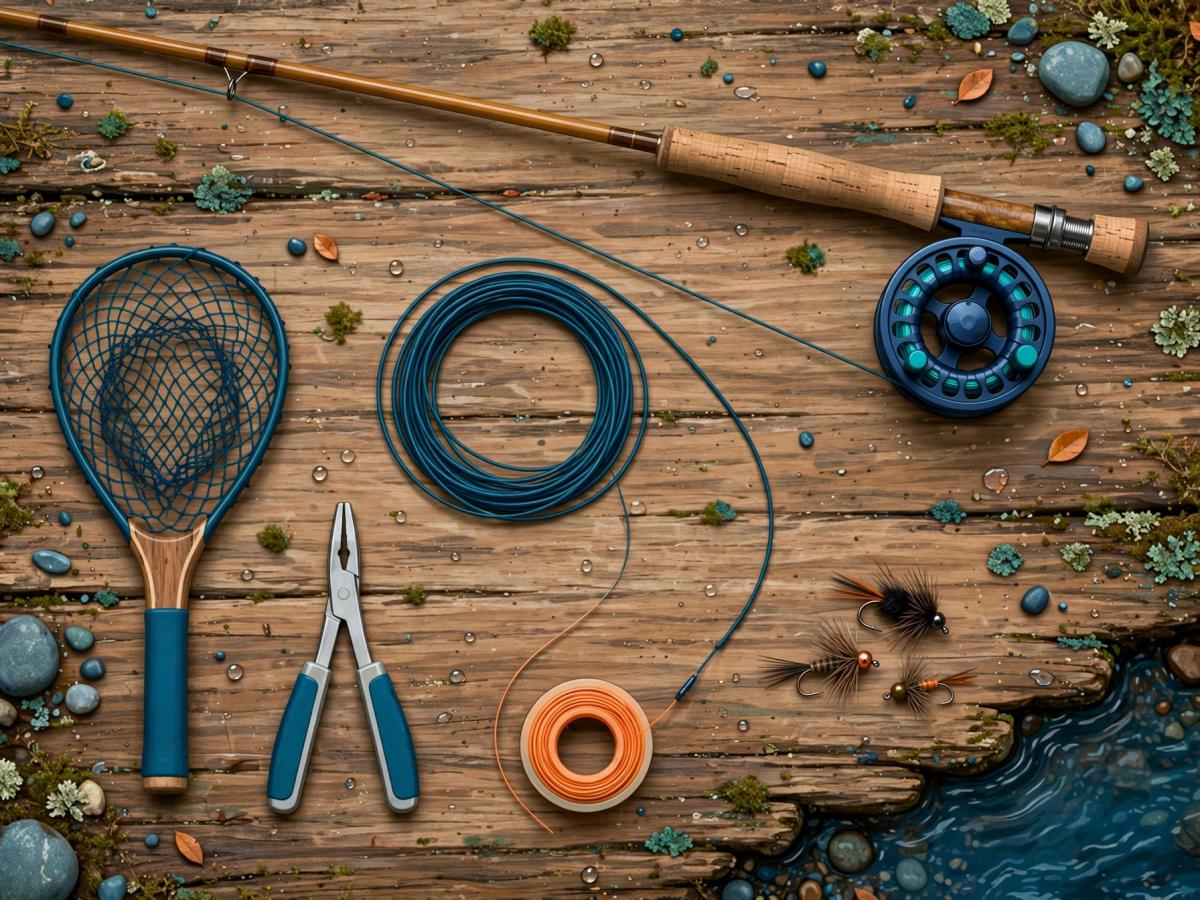
Meet the Outfit Without the Mystery
A fly outfit can look like a collection of specialized parts when you first lay it on a table. The good news is that each part has a clear job. Once you can trace the path from the reel to the fly, the setup becomes a sequence you can inspect instead of a puzzle you have to memorize.
This lesson is about orientation, not shopping. Different waters and species call for different rod weights, lines, leaders, and flies. A familiar, balanced outfit that fits your local water gives you a better place to learn than a pile of advanced options. You can build skill with a brand-neutral setup and adjust later when observation gives you a reason.
Learning goal
By the end, you should be able to name the main parts of a fly outfit, describe what each one does, and check the connection from the reel to the fly before you practice. You will also have a simple way to organize your gear for a first outing.
Start with the rod and reel
The rod is the long, flexible lever in your hand. Its length and action help you move the fly line, and its weight rating gives you a general sense of the line and fly sizes it is designed to handle. A rod is a tool for controlling line. It does not need to feel mysterious or delicate. Hold it with a relaxed grip and keep the tip clear of people, branches, and hard surfaces.
The reel sits below the rod and stores the line. It also provides a drag system that can help control a fish when line leaves the reel. For early practice, the reel's most important job is keeping the line organized and attached to the rod. The reel does not supply the weight for a cast. The line does that work.
When you hold the outfit, check that the reel foot is seated in the rod's reel seat and that the connection feels secure. A comfortable balance makes practice easier. Brand names and premium finishes do not replace a secure connection or a setup that suits the water you can safely reach.
Follow the line system
A fly outfit uses several connected sections. Starting at the reel, you will usually find backing, fly line, leader, tippet, and the fly.
- Backing is thin line stored beneath the fly line. It gives extra length if a fish takes more line than you have outside the rod. Beginners may rarely see it, but it belongs in the system.
- Fly line is the heavier, visible line that carries the cast. Its taper and floating or sinking design affect how it moves and where a fly travels. A floating line is a common starting point for simple surface and shallow practice, although local fishing situations vary.
- Leader is the tapered section between fly line and tippet. The thicker end transfers energy from the line, while the finer end helps the presentation reach the water with less disturbance.
- Tippet is the final, replaceable section of fine line. It connects the leader to the fly. It can be changed when it wears, shortens, or needs to match the fly and local rules.
- Fly is the artificial pattern attached at the end. It may suggest an insect, small baitfish, or another food source. A fly is a presentation choice, not a promise that fish will respond.
Think of the line as a chain with different jobs. The backing stores reserve line. The fly line provides casting weight. The leader and tippet create a controlled transition to the fly. If one connection feels damaged or tangled, stop and fix it before you start waving the rod.
Two useful tools near the end
Forceps are small pliers used for tasks such as pinching a barb where permitted, holding a hook safely, and helping remove a hook. Keep them secured where you can reach them without putting a hook through your fingers. They are a handling tool, not a substitute for learning how to identify a hook's path.
A net gives you a way to support a fish in the water while you remove the hook or decide whether local rules call for release or legal harvest. Choose a net you can control at your fishing spot. A net is helpful, but it does not make wading, steep banks, or fast water safe. You can learn plenty from the bank without carrying one into water.
Build a simple inspection habit
Lay the outfit on a clean surface and trace the path with your finger. Say each part out loud: reel, backing, fly line, leader, tippet, fly. Look for cracked guides, frayed line, loose knots, damaged tippet, and a fly that is attached securely. Then look around the setup. Is the line looped around a chair, a branch, or your feet? Are the forceps closed? Is the net where you can reach it without stepping toward unstable water?
This small inspection turns setup into a repeatable habit. It also helps you explain the outfit to a fishing partner without relying on jargon. You do not need to know every knot or every line taper before your first practice session. You need to know where the energy travels and where the sharp point is.
Try this: the line-system walk-through
Set up indoors or on a clear table with the hook removed, covered, or replaced by a soft practice yarn. Point the rod in a safe direction. Trace the line from the reel to the end and name each section. Next, coil the line loosely in large loops and practice keeping it away from your ankles and furniture. Finally, place your forceps and net where your dominant hand can reach them without crossing a hook.
If you have access to a safe open lawn, repeat the walk-through outdoors without attaching a sharp fly. Keep the practice line short and let someone nearby know where you are moving. The goal is recognition and organization. Casting can wait until the outfit feels familiar.
Water, hooks, and local rules
Check the regulations for the water you plan to fish before you attach a fly. Rules may cover license requirements, permitted waters, hook styles, barbs, seasons, species identification, and whether a fish may be kept. Those details change by location, so a general lesson cannot replace the current local source.
Choose a practice space with room behind and beside you. Keep hooks pointed away from eyes, hands, pets, and other people. Wear eye protection when it fits the setting, and stop when wind, branches, poor footing, or nearby people make the setup unsafe. Waders are optional equipment, not a requirement for learning the parts of an outfit. Stay on stable ground until your skill, clothing, and local conditions support any decision to enter the water.
Recap
A rod controls the line, a reel stores it, and the fly line supplies the weight that makes a cast possible. Backing, leader, tippet, and fly complete the path from the reel to the presentation. Forceps support safe hook work, and a net can support a fish close to the water. Start with a simple inspection, a clear practice area, and the local rules for your destination. Understanding the outfit gives every later lesson a calmer starting point.
Test Your Knowledge
Ready to see how much you've learned? Take this quick 4-question quiz to complete the lesson.
Take the Quiz to Finish
Complete the quiz above to unlock the lesson completion.