Land and Release Responsibly
A bass close to the bank brings line, hooks, net choices, footing, and local rules into one moment. A calm landing plan helps you protect the fish and yourself. Prepare before the fish arrives, keep the fish low, and let the current regulations guide the release or legal-harvest decision.
Responsible handling looks similar across many situations, but species, size, water temperature, equipment, and local rules still matter. Use these habits as a starting point, then follow the requirements for the water you are fishing.
Learning goal
You will practice preparing a net and landing area, controlling hooks, supporting a bass near the water, and deciding between release and legal harvest using current local information. You will also rehearse the sequence before a real fish is on the line.
Prepare the landing area
Keep the net open and within reach before the fish is close, but keep your feet on stable ground. Clear loose tackle, bags, and line from the area. If another angler is with you, decide who controls the rod and who handles the net. A short call such as “net” can prevent both people from reaching for the same hook.
Maintain steady pressure with the rod and guide the fish toward open water beside the bank. Avoid dragging a fish over rocks or lifting it high when a net or supported hand landing is available. A fish may surge at the last second. Give yourself room and keep your body away from the hook path.
Lead the fish head first into a net when the net and water position make that safe. Avoid chasing it with the net. If netting would require a dangerous step, keep the fish in the water and choose a controlled landing only when your skill and footing support it.
Control the hooks
Bass lures may carry one or more hooks, and a hook can swing free when the fish shakes. Keep your face, hands, and legs away from the lure until the fish is supported and the hook is visible. Set the rod in a place where line will not cross your hands or another person.
Use pliers or forceps to remove the hook when you have a clear view. Hold the lure or hook in a way that keeps the point away from skin. If a hook is deeply set, tangled, or unsafe to reach, get experienced help and follow local guidance. Pulling blindly can injure the fish and the angler.
Do not wrap line around your hand for leverage. If a lure snags during the landing, pause and solve the line problem from a stable position. A quick landing begins with control, not speed.
Wet hands and close handling
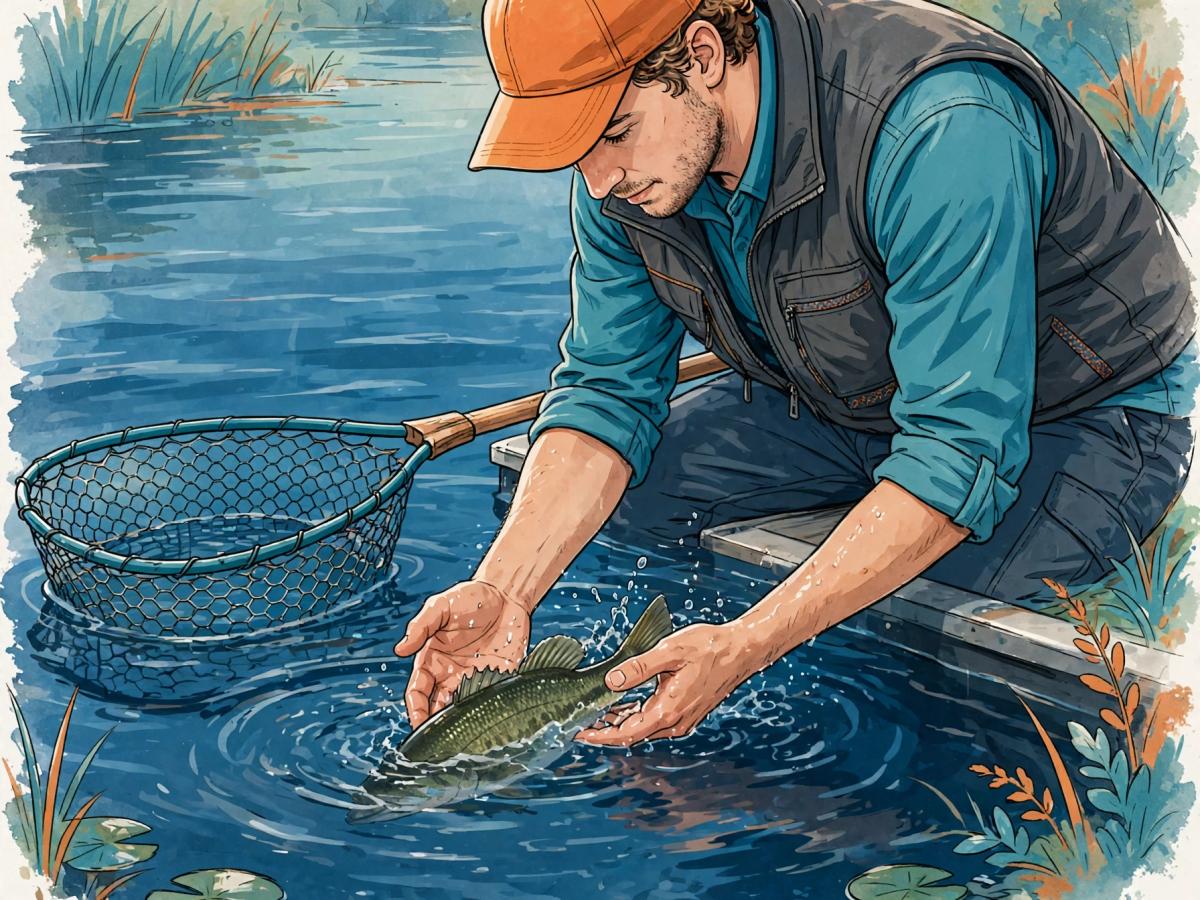
Wet your hands before touching the fish. Keep it low over the water or inside the net so a slip does not become a hard fall. Support the fish's body and avoid pressing on the gill area. If you hold the lower jaw, keep the grip controlled and support the body for larger fish rather than letting the fish hang by the jaw.
Keep air exposure short. Remove the hook, check any local measurement requirement, and return the fish to the water promptly when release is the plan. A photo is optional and should never extend handling or require an unsafe stance. If the fish is distressed, skip the photo and concentrate on supporting it.
In still water, hold the fish upright and supported until it can swim away with control. In moving water, choose a gentle position that does not force water through the gills or place the fish in a dangerous current. Let the fish leave under its own power. Handling cannot guarantee an outcome, so reduce stress and time out of water wherever you can.
Release or legal harvest
Check the current official rules before the trip. Regulations may cover bass species identification, size, bag limits, seasons, special waters, possession, and release requirements. Rules can change by water body and date. A general classroom lesson cannot replace the local source.
If release is required or chosen, use the low, wet-hand method and return the fish carefully. If legal harvest is allowed and it fits your plan, follow the exact requirements for identification, measurement, possession, and transport. Keep only what the law allows and what you can responsibly use. This lesson focuses on the landing decision and handling. Cleaning instructions belong in a separate local guide.
Respect the water while you decide. Keep the bank clear, avoid blocking another angler, and return the fish to suitable water rather than leaving it on a hot or dry surface. Responsible handling is a series of small choices made quickly and calmly.
Try this: rehearse before the bite
Use a hookless lure or soft practice object. Set a net and pliers where you can reach them from a stable stance. Practice clearing the line, guiding the object head first toward the net, setting the rod safely, and keeping the object low. Then rehearse wetting your hands and supporting the body without squeezing the gill area.
Talk through two local-rule decisions before you fish: where you will check size and bag rules, and what you will do if the hook is difficult to remove. If you fish with a partner, practice the short call for the net and the handoff for hook control. The rehearsal turns a rushed moment into a familiar sequence.
Water, hooks, and local rules
Wear eye protection when appropriate, keep hooks away from bystanders, and use tools rather than fingers when the hook path is unclear. Do not lean over a drop, climb a dock rail, or step into moving water to reach a fish. If the net cannot be used safely, protect your footing and keep the fish supported in the water when possible.
Follow local access, license, season, size, bag, and species rules. Some waters have special release requirements or restrictions on tackle. Verify the official regulation source for the exact destination, and carry only the equipment you can manage safely.
Recap
Prepare the net and landing area before the bass is close. Control the lure and hook path, wet your hands, support the fish close to the water, and limit air exposure. Use current local rules to decide on release or legal harvest, and keep the process inside your actual skill and footing. A calm rehearsal supports a calm landing.
Test Your Knowledge
Ready to see how much you've learned? Take this quick 4-question quiz to complete the lesson.
Take the Quiz to Finish
Complete the quiz above to unlock the lesson completion.