Choose a Simple Lure Family
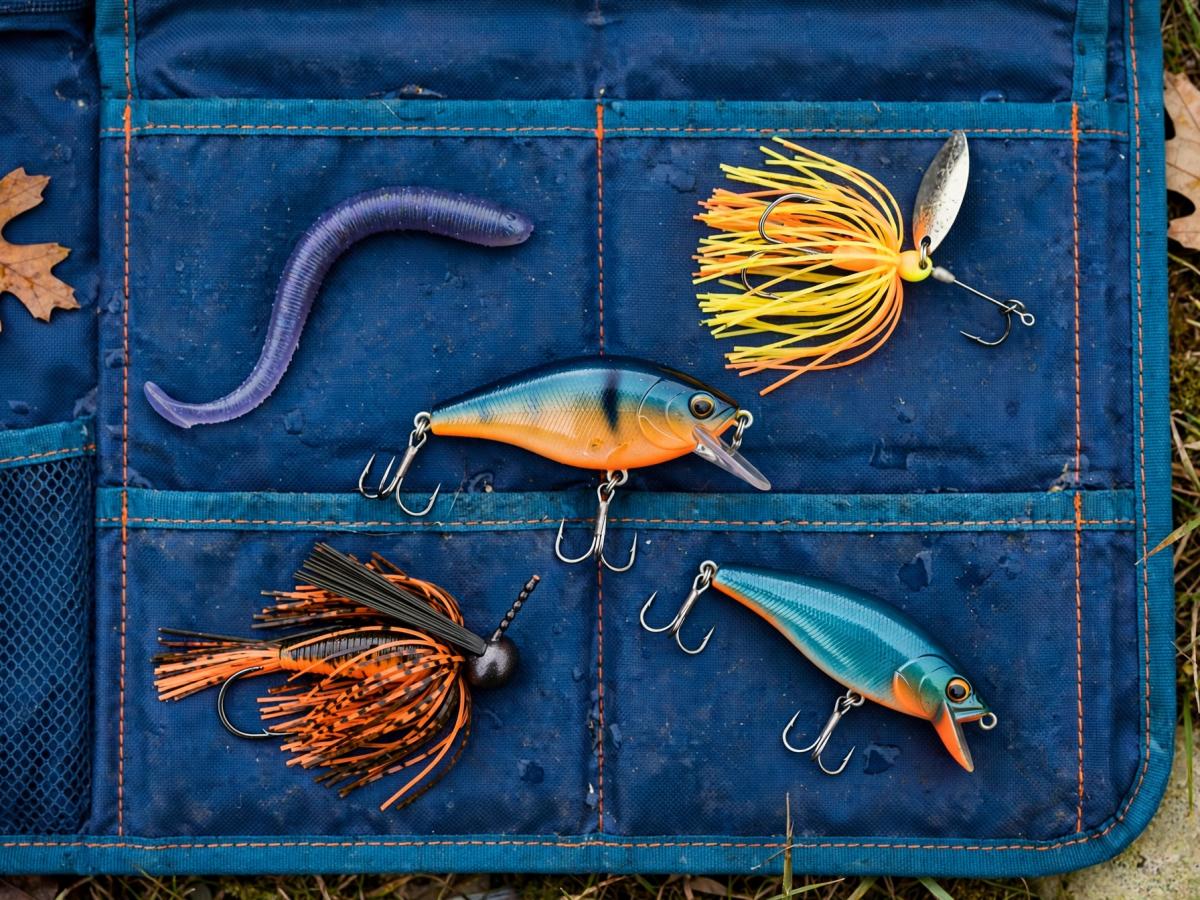
A bass lure box can make a first decision feel larger than it needs to be. Start by learning what broad lure families do in the water. Soft plastics, spinnerbaits, crankbaits, jigs, and topwater lures each give you a different way to present a shape, vibration, profile, or movement.
The aim is a useful first choice, not a universal ranking. Water clarity, depth, cover, light, wind, season, fish species, and local rules all influence the fit. Learn to explain why you chose a family, then watch the lure and the water for information.
Learning goal
You will compare five broad lure families, connect each to the conditions it can help you explore, and build a one-change decision routine. You will also learn how to keep lure choice connected to safe tackle and a controlled casting area.
Soft plastics invite a measured search
Soft plastics include worms, creature shapes, swimbaits, and other flexible profiles. They can be rigged in different ways and moved slowly, steadily, or with pauses. Their broad usefulness comes from the ability to change how they travel through the water and around cover.
Before choosing one, ask what you need the lure to do. Do you need a slower presentation, a profile that can move near the bottom, or a way to work around a particular type of cover? A soft plastic that sinks can find a different lane from one that is held higher. The rig, weight, hook, and local rules matter as much as the shape.
Spinnerbaits add movement and vibration
A spinnerbait combines a weighted body, hook, and blades that turn as the lure moves. It can offer flash and vibration in open water, around sparse cover, or in a wind-affected search. Watch how the blades and skirt move at the speed you can control.
Spinnerbaits also carry a hook and can snag. Choose a route that gives you room to cast, retrieve, and stop without people or branches in the path. If the water is too shallow or crowded for the lure's movement, a different family may give you clearer information.
Crankbaits explore a swimming path
A crankbait is a hard lure designed to wobble or swim as it is retrieved. Its bill, shape, and buoyancy affect how it travels. Instead of choosing by name alone, consider the depth you can reach, the bottom or cover nearby, and whether you can keep the lure moving in a controlled lane.
A crankbait can help you learn whether a section has a consistent bottom or interruptions that change the retrieve. Stop and reset when the lure encounters a snag. Treble hooks make careful handling important, especially when a lure comes close to shore or a net.
Jigs offer a compact profile
A jig combines a weighted head with a skirt, hair, or soft trailer. It can be presented slowly along a bottom or around a defined piece of cover. The weight changes how quickly it falls and how it feels when it contacts a surface.
Use the line to notice bottom contact and cover. If you cannot tell whether the lure is moving or caught, slow down and create space before adjusting. A jig is a tool for learning contact and edges, not a reason to force a lure into a dangerous snag.
Topwater keeps the surface in view
Topwater lures travel on or just above the surface. They can help you observe light, wind, surface cover, and visible movement. A calm retrieve, pause, or steady walk may create a different signal, but no topwater action guarantees a response.
Keep eyes on the lure and the area around it. A surface lure can be exciting, and excitement can make an angler hurry a hookset or forget a nearby person. Use the lure only where you can keep the casting and landing path controlled.
Build a simple decision routine
Use three questions before selecting a family. First, what part of the water do you need to explore: surface, middle, bottom, or a cover edge? Second, what movement can you control in the space you have? Third, what hook and snag risks does the choice create?
Choose one family and one change you may make later. For example, you might begin with a soft plastic because you want a slower bottom search, then change only the weight or retrieve speed if the presentation is hard to control. Or you might choose a spinnerbait to observe a windy edge, then change the route before changing families.
Your reasoning matters more than the label. The same family can behave differently with a different size, weight, trailer, retrieve, or water condition. Keep the first choice modest and learn from what you can see.
Try this: the five-family sort
Place one example of each family on a towel with hooks pointed away from you. For each lure, write three notes: where it travels, what movement or profile it offers, and one condition that could make it hard to control. Then choose one for a safe, accessible practice area and write a single reason.
Use a hookless practice plug or keep the lure contained while rehearsing the casting path. If you fish, make a short set of controlled casts and watch the path. Change only retrieve speed, depth, or angle on the next set. End by writing what the water told you and what remains uncertain.
Water, hooks, and local rules
Check hooks, split rings, line, and knots before you cast. Treble hooks can catch clothing, skin, net material, branches, and other tackle. Scan behind and overhead, keep bystanders outside the casting lane, and never pull a snag toward your body. Use tackle that matches the lure's weight and your skill, and follow local restrictions on lure style, hooks, and harvest.
Read access signs around docks, private banks, and managed waters. A lure choice cannot overcome an unsafe stance or a restricted location. When the wind, crowd, or overhead space makes a family hard to control, choose a safer practice or leave the water.
Recap
Soft plastics, spinnerbaits, crankbaits, jigs, and topwater lures are broad presentation families. Choose based on the part of the water you can explore, the movement you can control, and the hook or snag risks around you. Change one variable at a time and let conditions, local rules, and observation guide the next choice.
Test Your Knowledge
Ready to see how much you've learned? Take this quick 4-question quiz to complete the lesson.
Take the Quiz to Finish
Complete the quiz above to unlock the lesson completion.